
U.S. Midterms Shape Policy Expectations: Congressional Control, the Dollar, Interest Rates, and Post-Election Performance in Gold and U.S. Stocks
Weekly Market Overview
This week’s market focus is on the U.S. midterm elections and how the balance of power in Congress could reshape fiscal policy, government regulation, and market risk appetite over the next two years.
For financial markets, the key question is not simply which party wins. It is how far the results differ from market expectations and whether the shift in power is significant enough to change the outlook for economic growth, inflation, interest rates, and corporate earnings.
If Democrats gain control of both the Senate and the House of Representatives, the United States would have a divided government, with Republicans holding the White House and Democrats controlling Congress. Legislative negotiations over tax cuts, fiscal spending, and major reforms could become more difficult, but this would not necessarily be bearish for U.S. stocks. Constraints on policy changes could reduce some uncertainty. Conversely, difficulties advancing anticipated tax cuts or stimulus measures could weaken the earnings benefits some companies had expected.
Neither the dollar nor gold has a fixed “election-driven direction.” If markets lower their growth and interest rate expectations, the dollar could come under pressure while gold could find support. If persistent inflation, fiscal risks, or political disputes push yields and safe-haven demand higher, the two assets could respond differently—or even strengthen simultaneously in the short term.
The supplied statistics covering five historical midterm elections show that gold and the SP 500 posted relatively consistent gains over certain post-election observation periods, while the dollar’s direction was more mixed. However, the sample covers only 2006, 2010, 2014, 2018, and 2022. The historical frequency of gains should not be treated as the probability of a profitable trade this time.
Key market themes this week and beyond include:
-
Whether control of both chambers becomes clear and whether the size of the majority exceeds market expectations;
-
Whether media projections, actual vote counts, and officially certified results diverge;
-
Whether divided government changes the likelihood of tax cuts, fiscal spending, and regulatory policies being implemented;
-
Whether living-cost concerns prompt both parties to adjust their economic policy priorities;
-
How US02Y, US10Y, and real yields reflect post-election policy expectations;
-
Whether DXY is driven primarily by interest rate differentials, growth expectations, or safe-haven demand;
-
Whether sector rotation emerges across US500, NAS100, and US30;
-
Whether XAUUSD finds support from falling interest rates or politically driven safe-haven demand;
-
Whether UKOUSD and USOUSD respond to energy policy headlines, and whether fundamentals support those moves.
Overall, market attention is shifting from “who wins a congressional majority” to “which policies can be implemented and when they will affect fundamentals.”
This Week’s Market Themes
1. Congressional Control: The Expectations Gap Matters More Than Party Labels
If Democrats regain both chambers, markets must first distinguish between an outcome that has already been fully priced in and a political shift that exceeds expectations.
Beyond which party holds the majority, investors should consider:
-
The size of the majority: A narrow majority and a substantial one have different implications for agenda-setting and negotiations within the party.
-
The distribution of victories: Flips in swing districts and losses in traditional strongholds can send different political signals.
-
Prior market expectations: Expected outcomes may generate limited reactions, while surprises could trigger rapid repricing.
-
The degree of certainty: Close races, recounts, and legal disputes could prolong uncertainty.
Divided government may constrain major legislation, but a congressional majority does not confer the ability to change all policies unilaterally. Presidential veto power, Senate procedures, and the executive branch’s existing authority would continue to shape the final outcome.
Post-election price action should therefore be assessed in terms of both the immediate sentiment reaction and the subsequent substantive effects of policy. If prices initially reflect policy promises but legislation ultimately stalls, early market moves could reverse.
Markets to watch: US500, NAS100, US30, DXY, XAUUSD
2. Living Costs: Political Pressure Does Not Mean Inflation Will Fall Immediately
If reliable post-election surveys confirm that food, housing, energy, and borrowing costs were important influences on voting decisions, policy discussions could focus more heavily on household economic concerns.
Areas likely to attract attention include:
-
Housing supply and household affordability;
-
Healthcare expenses and insurance costs;
-
Energy prices and security of supply;
-
Financing and operating costs for small and medium-sized businesses;
-
Household tax burdens and fiscal support;
-
Tariffs, immigration, and labor supply.
However, policy objectives and actual outcomes may differ. Subsidies, for example, could ease the burden on some households, but they could also increase inflationary pressure if they stimulate demand. Expanding housing or energy supply typically takes longer to affect prices.
For markets, the key is not whether a policy claims to “lower living costs,” but how the measures would change supply and demand, government spending, and the inflation trajectory. A change in congressional control would not automatically alter the Federal Reserve’s policy assessment.
If data show easing inflation and a cooling economy, markets could price in a greater likelihood of rate cuts. If inflation remains persistent, however, the scope for lower interest rates could remain limited.
Markets to watch: DXY, US02Y, US10Y, XAUUSD, US500
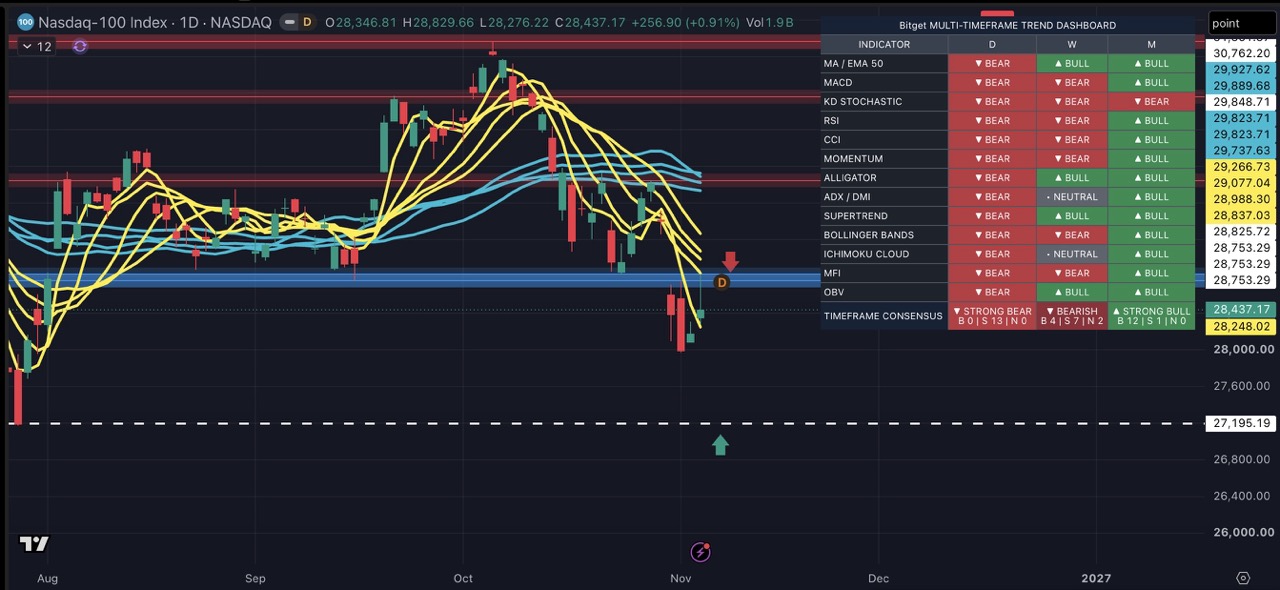
3. U.S. Equity Indices: Divided Government Is Not Necessarily Bearish—Sector Divergence Deserves More Attention
 |
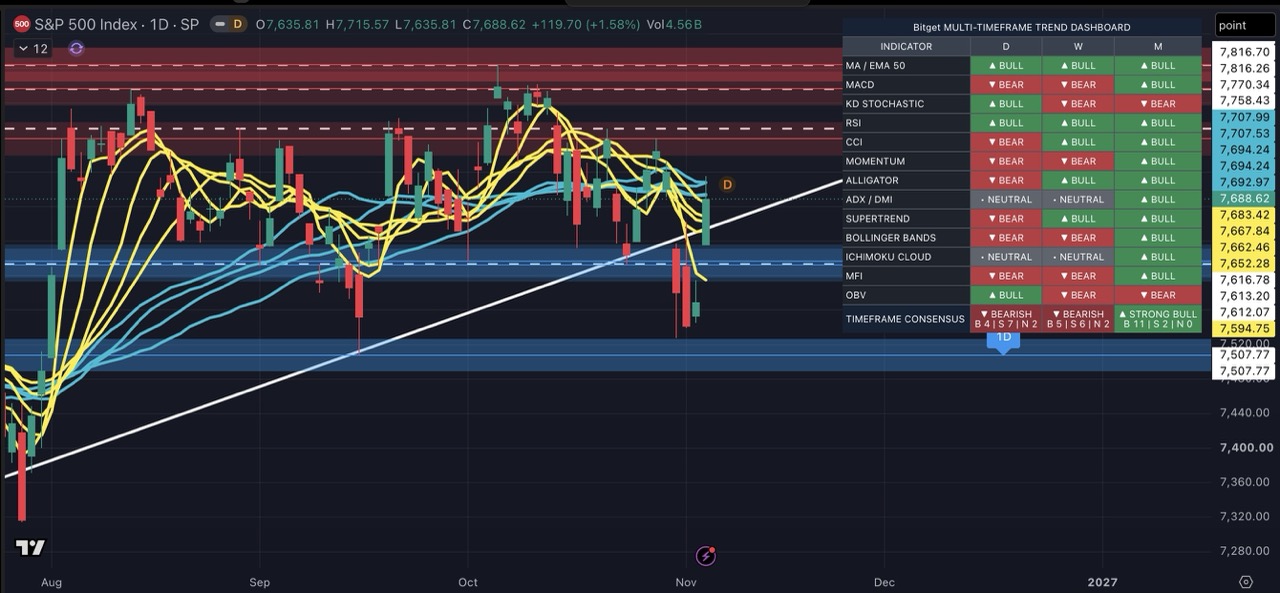 |
Post-election U.S. equity performance must still be assessed alongside corporate earnings, interest rates, and economic conditions. Congressional gridlock could limit dramatic policy changes, but it could also obstruct anticipated tax cuts or fiscal stimulus. It therefore does not point automatically to a particular direction for equity indices.
Policy exposure also varies across sectors:
| Sector |
Main Post-Election Areas to Watch |
| Technology |
Regulation, trade restrictions, AI investment, and the effect of interest rates on valuations |
| Financials |
Financial regulation, taxation, credit demand, and the yield curve |
| Energy |
Extraction policies, environmental rules, permitting procedures, and global oil supply and demand |
| Healthcare |
Drug prices, insurance systems, government reimbursement, and policy negotiations |
| Industrials and Infrastructure |
Government spending, manufacturing investment, and trade policy |
For NAS100, declining yields could support valuations if corporate earnings expectations remain stable. However, if falling rates reflect a significant deterioration in growth, earnings pressure could offset that benefit.
For US500 and US30, traders should assess whether market gains are driven by a small number of heavily weighted stocks or broaden into financials, industrials, and other economically sensitive sectors.
Markets to watch: US500, NAS100, US30, US10Y
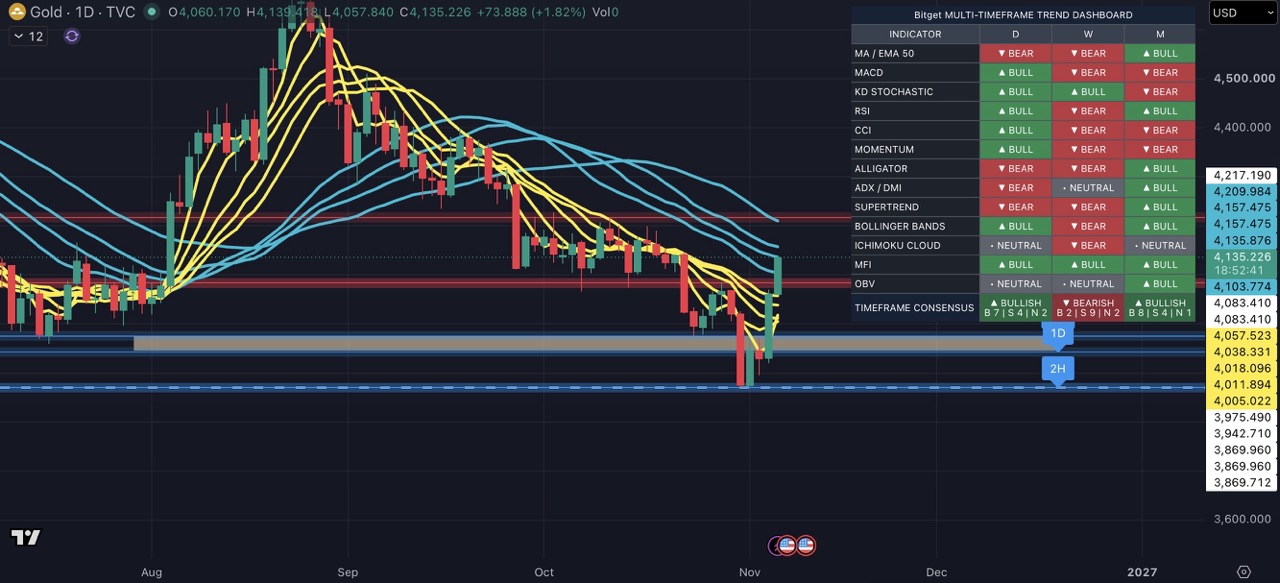
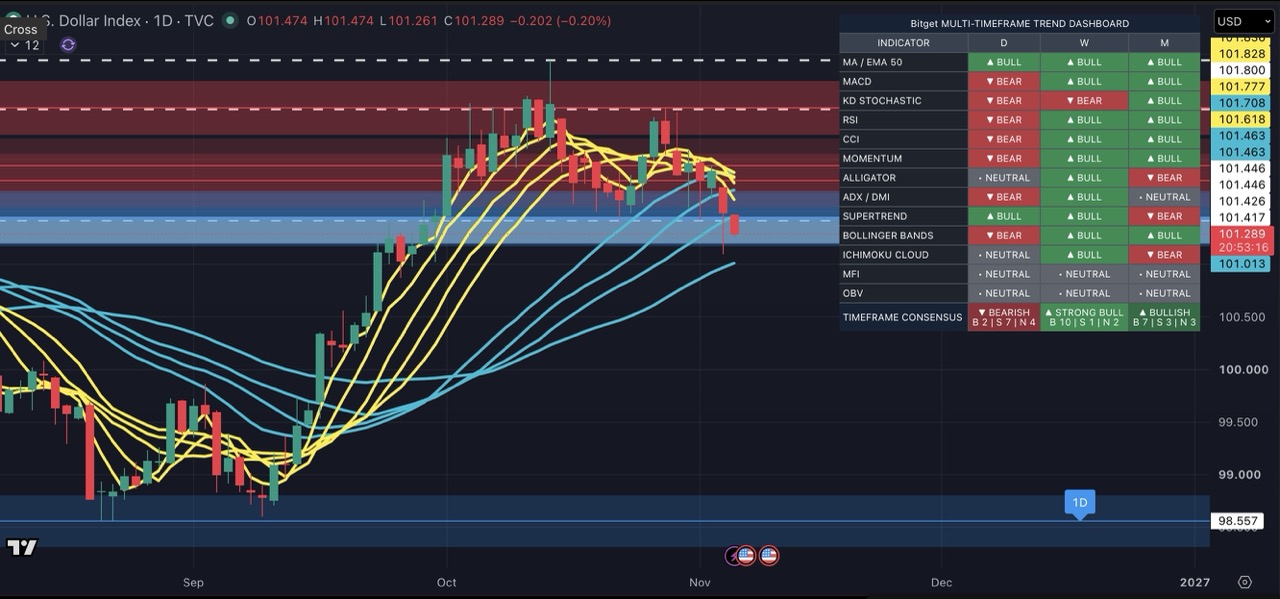
4. XAUUSD and DXY: Interest Rates, Safe-Haven Demand, and Fiscal Expectations Jointly Shape Prices
The post-election response of gold and the dollar could change depending on the dominant market driver.
 |
 |
| Market Scenario |
Potential U.S. Dollar Response |
Potential Gold Response |
| Softer growth expectations and stronger expectations of rate cuts |
Reduced support from interest rate differentials could weigh on the dollar |
Could benefit if real yields decline |
| Persistent inflation and higher expected policy rates |
Could gain support from interest rate differentials |
Could face pressure from rising real interest rates |
| Political disputes or delayed results |
Could receive support from safe-haven flows |
Could receive support from safe-haven demand |
| Lower policy uncertainty and improving risk appetite |
Depends on interest rate differentials and capital flows |
The safe-haven premium could unwind |
These relationships are not guaranteed. In particular, when nominal yields rise, it is important to determine whether the move reflects changes in real interest rates, inflation expectations, or the term premium. Higher nominal yields should not automatically be treated as an unambiguous bearish signal for gold.
The dollar also requires a comparison of policy paths in the United States and other economies, rather than an assessment of U.S. domestic politics alone.
Markets to watch: XAUUSD, DXY, US02Y, US10Y
5. Historical Post-Election Statistics: More Consistent Gains in Gold and U.S. Stocks, but a Mixed Dollar Trend
According to the supplied data, major assets performed as follows after the five midterm elections in 2006, 2010, 2014, 2018, and 2022:
| Asset |
1 Month After Election |
3 Months After Election |
6 Months After Election |
12 Months After Election |
| SP 500 |
Up in 4/5 cases; average +1.01% |
Up in 4/5 cases; average +4.12% |
Up in 5/5 cases; average +7.54% |
Up in 5/5 cases; average +8.22% |
| DXY |
Up in 3/5 cases; average −0.23% |
Up in 3/5 cases; average +0.61% |
Up in 2/5 cases; average −1.20% |
Up in 3/5 cases; average −0.27% |
| Gold |
Up in 5/5 cases; average +3.56% |
Up in 5/5 cases; average +6.87% |
Up in 5/5 cases; average +10.56% |
Up in 4/5 cases; average +18.97% |
Each asset and observation period includes five election samples. These figures represent price changes, not CFD returns after trading costs.
The data offer three observations:
-
Gold’s short- to medium-term performance was more consistent: It rose over the one-, three-, and six-month post-election periods in all five cases.
-
U.S. stocks showed more positive medium-term performance: The SP 500 recorded gains over both the six-month and one-year post-election periods in all five cases.
-
The dollar had no fixed direction: Even when gains occurred more frequently, a few larger declines could still produce a negative average return.
However, five observations are insufficient to establish a robust trading pattern. “Up in all five cases” does not mean there is a 100% probability of gains this time, nor does it prove that the elections caused those gains. Differences in monetary policy, economic conditions, and valuations across the years could all influence the results.
Historical data are useful for building an analytical framework, not for generating automatic entry signals. Observation periods for 2026 that have not yet concluded must not be included as completed historical samples.
6. Energy Policy and Voter Demographics: Distinguishing Long-Term Signals from Short-Term Catalysts
Elections could change energy regulation, extraction permits, and policy negotiations, but oil prices remain driven by global demand, OPEC+ decisions, inventories, exports, and geopolitics.
For UKOUSD and USOUSD, traders should establish:
-
Whether the news concerns a political statement, a policy proposal, or a measure already in force;
-
Whether implementation requires legislation, funding, or administrative measures;
-
When the policy could materially affect supply, demand, or corporate costs;
-
Whether global oil market fundamentals support the same direction.
Similarly, changes in voting patterns among key groups, such as Latino voters, could influence future positions on trade, immigration, and fiscal policy. However, reliable surveys must be used to distinguish differences across states, age groups, income levels, and turnout. Individual district flips cannot establish a uniform nationwide shift.
These structural political signals are better suited to medium- and long-term policy analysis than to direct short-term trading decisions.
Markets to watch: UKOUSD, USOUSD, US500, DXY
Trading Framework for Major CFD Assets
| Instrument |
Potential Supportive Factors |
Potential Sources of Pressure |
Key Confirmation Indicators |
| US500 |
Lower policy uncertainty, resilient earnings, falling interest rates |
Disappointed stimulus expectations, downward earnings revisions, rising yields |
Earnings reports, market breadth, US10Y |
| NAS100 |
Falling real interest rates, sustained technology earnings and AI investment |
Valuation pressure, regulatory or trade restrictions, weaker growth expectations |
Real yields, technology earnings, capital expenditure |
| US30 |
Improving industrial and financial sector earnings, resilient domestic demand and investment |
Stalled fiscal negotiations, rising costs, a cooling economy |
Manufacturing, consumption, and business investment data |
| XAUUSD |
Falling real yields, a weaker dollar, stronger safe-haven demand |
Rising real yields, a stronger dollar, an unwinding safe-haven premium |
DXY, real interest rates, political risk |
| DXY |
Wider interest rate differentials in the dollar’s favor, stronger relative U.S. growth, safe-haven demand |
Narrower interest rate differentials, stronger rate-cut expectations, capital outflows |
Policy expectations for the United States and other economies |
| UKOUSD / USOUSD |
Tighter supply, falling inventories, rising geopolitical risk |
Weaker demand, increased supply, an unwinding risk premium |
OPEC+, inventories, exports, and shipping |
| US02Y / US10Y-linked products |
Depends on the contract’s quotation convention |
Depends on the contract’s quotation convention |
Fed expectations, inflation, growth, and the term premium |
Key Issues to Watch in the Week Ahead
1. Confirmation of Election Results and the Risk of Disputes
Distinguish between media projections, candidates’ victory declarations, vote counts, and official certification. Close races, recounts, or legal disputes could prolong market volatility.
2. Whether Policy Announcements Advance into Formal Procedures
Track whether tax cuts, fiscal spending, healthcare, energy, and regulatory measures enter the legislative or administrative process. Avoid treating political statements as policies already implemented.
3. How Interest Rate Markets Reprice
Monitor US02Y, US10Y, and real yields to determine whether markets are pricing in rate cuts, inflation, slower growth, or fiscal and term-premium risks.
4. Whether Economic Data Support the Political Narrative
Follow inflation, employment, wage, consumption, and economic activity data according to the actual release calendar. Voters’ perceptions of the economy matter, but they cannot replace verifiable fundamental data.
5. Whether U.S. Equity Gains Broaden
Assess whether rising indices are accompanied by improving market breadth, and monitor the relative performance of financials, industrials, energy, healthcare, and technology.
6. Post-Election Volatility and Trading Costs
During major news events, pay attention to spreads, liquidity, slippage, and overnight financing charges. Standard stop-loss orders do not guarantee execution at the specified price, and positions held overnight require an adequate margin buffer.
Weekly Summary
The central market message this week is that elections determine the distribution of political power, but price direction is still shaped by the gap between expectations and outcomes, policy implementation, and economic fundamentals.
If Democrats regain both chambers, divided government could constrain major legislation. However, that would not necessarily cause U.S. stocks to fall, nor would it automatically imply a weaker dollar or higher gold prices. The more important question is how policy negotiations would change expectations for fiscal stimulus, corporate costs, inflation, and interest rates.
Statistics from five historical midterm elections show relatively positive performance records for gold and the SP 500 over certain periods, while the dollar’s performance was more mixed. However, the small sample and differing macroeconomic conditions mean these results should serve only as context, not as a substitute for confirmation from current market conditions.
In the short term, the following cross-market relationships warrant attention:
-
Stronger rate-cut expectations and falling real yields: These could support gold and growth stocks, but the earnings outlook still needs confirmation.
-
Persistent inflation and higher interest rate expectations: These could support the dollar while increasing pressure on gold and highly valued technology stocks.
-
Escalating political disputes: The dollar and gold could both benefit from safe-haven demand, while equity market volatility could increase.
-
Stalled policy negotiations: Market moves previously driven by expectations of tax cuts or stimulus could reverse.
-
Substantive changes in energy policy: These still need to be cross-checked against global supply and demand, inventories, and geopolitical risks.
💡 The priority in post-election trading is not to chase the first market move, but to verify the results, prepare for multiple scenarios, and confirm whether price action and fundamentals support each other.
If you wish to follow these markets through Bitget CFD, first use official channels to confirm service availability in your region, trading eligibility, contract specifications, spreads, overnight financing charges, and margin requirements. CFDs are high-risk leveraged products that can rapidly magnify losses. Before trading, control position sizes, define acceptable losses, and carefully manage price-gap and event risks.
All trading education provided by Bitget is for educational purposes only and should not be considered financial advice. The strategies and examples shared are for reference only and may not reflect actual market conditions. CFD trading involves significant risk, including the potential loss of capital. Past performance does not guarantee future results. Please conduct thorough research and ensure that you understand the risks involved. Bitget is not responsible for any trading decisions made by users.


- Weekly Market Overview
- This Week’s Market Themes
- Trading Framework for Major CFD Assets
- Key Issues to Watch in the Week Ahead
- Weekly Summary