News>
Fed hike is only the first half: BoE tonight and BOJ Friday decide what U.S. stocks do next.
By:
- The Fed has hiked. US stocks have only finished the first half.
Fed Chair Warsh stressed after the hike that inflation is still too high. US stocks are stuck in a window where the hike has landed, but global funding costs have not been fully priced in.

In the early hours of September 17 Beijing time, the Fed delivered its first 25bp rate hike in three years, taking the target range to 3.75%–4.00%. Warsh was firm afterward: inflation remains elevated, the economy is still strong, and another hike later this year cannot be ruled out.
The Dow fell 1.21%, the S&P 500 dropped 0.45%, and the Nasdaq was roughly flat. The 10-year Treasury yield is still hugging 5%. Oil pulled back from $108, but the Middle East premium has not faded. What still has not been fully priced is tonight’s Bank of England decision and Friday’s Bank of Japan decision.
The ECB already hiked last week. If the UK and Japan tighten further, global money gets more expensive — and the most rate-sensitive sectors in the US market get hit first.
- What the UK and Japan say matters more than whether they hike.
Tonight, start with Threadneedle Street. The BoE is likely to stand pat. What the market is really pricing is how hawkish the statement is.
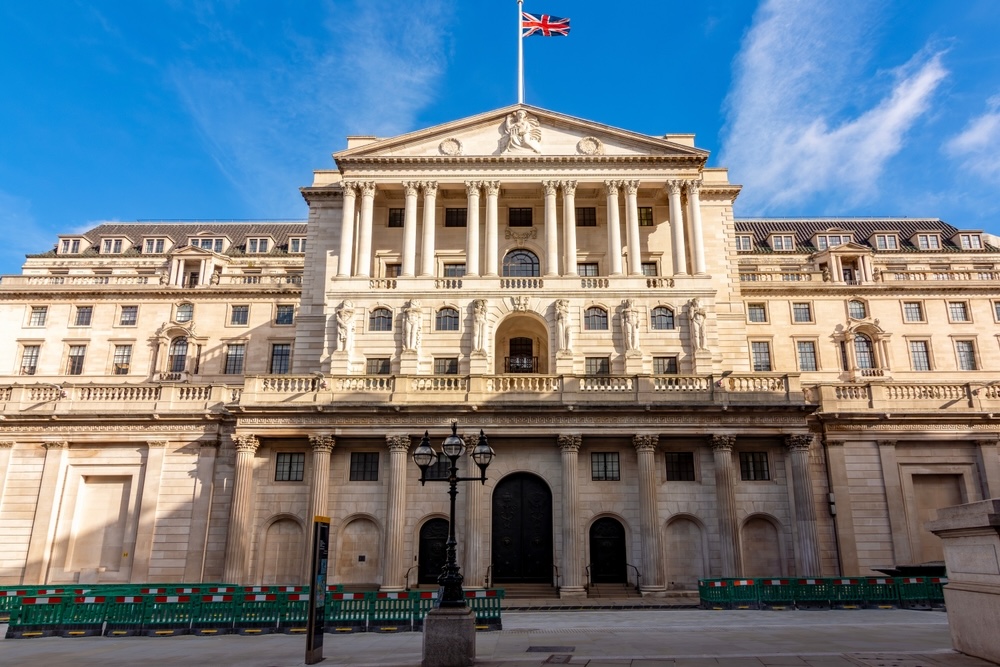
The Bank of England is widely expected to hold at 3.75%. The question is not hike or no hike — it is whether the vote splits and whether the language is hard. UK inflation in August was around 3.1%, and oil is still above $100. Markets have already put the odds of a November hike near 80%.
If tonight is “hawkish talk, no action,” Treasury yields can push higher again. Growth stocks, REITs, utilities, and housing names will all feel it.
On Friday, the BoJ is almost locked in for a 25bp hike, taking rates from 1.00% to 1.25% — a multi-decade high. The hike itself is largely priced. What matters is what Kazuo Ueda says about whether more hikes are coming. USD/JPY is still around 156.
If the BoJ hikes but talks softly, risk assets may get some relief. If it hints at another hike this year, the yen strengthens, carry trades unwind, and expensive US growth stocks can get taken out.
- Cut leverage first. Then pick stocks by rate sensitivity.
In a decision window, move capital out of pure duration and into names that can absorb higher funding costs.

Do not chase the bounce these two days, and do not go all-in on one direction. The more durable approach: take some leverage off, and shift exposure toward names that can live with higher rates.
Relatively more stable: banks and energy — JPMorgan (JPM), Bank of America (BAC), Exxon Mobil (XOM). NVIDIA (NVDA) and Apple (AAPL) can stay as core holdings, but do not add leverage to chase them. Do not rush to catch falling knives in REITs, utilities, or housing.
If the UK and Japan talk softly and rate-sensitive names bounce, that bounce is better used to reduce, not to call a trend reversal. If both lean hawkish, stay away from high-valuation growth and leveraged real estate first.
After the decisions, watch two things:
- Whether the 10-year Treasury yield reclaims 5%.
- Whether USD/JPY breaks below 154 quickly.
Those two lines will tell you whether to stay defensive or add risk more clearly than the indices will. Good luck trading.
Related names & logic
Theme Name Ticker Logic
| Medium-term candidate (NII) | JPMorgan | rJPM | Loan pricing resets faster after a hike; funding franchise gives it more power to capture higher funding costs |
| Medium-term candidate (NII) | Bank of America | rBAC | Large retail and commercial book; NII is more elastic when the curve flattens or the front end rises |
| Medium-term candidate (pricing power) | Exxon Mobil | rXOM | Oil still elevated, cash flow is thick, and discount-rate damage is smaller than for high-duration growth |
| Core / quality hold | NVIDIA | rNVDA | Orders and cash flow can absorb higher rates; keep as a base holding, do not add leverage into the bounce |
| Core / quality hold | Apple | rAAPL | Cash, buybacks and brand pricing power; less volatile than pure-duration growth |
| Watch tool | Real Estate ETF | rVNQ | Not a long idea; use it to track whether rate-sensitive sectors get a second valuation hit |
Stock Limited-time Offer: August new user gift: Buy U.S. stocks and get free NVIDIA stock.Trade Now for Better Deals
New to stock spot trading? These videos will get you up to speed:
Disclaimer: The content of this article solely reflects the author's opinion and does not represent the platform in any capacity. This article is not intended to serve as a reference for making investment decisions.
Trade now!
You may also like
Crypto prices
More





Become a trader now?A welcome pack worth 6200 USDT for new users!
Sign up now