
Exploring the Frontier of Bitcoin Layer 2s: Unlocking BTC's Full Potential

From blockcrunch by fishmarketacad
Blockcrunch VIP is a premium research newsletter on the most important crypto projects and trends, prepared by top crypto analysts twice a month. Subscribe to Blockcrunch VIP to receive in-depth project analysis from our research team - all for the price of a coffee ☕ a day.
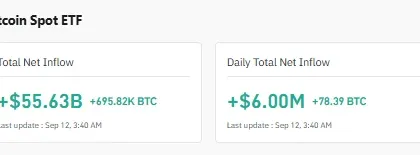
Bitcoin has had a remarkable journey since its inception in 2009, from its early days as a niche digital currency to the launch of the Bitcoin Spot ETF in 2023 which marked a significant milestone in turning Bitcoin into a mainstream asset class. Now institutional investors are able to gain exposure to the world's largest cryptocurrency with ease and BiTC net inflows have already surpassed $1B as of March 15, 2024.

Source: TheBlock
In fact, ever since the BTC ETF was created, the net BTC inflows have been higher than the amount of BTC mined. For example, in the first week of March, the BTC ETF inflows equaled 33,000 Bitcoin, while Bitcoin miners produced 6300 BTC, showing that demand is outpacing supply significantly.

Source: Bloomberg
Additionally, BTC reserves in exchanges continue to dwindle, likely sitting on-chain in self-custodial wallets. The drop in BTC on exchanges has often been viewed as a bullish signal.

Source: CryptoQuant
To top things off, the upcoming halving event in 2024 is happening in April 20, 2024, or roughly 30 days later as of this writing. This will halve the rate at which new bitcoins are mined, which is likely to further exacerbate the supply-demand imbalance, driving prices even higher.

Source: https://watcher.guru/bitcoin-halving
For miners, the halving also means that their cost per bitcoin will increase. The cost of BTC production has often acted as a lower boundary of Bitcoin’s price range, or aka price floor, as miners are not able to sustainably sell below this level. Bitcoin's current production cost is estimated to be about $18,000 to $21,000. According to CoinShares research, the average cost of production is estimated to be around $38k after the halving, rising bitcoin’s floor price.

Source: Coinshares
All these factors have no doubt helped Bitcoin’s price finally achieve an all time high after roughly 850 days, now hitting over $1.3 trillion in market cap. With BTC outperforming most other cryptocurrencies, this has led to BTC continuing to dominate mindshare.
However, despite its meteoric rise, Bitcoin's underlying technology has faced criticism for its limited programmability and scalability. Furthermore, with BTC ETFs growing market share rapidly, there are concerns of BTC centralization, turning Bitcoin into a controlled asset within the traditional financial system.
Could this be Bitcoin’s DeFi summer, awakening this sleeping giant and turn into something more productive while furthering its decentralization?
This is where Bitcoin Layer 2 (L2) solutions come into play. There are now numerous Bitcoin L2 protocols aiming to improve upon Bitcoin's capabilities by introducing additional features and functionalities without compromising the core principles of decentralization and security.
In the following sections, we will explain what a Bitcoin L2 is, the problems it is solving, comparing the different Bitcoin L2s, and exploring possible future use cases and risks that Bitcoin L2 faces
Disclaimer: The content of this article solely reflects the author's opinion and does not represent the platform in any capacity. This article is not intended to serve as a reference for making investment decisions.
You may also like
All Eyes on Walsh: Will the "Central Bank Super Week" See a G7 Rate Hike Wave Next Week?
Amid rising inflation, geopolitical conflicts, and oil prices surpassing $100, G7 central banks are entering a crucial rate-setting week. Driven by higher-than-expected core inflation, the Federal Reserve is expected to implement its first rate hike in three years; the Bank of Japan is likely to raise rates to 1.25%, marking a 30-year high; meanwhile, the Bank of England, the European Central Bank, and the Bank of Canada are also reinforcing their hawkish stances. Global monetary policy is undergoing a major turnaround towards collective tightening.
Uniswap processes $70.6 billion in 30-day DEX trades, outpacing rivals
Morgan Stanley’s $50.6M BTC buying shields market – But rally to $82K has THIS hurdle
Will the Fed "continue raising interest rates"? Will the "tightening cycle" of the late 1980s be repeated?
The Citi report points out that the current macro environment is highly similar to the tightening cycle of 1988-1989, when the economy remained resilient and inflation pressures gradually accumulated, followed by a slowdown in economic activity before policies shifted to easing. During that tightening cycle, the Federal Reserve raised interest rates 16 times in a row.
Crypto prices
More


