
Global Bitcoin ETF holds over 1 million BTC
ChainCatcher news, according to CryptoSlate, according to Bold.report data, all Bitcoin exchange-traded funds (ETFs) in the world currently hold a total of more than 1 million Bitcoins.
It is reported that these ETFs are distributed in many countries including the United States, Sweden, Hong Kong, Germany, Switzerland, Canada, Brazil and Australia. US-based ETFs lead the way, with Grayscale GBTC holding around 292,000 BTC, followed by BlackRock IBIT holding around 280,000 BTC and Fidelity FBTC holding 162,000 BTC. Together, these three giants hold approximately 734,000 BTC.
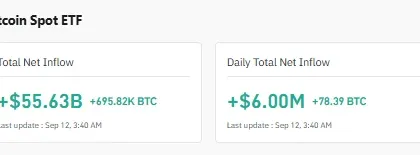
Total net inflows into U.S. Bitcoin ETFs have now reached $13.7 billion, according to Farside data.
Disclaimer: The content of this article solely reflects the author's opinion and does not represent the platform in any capacity. This article is not intended to serve as a reference for making investment decisions.
You may also like
All Eyes on Walsh: Will the "Central Bank Super Week" See a G7 Rate Hike Wave Next Week?
Amid rising inflation, geopolitical conflicts, and oil prices surpassing $100, G7 central banks are entering a crucial rate-setting week. Driven by higher-than-expected core inflation, the Federal Reserve is expected to implement its first rate hike in three years; the Bank of Japan is likely to raise rates to 1.25%, marking a 30-year high; meanwhile, the Bank of England, the European Central Bank, and the Bank of Canada are also reinforcing their hawkish stances. Global monetary policy is undergoing a major turnaround towards collective tightening.
Uniswap processes $70.6 billion in 30-day DEX trades, outpacing rivals
Morgan Stanley’s $50.6M BTC buying shields market – But rally to $82K has THIS hurdle
Will the Fed "continue raising interest rates"? Will the "tightening cycle" of the late 1980s be repeated?
The Citi report points out that the current macro environment is highly similar to the tightening cycle of 1988-1989, when the economy remained resilient and inflation pressures gradually accumulated, followed by a slowdown in economic activity before policies shifted to easing. During that tightening cycle, the Federal Reserve raised interest rates 16 times in a row.
Crypto prices
More


