- Over 356,000 ETH (~$870M) pending, signaling potential sell pressure.
- ETH price declined 3.74%, which is linked to significant recent unlocks.
- Positive inflows continue, but concerns over sustained sell-offs persist.
Ethereum is currently facing a significant surge in withdrawals, with around 143,000 ETH—valued at approximately $350 million—set to become available within 12 hours. Additionally, 212,000 ETH, including rewards from validators exiting the network, is scheduled for withdrawal soon. According to Token Unlocks , a total of 356,570 ETH, worth approximately $870 million, is pending withdrawal.
If these withdrawals are processed, this could signal potential sell pressure on Ethereum. The next 12 hours are expected to see the withdrawal of roughly 142,460 ETH, valued at $346 million. This movement suggests a significant outflow from staking, with the current ETH price at $2,436.81 reflecting a 3.74% decline. Besides, the staking APR has decreased by 12.56%, now at 3.30%, indicating lower participant rewards.
Ethereum has recently experienced a substantial increase in staking activities, with a net balance rise of 108.18%, amounting to 15,260 ETH, or $38.04 million. Since the Shanghai Fork, the net staking balance has reached 13.75 million ETH, worth $33.74 billion. However, withdrawals have been significant, with 16,130 ETH withdrawn yesterday, contributing to 17.13 million ETH withdrawn since the Shanghai Fork . At the same time, 31,390 ETH was deposited yesterday, adding to 30.88 million ETH deposited post-fork.
Historically, large ETH unlocks have coincided with price declines. For example, ETH peaked at $3,147.63 on July 13, 2024, but dropped to $2,420.60 by August 8, 2024. This downward trend has been linked to significant unlocks, such as the $0.69 billion worth of ETH unlocked around mid-July, which likely contributed to downward price pressure as stakers may have sold their assets.
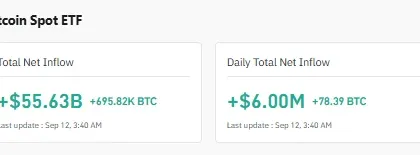
Meanwhile, Ethereum saw a strong rebound on Monday but quickly lost those gains in the following days as Jump Trading continued its selling spree. However, this phase appears to be nearing its end. As a result, the ETH/BTC pair seems likely to rotate back up, especially as inflows remain positive.
Disclaimer: The information presented in this article is for informational and educational purposes only. The article does not constitute financial advice or advice of any kind. Coin Edition is not responsible for any losses incurred as a result of the utilization of content, products, or services mentioned. Readers are advised to exercise caution before taking any action related to the company.