
Volume 196: Digital Asset Fund Flows Weekly Report

Low inflows overall at US$30m, but Solana suffers its largest outflows on record
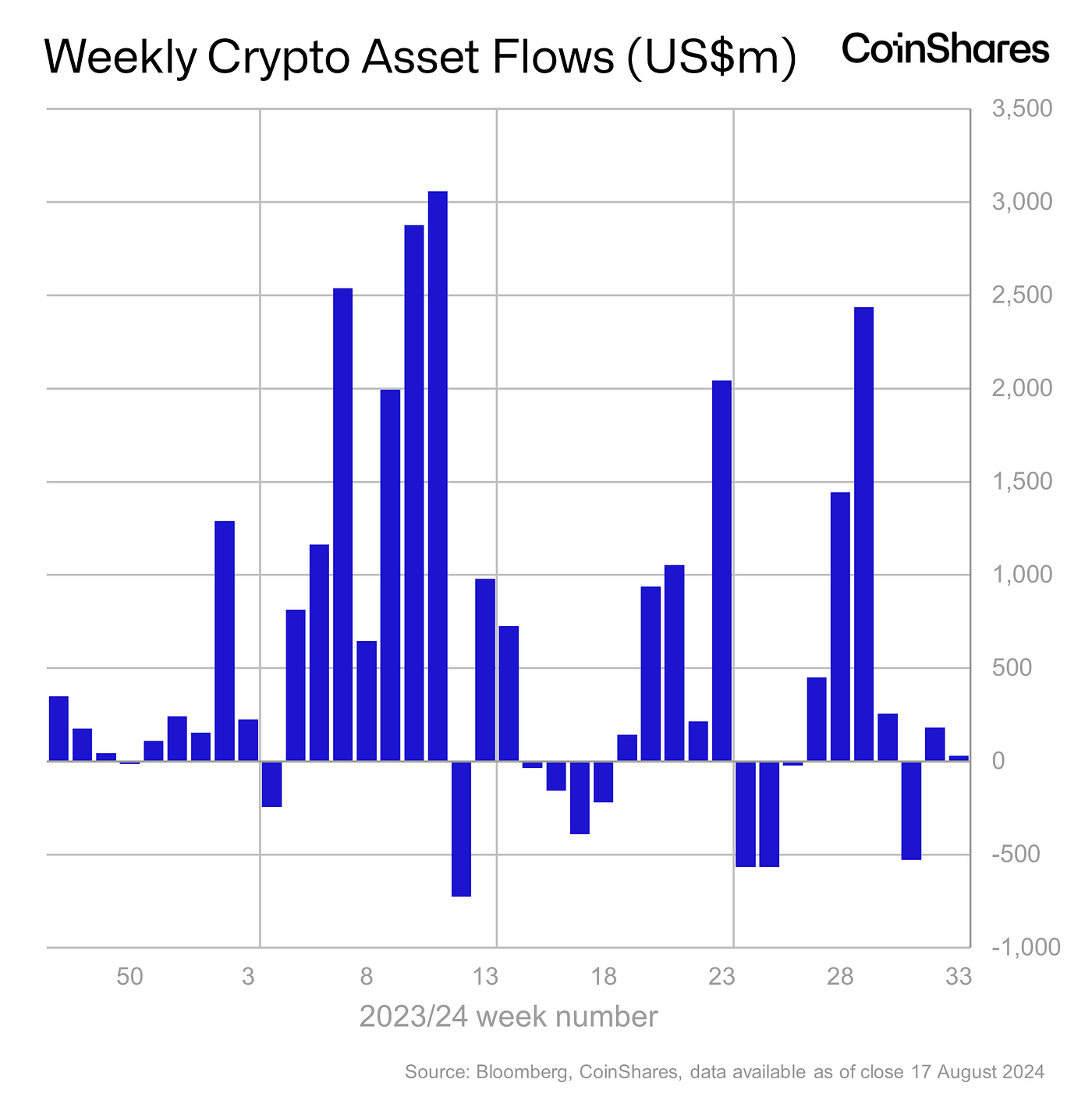
- Last week, digital asset investment products experienced minor inflows totalling US$30m, as recent macroeconomic data implied the FED were less likely to cut interest rates by 50 basis points in September.
- Ethereum saw only US$4.2m inflows last week, although this masked a flurry of activity between providers.
- Solana saw outflows of US$39m, the largest on record, as it faced a sharp decline in trading volumes of memecoins, on which it heavily relies.
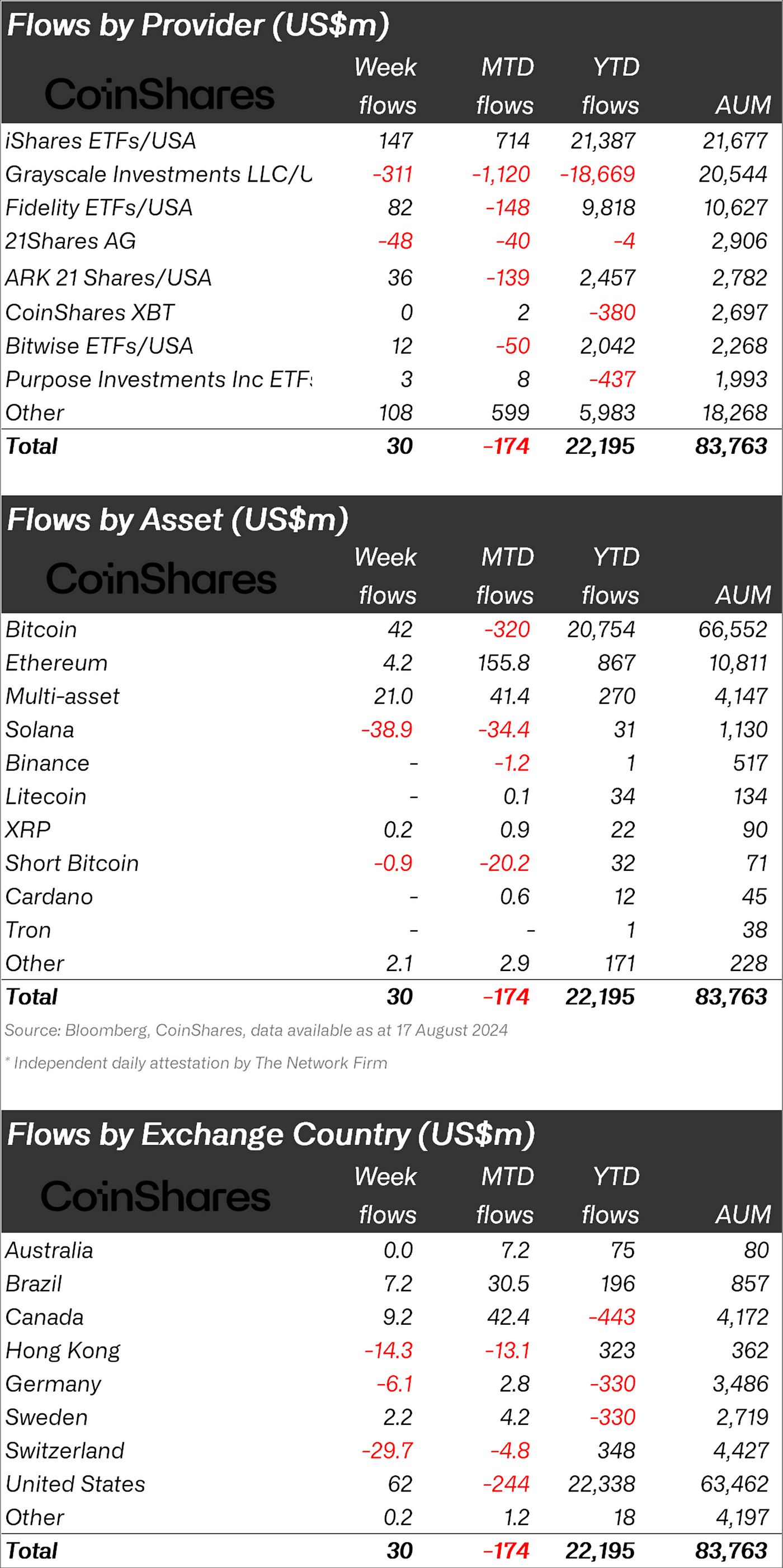
Last week, digital asset investment products experienced inflows totalling US$30m. However, this modest figure conceals varying trends among different investment product providers, as established providers continued to lose market share to issuers of newer investment products. Weekly trading volumes on investment products fell to nearly 50% of the week prior at US$7.6bn, as recent macroeconomic data implied the FED were less likely to cut interest rates by 50 basis points in September.
Flows were very mixed from a regional perspective, the US, Canada and Brazil saw inflows of US$62m, US$9.2m and US$7.2m respectively, while Switzerland and Hong Kong saw the most significant outflows totalling US$30m and US$14m respectively.
Bitcoin saw inflows saw the most significant inflows, totalling US$42m, while short-bitcoin ETFs saw outflows for the second consecutive week totalling US$1m.
Ethereum saw only US$4.2m inflows last week, although this masked a flurry of activity, with new providers seeing US$104m inflows, while Grayscale saw US$118m outflows.
Solana saw outflows of US$39m, the largest on record, as it faced a sharp decline in trading volumes of memecoins, on which it heavily relies.
Disclaimer: The content of this article solely reflects the author's opinion and does not represent the platform in any capacity. This article is not intended to serve as a reference for making investment decisions.
You may also like
The Capital Trends Behind the AI Computing Power Rebound: JPMorgan Fund Flows Reveal Retail Buy-In "Shrinking," Pouring Into Nvidia, SanDisk and Other Computing Power Core Companies
What has been revealed is not a "complete withdrawal of retail investors from AI," but rather a significant slowdown in overall market entry pace under macroeconomic pressure, with stock selections becoming more concentrated. In response to the Federal Reserve's unanimous decision to raise interest rates by 25 basis points, increasing the policy rate to 3.75%–4.00%, JPMorgan's assessment is: if this is simply a withdrawal of last year's "insurance-style rate cuts" during a shallow rate hike cycle—and if corporate earnings remain strong and the Middle East situation does not further spiral out of control—the stock market is still capable of absorbing rising interest rates.
Vote Result 7-2! Bank of Japan Raises Interest Rates at Fastest Pace Since 1990, Does Not Signal a Clearly More Hawkish Stance
The Bank of Japan has raised interest rates to 1.25%, marking the highest level since 1995 and the sixth increase since exiting the negative interest rate policy in March 2024. Out of the nine committee members, Asada and Sato voted against the hike, citing the current economic situation, reflecting ongoing internal disagreements over further tightening. In its statement, the Bank of Japan indicated it will continue to raise rates and adjust the degree of monetary easing, but the forward guidance language showed limited changes from the July statement, without sending notably more hawkish signals.
Crypto prices
More


