Ether ( ETH ) price has climbed above $1,700 after 16 days of selling pressure caused by macroeconomic uncertainty and a sharp decline in onchain activity. Despite the rebound, Ether has underperformed the broader altcoin market by 23% year-to-date.
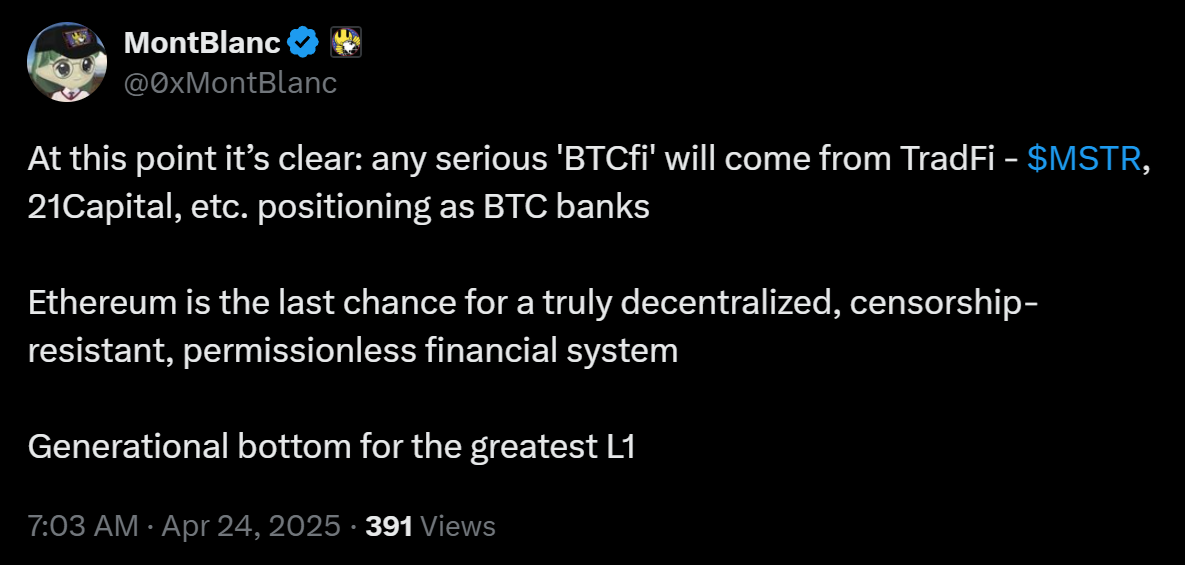
Some traders claim that ETH is set for a “generational” bull run by offering a “truly” decentralized and permissionless financial system, but is that really the case?
Source: X/0xMontBlanc
Ether was one of the few major cryptocurrencies that did not reach a new all-time high in 2025, unlike competitors such as Solana ( SOL ), Tron ( TRX ), and BNB ( BNB ).
Some critics argue that moving away from proof-of-work mining removed a competitive advantage that Ethereum once had over its rivals.
Ethereum fee drop signals ETH price weakness
Eventually, Ether may outperform its competitors, even if only for a short period, and influencers who are calling for a “generational bottom” will celebrate their predictions, despite the lack of strong fundamentals to support lasting price growth. However, considering the 95% drop in Ethereum fees since January, the chances of an immediate ETH surge seem low.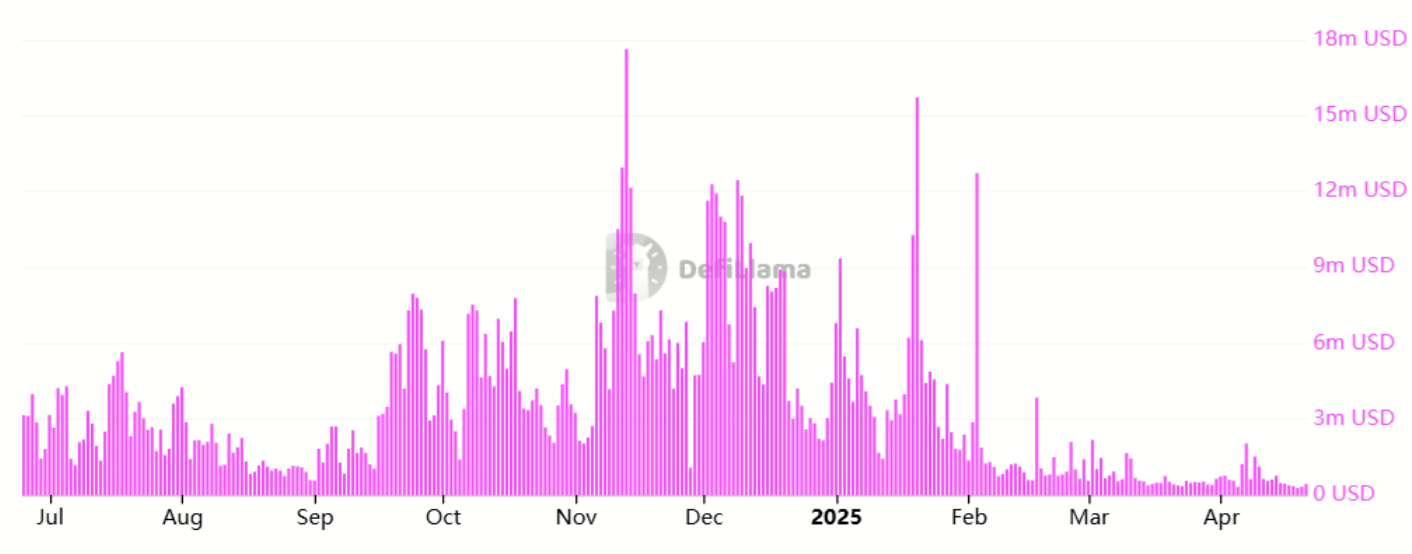
Ethereum network daily fees, USD. Source: DefiLlama
The low demand for data processing on the Ethereum network causes ETH to become inflationary, as the built-in burn mechanism is not enough to balance the new coins issued to cover staking rewards.
Despite being the clear leader in Total Value Locked (TVL), traders are generally uninterested in this metric since it hasn’t translated into higher demand for the Ethereum network or increased scarcity for ETH.
As a result, even if Ethereum’s fundamentals improve, optimism among ETH holders is declining, while competitors—especially Solana ( SOL ) and XRP ( XRP ) investors—are hopeful about the approval of their spot exchange-traded funds (ETFs) in the US. Currently, spot ETFs in the US are only available for Bitcoin ( BTC ) and Ether ( ETH ), so additional offerings would likely reduce the potential institutional demand for altcoins.
Adding to the concerns, US-listed spot Ether ETFs saw $10 million in net outflows between April 21 and April 23, while similar BTC instruments experienced record-breaking inflows.
History shows ETH price rallies seldom last long
Historical evidence does not favor a lasting outperformance compared to competitors, which lowers the odds of a sustainable ETH rally.
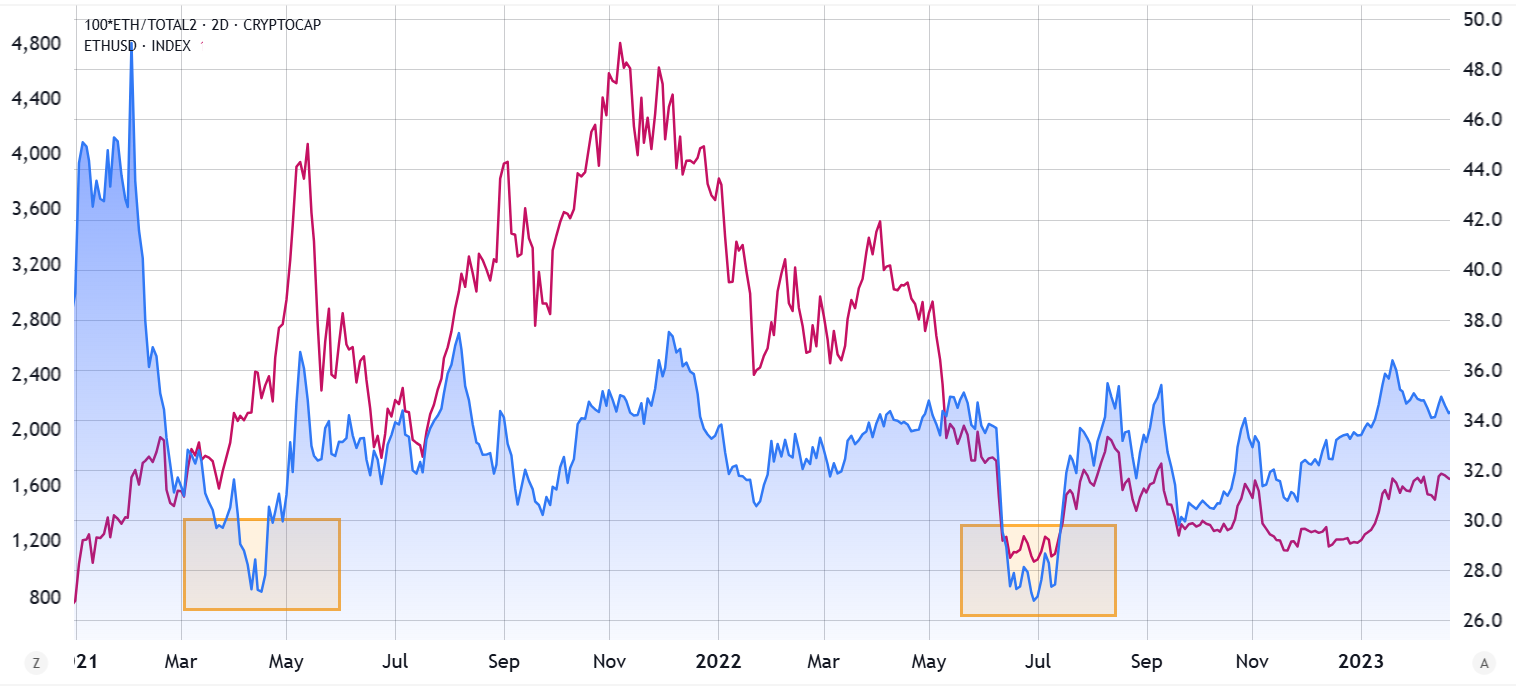
Ether market share among altcoins. Source: TradingView / Cointelegraph
For example, Ether’s market share in the altcoin capitalization reached a low point in June 2022 at around 26.5% when the ETH price dropped below $1,100. After a quick rally to $2,000 by August 2022, the momentum faded, and ETH’s price fell below $1,200 less than three months later. This sudden correction likely left many investors frustrated, as they had to wait eight months for ETH to reclaim $2,000 in April 2023.
A similar pattern happened in April 2021, when Ether’s altcoin market share bottomed out at 26.8%. After that, the ETH price climbed from $2,100 to $4,200 by May 2021, only to fall below $2,000 the following month. Again, traders who bought near the cycle top had to wait six months just to recover their investment. This history has taught Ether traders to take profits quickly, which reduces the chances of reaching a new all-time high.
It is difficult to pinpoint what triggered previous Ether bull runs, especially as the narrative has shifted from utility tokens to NFT marketplaces, artificial intelligence, memecoins, and, more recently, RWA tokenization. While some influencers believe in strong ETH momentum, others warn there could be another 15% drop compared to Bitcoin’s performance.
In the end, historical evidence does not support a lasting ETH price rally, even if it bottoms out relative to the broader altcoin market capitalization.
This article is for general information purposes and is not intended to be and should not be taken as legal or investment advice. The views, thoughts, and opinions expressed here are the author’s alone and do not necessarily reflect or represent the views and opinions of Cointelegraph.