
Mobius Token Smart Contract Hack on BNB Chain Drains $2.15 Million

The Mobius attacker used Tornado Cash to obscure the stolen fund flows, making recovery efforts difficult.
A critical vulnerability in the Mobius Token (MBU) smart contract on BNB Smart Chain has led to a $2.15 million loss, adding to the growing list of crypto-related exploits in 2025. Mobius is a lesser-known project within the BNB ecosystem.
The attack, confirmed by Web3 security firm Cyvers on May 11, involved a malicious hacker who took advantage of a flaw in the MBU minting mechanism.
Mobius Attacker Moves Fund Through Tornado Cash
According to Cyvers, the incident began at 07:31 UTC when a wallet (0xB32A5) deployed a rogue contract. Just two minutes later, another address (0x631adf) initiated a series of suspicious transactions.
Using only 0.001 BNB, the attacker minted 9.73 quadrillion MBU tokens and quickly exchanged them for stablecoins, netting $2.15 million. In the same process, the attacker also gained an additional 28.5 million MBU tokens.
After the exploit, the stolen assets were moved to Tornado Cash, a popular protocol that anonymizes transactions.
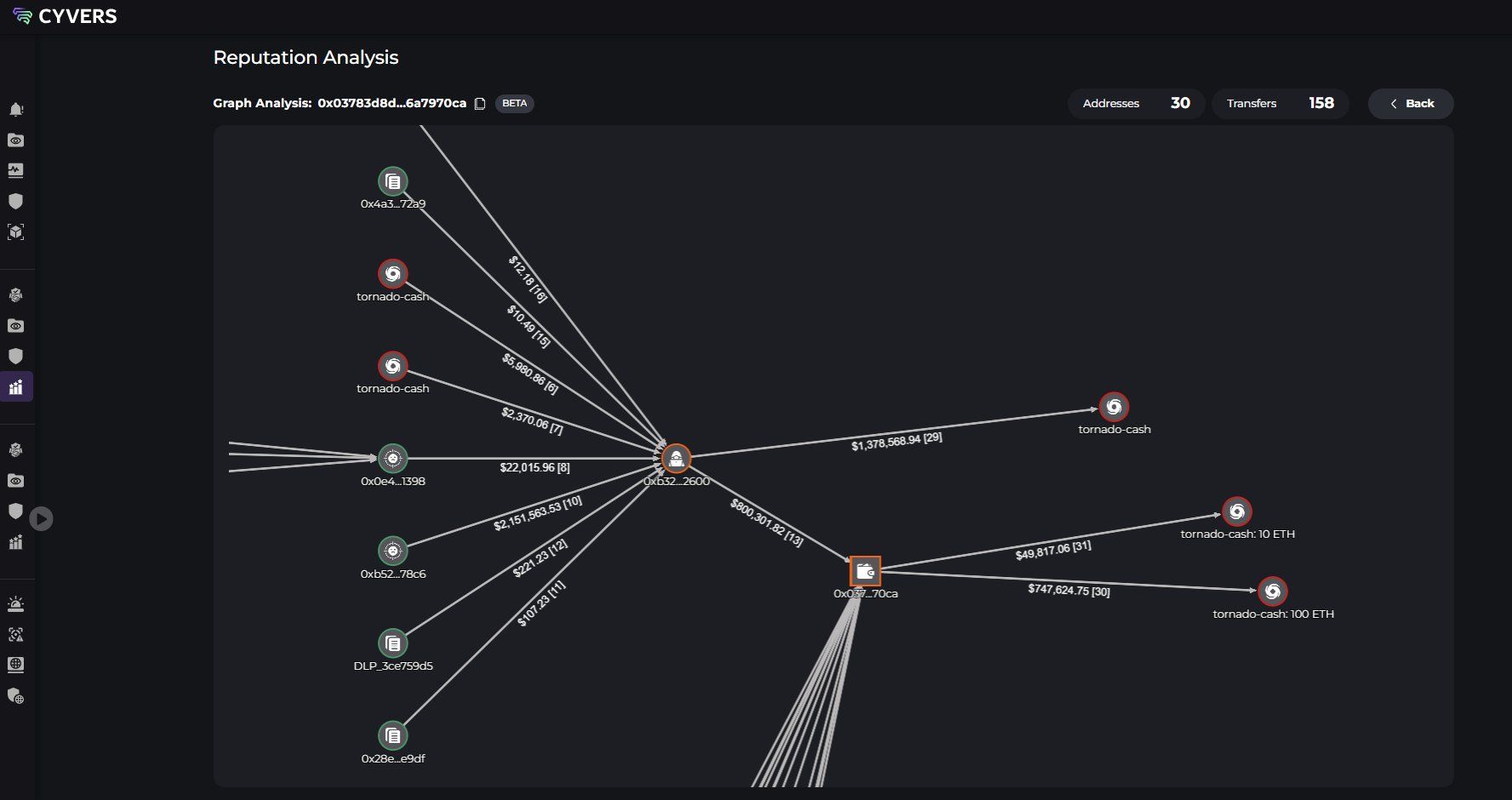 Mobius Attacker Fund Flow Through Tornado Cash. Source:
Cyvers
Mobius Attacker Fund Flow Through Tornado Cash. Source:
Cyvers
The method and speed of the exploit point to a calculated move to evade tracking and asset recovery. This incident further highlights the persistent vulnerabilities facing smart contract-based systems.
Meanwhile, this Mobius hack makes it the latest victim in a wave of blockchain exploits that have resulted in the loss of around $2 billion across various platforms, including Bybit.
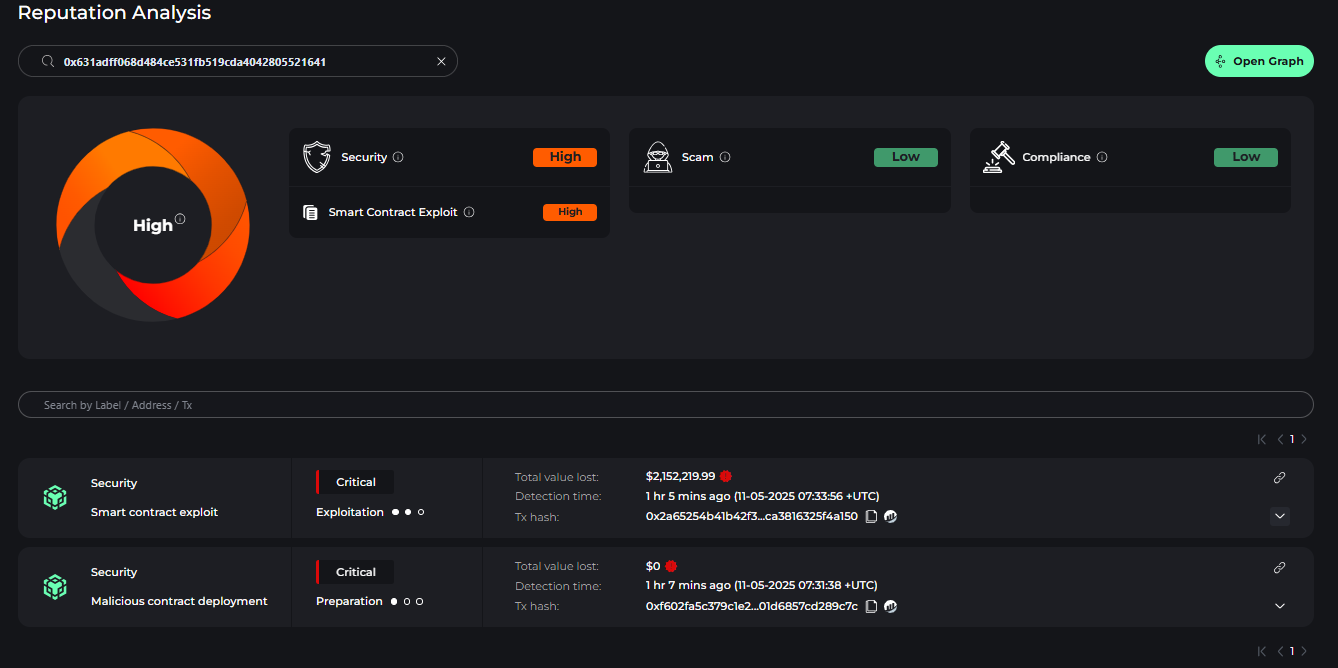 Funds Drained from Mobius. Source: Cyvers
BNB Chain Activity Surges
Despite isolated incidents like the Mobius breach, BNB Chain is witnessing a significant resurgence in user and developer activity. Over the past months, the network has reemerged as a top contender in the DeFi space.
Data from DefiLlama shows that the total value locked (TVL) on BNB Chain has surpassed $10 billion, reaching a three-year high. However, it is still significantly below the 2021 all-time high of more than $40 billion.
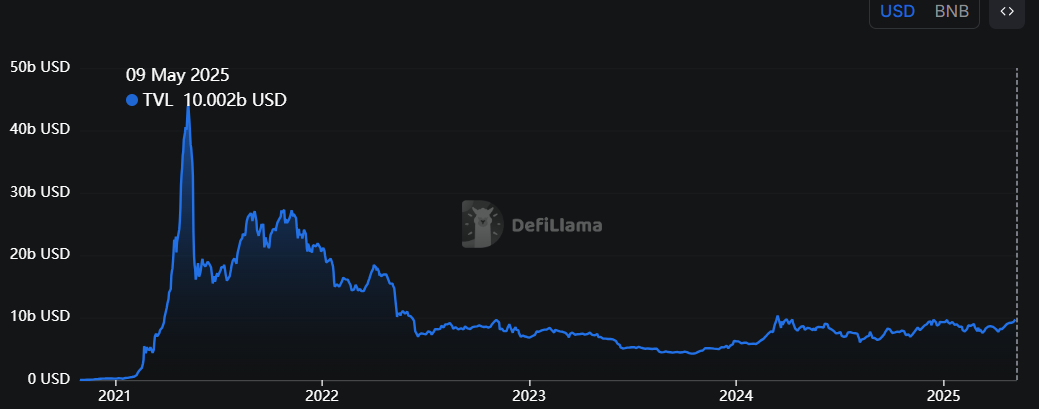 BNB Chain TVL. Source:
DeFillama
BNB Chain TVL. Source:
DeFillama
BNB Chain also recently claimed the top spot in the decentralized exchange (DEX) sector, outpacing both Ethereum and Solana.
Market observers noted that the network’s growth is fueled by fresh institutional interest, an increase in DeFi participation, and strong demand for on-chain assets.
Moreover, the momentum can also be partly attributed to Binance’s continued influence and Changpeng Zhao’s renewed focus on the blockchain network.
Disclaimer: The content of this article solely reflects the author's opinion and does not represent the platform in any capacity. This article is not intended to serve as a reference for making investment decisions.
You may also like
To deliver computing power, Oracle uses trucks to transport natural gas to power its data centers
To address pipeline delays in AI data center construction, Oracle has adopted an unconventional energy supply method by transporting compressed natural gas via trucks, which has already been implemented in Utah and Texas, and is also being considered for the "Project Jupiter" in New Mexico. However, this solution costs four times as much as pipeline natural gas and is limited in scale, covering only a small fraction of the project's total capacity.
Aptos insider vesting ends, cutting APT unlocks by 60%
US Treasury yields soar to a 24-year high; US Treasury advisors expect future declines as AI investments and energy shocks drive up borrowing costs
David Zervos, senior advisor to U.S. Treasury Secretary Yellen and a veteran Wall Street professional, stated on Thursday that despite the recent surge in U.S. Treasury yields to their highest levels in decades, the current real yields are significantly elevated compared to historical levels, suggesting room for a decline in the future.
St. Louis Fed President: Further rate hikes needed over the next 6 to 9 months; inflation remains the top issue for the US economy
St. Louis Federal Reserve President Musalem said on Thursday that the Federal Reserve still needs to raise interest rates further in order to bring U.S. inflation back to the 2% target in a timely manner.
Crypto prices
More


