
Spot crypto ETFs gain bipartisan support in South Korea's upcoming presidential election

Quick Take Kim Moon-soo, the right-wing party candidate for South Korea’s presidential election next month, stated his support for local spot crypto ETFs. Both leading candidates for the upcoming election have pledged to allow spot crypto ETFs to trade in South Korea.
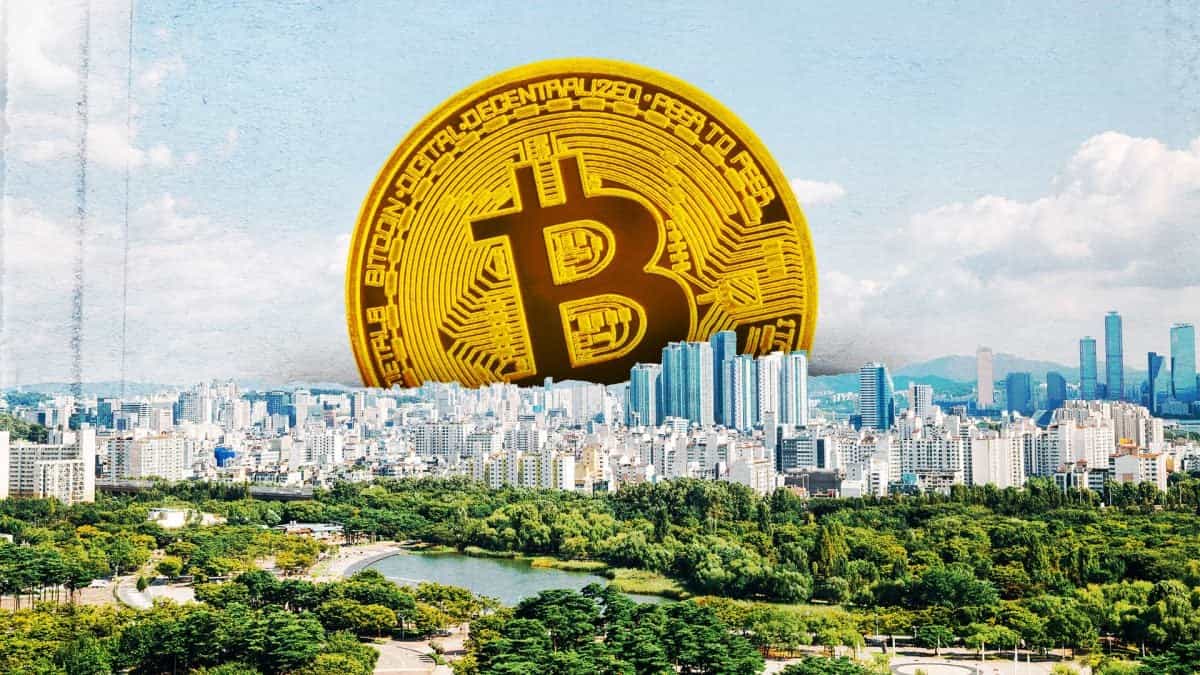
Kim Moon-soo, the presidential candidate from South Korea's main right-wing party, officially announced Monday that he would support the local adoption of spot cryptocurrency exchange-traded funds as part of his election pledges.
According to South Korea's National Election Commission, Kim of the People Power Party vowed to allow spot crypto ETFs in the country's financial system, in an aim to foster wealth accumulation in the middle class.
Kim also pledged to institutionalize the local crypto market in a fair and transparent environment by establishing additional legal frameworks around the crypto industry.
South Korea's top financial regulator, the Financial Services Commission, currently does not permit the local issuance or trading of spot crypto ETFs, having concluded last year that there is no legal basis for bitcoin or other cryptocurrencies to serve as underlying assets for such products.
With Kim's promise to support spot crypto ETFs, both presidential candidates from the country's two major political parties have now formed a bipartisan consensus.
Last week, Lee Jae-myung , runner for the left-wing Democratic Party of Korea, vowed to introduce spot crypto ETFs in the country as part of his promise to provide more opportunities for South Korea's younger generation.
The People Power Party and the Democratic Party of Korea together hold 277 of the 300 seats in South Korea's unicameral legislative body.
According to a recent poll from Flower Research, Democratic Party's Lee had a 54% approval rating while right-wing candidate Kim had 20.6%, local news outlet Jose Ilbo reported . Reform Party's Lee Jun-seok received 6.9% support in the same poll.
In a separate poll from Realmeter, the Democratic Party candidate had a 52% rating, Kim saw 31%, and Reform Party's Lee had 6.3%, according to a report from Hankyoreh news outlet.
South Korea's untimely presidential election comes as former right-wing President Yoon Suk-yeol was impeached last month due to his brief martial rule imposition last December. The election is scheduled for June 3, 2025.
Meanwhile, spot crypto ETFs in the U.S. have proven successful beyond initial expectations. U.S. spot bitcoin ETFs and ether ETFs have cumulatively seen over $43 billion in net inflows, according to data from SoSoValue. U.S. issuers have also filed to launch spot ETFs based on other cryptocurrencies, such as XRP and Solana, which are currently under review.
Following the success in the U.S., South Korea's FSC indicated it would reexamine allowing spot crypto ETFs to trade in the local market.
Last week, FSC Chairman Kim Byung-hwan stated that the agency agrees with the election pledges regarding spot crypto ETFs, and that it would discuss implementation with the upcoming administration.
Disclaimer: The content of this article solely reflects the author's opinion and does not represent the platform in any capacity. This article is not intended to serve as a reference for making investment decisions.
You may also like
SpaceX, Broadcom, and Oracle Issue Massive Bonds! The U.S. Bond Market Is “Overflowing,” “Concentration Is Increasing, Ultimately All Influenced by the AI Cycle”
The AI financing wave has generated over $150 billion in debt demand within a week, saturating the public debt market and forcing a massive shift toward private credit and SPVs. "Crowding-out effects" in the debt market have pushed the 10-year US Treasury yield back to 5.31%, while CCC-rated junk bond spreads are nearing the historic threshold of 1,000 basis points. Oracle's five-year default probability has been priced by the market at over 20%, and SpaceX's CDS has nearly doubled in four months. Goldman Sachs warns that AI borrowers are "prepared to pay any price," with consumers, small businesses, and even governments ultimately footing the bill.
SpaceX Acquires Low-Frequency Spectrum with Massive Investment, Enters Mobile Operator Market; US Telecom Stocks Plummet
SpaceX announced the acquisition of 800MHz low-band spectrum covering the entire U.S. and has been authorized by the FCC to deploy 15,000 direct-to-cell satellites, officially declaring its independent entry into the U.S. mobile carrier market. Following the news, AT&T, T-Mobile, and Verizon all fell by more than 6% after hours. With $93.5 billion in cash and 12 million Starlink subscribers, Elon Musk is using this "final piece of the puzzle" to reshape the competitive landscape of the entire telecommunications industry.
Crypto prices
More


