
Trump Crypto Dinner Transcript: A Carefully Orchestrated "Performance" at the Intersection of Politics, Technology, and Capital

「I witnessed firsthand how a new narrative logic entered the center of power... The whole scene has packaged cryptocurrency into a new coordinate of loyalty and influence.」
Original Title: "Trump Dinner Scene Observation: Kronos Research CIO Shares Cryptocurrency and Political Pinnacle Intersection"
Original Source: Odaily Planet Daily
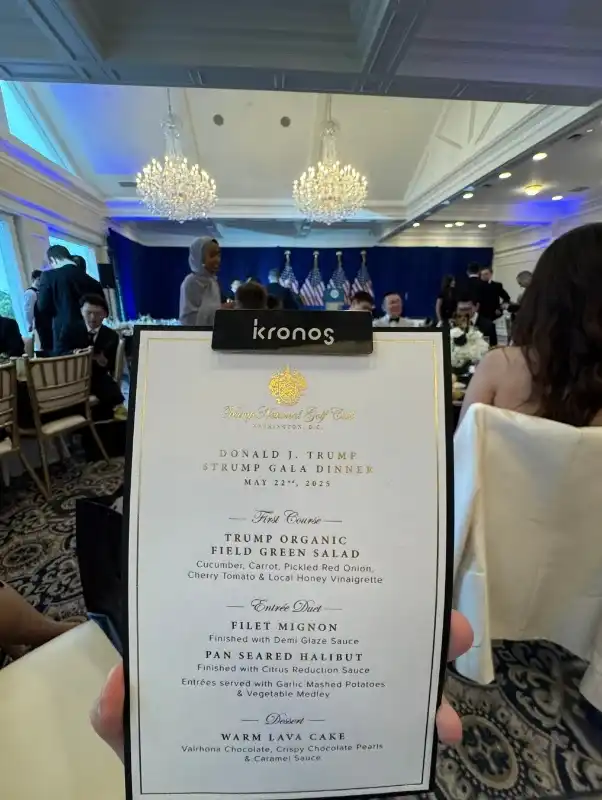
On the evening of May 22 Eastern Time, Kronos Research CIO Vincent was invited to attend a VIP dinner hosted by Trump at the National Golf Club. Immediately after the dinner, Odaily Planet Daily contacted Vincent for an interview about his observations and feelings at the dinner, including highlights of the dinner process, composition and discussions of the attendees, information related to regulation and industry impact, post-dinner reflections, etc. Vincent also expressed on X that by holding Trump's token, people have the opportunity to meet the U.S. President in person and listen to his speech, which is an unprecedented opportunity... Trump affirmed his support for cryptocurrency, which was inspiring and uplifting.
Event Recap
Odaily Planet Daily: How long did the entire dinner last? What was the general process like? Was there any part that made you feel "This is not an ordinary dinner event"?
Vincent: The dinner started receiving guests at 5:30 pm and lasted until around 10:30 pm. The overall arrangement was relatively orderly: guests arrived gradually and freely interacted at round tables; after a brief address by President Trump, the dinner officially began. The most memorable part for me was the "exclusivity" created on-site—especially during the segment where he met privately with the top 25 token holders. The entire atmosphere was not like a traditional social dinner, and both the security arrangements and the validation requirements for token holders added a certain "token threshold" entry mechanism to the event. To some extent, it also conveyed a message: cryptocurrency, especially tokens, is no longer just a speculative tool but is evolving into a new type of asset at the social and political level.
Odaily Planet Daily: Was Trump's demeanor and speech content as "entertaining" or boring as expected? Were there any remarks that were shocking or inadvertently revealed deep signals?
Vincent: After a brief private conversation with the top 25 token holders, Trump himself gave a public speech to all the guests. His speech style integrated some light-hearted humorous sections and released certain policy signals—including reiterating support for cryptocurrency, proposing the establishment of a "U.S. Bitcoin Reserve" concept, and positioning crypto as part of the "America First" economic strategy. Although the speech had many entertaining elements, what is more worth noting is the strategic intent he conveyed: he clearly recognizes the influence of the crypto community in the current political landscape and is trying to establish connections with it and leverage its voice.
Odaily Planet Daily: Who did you sit with or interact with? Did any figures from outside the crypto circle, such as the financial or political realm, appear?
Vincent: The on-site guests had diverse backgrounds but were generally of a high caliber, ranging from crypto-native entrepreneurs and liquidity providers to investors from Web2 or traditional financial backgrounds. I engaged with many key players such as trading institutions, exchanges, and mining professionals. It is worth noting that some of the guests were not actively involved in the crypto space for an extended period, indicating that the impact of this event has extended beyond the industry itself, attracting more attention from individuals interested in macro trends, capital flows, and even political influences.
(All images in this article are from Vincent)
Odaily Planet Daily: Was the security and screening as strict as rumored? How did you pass through KYC and wallet background checks?
Vincent: The overall security was indeed as stringent as expected, with multiple security checkpoints set up at the entrance to ensure the safety of individuals and the venue. Regarding the participation process, all guests had to undergo coin verification based on on-chain snapshots, along with basic identity and background verification processes. This was a rather typical scenario: on-chain behavior was used for the first time as a "passport" applied in a real-world political setting, making this attempt to combine blockchain with real-world identities quite symbolic.
Odaily Planet Daily: Were there any scenes, speeches, gifts, dishes, or arrangements at the dinner that were either "laughable or tearful" or "politically charged"?
Vincent: There were indeed some "performative" elements at the event, such as Donald Trump awarding watches to the top four holders. These designs carried a certain symbolic meaning in form and also had a strong dramatic flair. From a market perspective, this is also an excellent example of observing how tokens are used as political engagement tools. Tokens not only provide eligibility but also transform into real-world rewards and exposure opportunities. While the overall atmosphere was relatively light-hearted and did not involve deep policy discussions, the underlying signals were very clear: tokens are being redefined as a brand-new channel to enter certain social strata or fields of influence.
Reflection and Insight
Odaily Planet Daily: As a major holder of the TRUMP token participating in this soirée, looking back on your decision to increase your position, do you think this was a purely emotional investment or a form of genuine political and financial behavior?
Vincent: Our holding of TRUMP was based on early market signals and narrative momentum, rather than a political stance. As market makers, we engage in trading in markets with concentrated liquidity. TRUMP later evolved into something that goes beyond the token itself; it became a gateway connecting real-world access and influence. From this perspective, it indeed reflects an experiment where politics and finance merge, but our participation was purely based on structural judgment and risk management considerations.
Odaily Planet Daily: As a blockchain entrepreneur, was there a moment when you realized, "I am experiencing a historic moment in crypto narrative"?
Vincent: Yes—it wasn't a sudden epiphany but rather a gradually emerging, even somewhat surreal cognitive process. Seeing token holders gaining political exposure due to on-chain activities completely changed my perception of how "influence is being redistributed." From the perspective of someone who has long observed market structure, this marks the point where crypto assets are transitioning from financial instruments to a form of social and political identity expression. It's not just "participating in history" but witnessing firsthand how a new narrative logic is entering centers of power. For the entire industry, this is a highly symbolic signal.
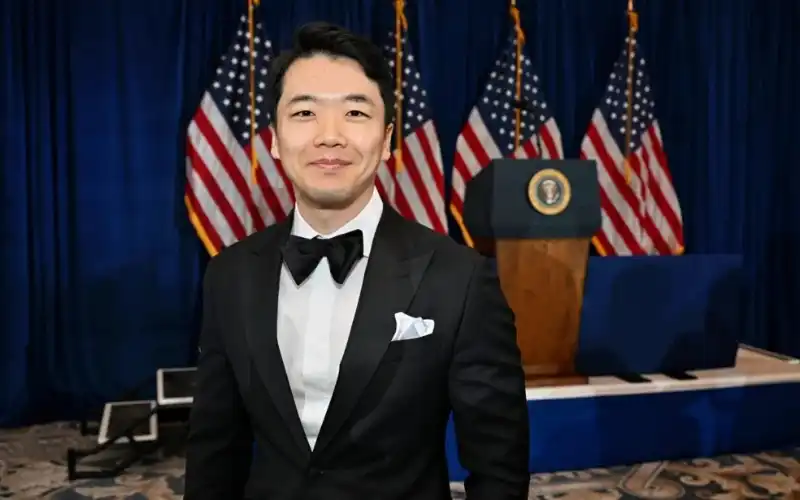
Odaily Planet Daily: If we were to say that this soirée was a "performance," what do you think each character's script was? What role do you think you played?
Vincent: This was undoubtedly a carefully crafted "performance"—Trump played the role of a populist idol, the guests were akin to early believers, and the entire setting packaged cryptocurrency as a new loyalty and influence coordinate. I positioned myself as an observer—engaged but more focused on analyzing the underlying operational logic. I took part in this performance not to express a position but to understand: what it means for market structure when politics, technology, and capital converge in the same narrative.
Odaily Planet Daily: After the banquet, was there a moment when you had a new realization or reflection on holding TRUMP or participating in such activities?
Vincent: After the banquet, a clearer point is: the market is far more than just driven by models and algorithms; it is also deeply influenced by emotions, cognition, and power structures. Tokens like TRUMP are, to some extent, becoming a "narrative container," whose value does not rely solely on fundamentals but is more based on its ability to connect with culture, identity, and social participation. For us, holding such assets does not mean endorsing a certain political position but rather understanding its symbolic function from a market structure perspective.
Industry Insights
Odaily Planet Daily: Do you feel that crypto is becoming more deeply embedded in power dynamics? Does it validate viewpoints such as "Web3 entering the national narrative"?
Vincent: This event once again underscores a reality: crypto is no longer just a technological innovation but has become a cultural phenomenon with political attributes. You can see this as progress or as posturing, but this transformation itself is real. When "political capital" becomes directly linked to the "token community," the boundaries between governance, incentives, and ideology begin to blur—that is the new feature of our era.
Odaily Planet Daily: Did anyone at the banquet mention topics such as crypto compliance, regulation, RWA, or industry direction? Did any new "regulatory signals" or political stances emerge?
Vincent: The banquet was primarily social with casual exchanges, and there was hardly any in-depth discussion on topics like regulation, compliance, or RWA. There were no explicit policy declarations, but from the repeated remarks on "Bitcoin reserves" and "driving crypto growth," a clearer inclination can be felt: to see crypto as part of the national strategy rather than just a speculative asset. As for RWA, it did not become the focus of onsite discussions, but as an important direction in the industry's development, its presence was reflected in the composition and focus of the attendees, just not systematically expressed in such settings.

Odaily Planet Daily: As a participant in the industry, will Kronos make any strategic adjustments in the US market after experiencing this event?
Vincent: From a strategic perspective, we are closely monitoring the situation. If the regulatory environment evolves towards greater clarity and collaboration, it will indeed create more room for institutions like us to deepen cooperation with the U.S. market. However, we are not the kind of team that reacts quickly to news headlines. Our responsibility has always been consistent—to provide liquidity and efficiency to the global market continuously and steadily, regardless of who is standing on the stage in any market environment.
Disclaimer: The content of this article solely reflects the author's opinion and does not represent the platform in any capacity. This article is not intended to serve as a reference for making investment decisions.
You may also like
Gold price holds critical $4,100 support, but can it break $4,200 as inflation risks loom?
Hinkal joins Mastercard Crypto Partner Program for private stablecoin payments
Chipmaker earnings growth cools to 136% as AI boom lifts S&P 500
Updated: Delta Air Lines warns that as fuel prices hit profits, airline capacity will tighten further
Delta Airlines lowers its annual profit forecast due to an expected increase in fuel costs to $6 billion. The CEO stated that ticket prices have risen by about 20% this year, with limited passenger resistance. Analysts warn that maintaining high ticket prices in 2027 is critical for improving profitability. The article includes comments from the earnings call and analyst remarks. Rajesh Kumar Singh/Shivansh Tiwary, Reuters Chicago, October 9 - Delta Airlines (DAL.N) said on Friday that, despite strong travel demand and rising ticket prices, soaring fuel costs have forced it to cut its 2026 profit expectations by nearly a quarter. So, the airline industry may need to further limit flight growth next year to protect profitability. This warning highlights the increasingly tough challenges faced by U.S. airlines. While strong demand and restricted seat growth have allowed airlines to significantly raise ticket prices and offset higher fuel costs, aggressively increasing flights to capture more demand may intensify competition, making it harder to maintain high fares and protect profits. Based in Atlanta, Delta now expects its annual fuel expenditure to increase by about $6 billion compared to last year—about $2 billion higher than its July forecast—due to the Iran war (link) causing global jet fuel prices to spike. Airlines worldwide are preparing for a prolonged fuel shock. Michael O’Leary, CEO of Ryanair Group RYA.I, said Thursday that high jet fuel prices could persist for another 12-18 months (link), adding more pressure on airlines to raise fares and control costs. https://www.reuters.com/graphics/AUTOMATED-20261008/A4A-JET-FUEL-DAILY-1Y/xmpjwjnmbvr/chart.png “In a high-cost environment, you can’t simply grow your way out,” Delta CEO Ed Bastian said on the earnings call. He noted that the industry has already taken steps to restrict capacity, but more measures will be needed next year to improve profitability. Bastian said Delta raised ticket prices about 20% this year, and passenger resistance has been limited. He is confident that even if fuel costs eventually drop, the high fares can still be maintained. Delta lowered its adjusted annual earnings per share forecast from the July prediction of $6.50-$7.50 to $5.10-$5.60. According to LSEG data, the midpoint of the new range is below analysts’ average expectation of $5.46. Third-quarter adjusted earnings per share were $1.72, four cents below analysts’ average forecast. In midday trading, shares of Delta dropped 1.7%, United Airlines UAL.O fell 1.4%, and both American Airlines AAL.O and Southwest Airlines LUV.N were down about 1%. Delta partly shields itself from rising fuel costs by owning a refinery outside Philadelphia (link), which is expected to generate over $700 million in profits this year. Even with this buffer, the airline expects its fourth-quarter fuel price to rise from $3.61 per gallon in Q3 to $4.25 per gallon. Delta forecasts adjusted fourth-quarter earnings per share to be between $1.15-$1.65, with the $1.40 midpoint roughly matching analysts’ average expectation of $1.39. Fare increases Government data shows that in the first eight months of 2026, U.S. airlines spent $42.9 billion on fuel, an increase of $13.2 billion compared to the same period last year despite slightly reduced consumption. According to the U.S. Bureau of Labor Statistics, strong demand and limited seat growth pushed average U.S. airline ticket prices up by about 25% year-on-year between April and August. https://www.reuters.com/graphics/USA-AIRLINES/FUEL/lbpgdnbzwvq/chart.png Analysts at Melius Research said that despite surging fuel costs, Delta’s ability to raise fares helps keep second-half profits roughly stable. Still, they warn that the company’s profit margin has struggled to improve over the years. “It is critical for margin improvement to maintain or raise fares in 2027,” they wrote in their research report. With industry capacity growth expected to accelerate in Q4, this challenge will likely become even tougher. Deutsche Bank analysts expect the proportion of fuel costs recouped through revenue measures to fall in Q4 and predict full recovery won’t happen until early 2027. Bastian noted that low industry returns are another reason for limiting capacity growth. He said Delta will be cautious with its 2027 capacity plan until the fuel price outlook becomes clearer. He added that international routes may account for a larger share of Delta’s capacity expansion compared to domestic routes. Currently, Delta says its premium cabins and corporate travel business remain strong, and its economy cabin business is gradually improving. With Q4 ticket bookings already exceeding 60%, Delta expects revenue to increase about 20% year-on-year, despite limited capacity growth. Executives said early booking trends for Q1 2027 are also encouraging. (For the convenience of non-native English speakers, Reuters automatically translates its reports into several
Crypto prices
More


