
Ethereum Supply Shock Intensifies With 29% of ETH Locked in Staking

Ethereum’s tightening supply from record staking and leveraged shorts signals a possible bullish breakout—or another sharp correction.
Ethereum (ETH) is on the verge of a dramatic supply shock as leveraged short positions soar to unprecedented levels, staking hits historic highs, and exchange liquidity plummets.
Will this be bullish for ETH, or will another “Black Thursday” event be created?
ETH Supply Shock Gaining Momentum
A chart posted by ZeroHedge on X highlights the Ethereum supply shock with leveraged short positions reaching a record -13,291 in aggregate OTC and cash contracts. This marks the sharpest drop since early 2025, signaling aggressive hedge fund activity.
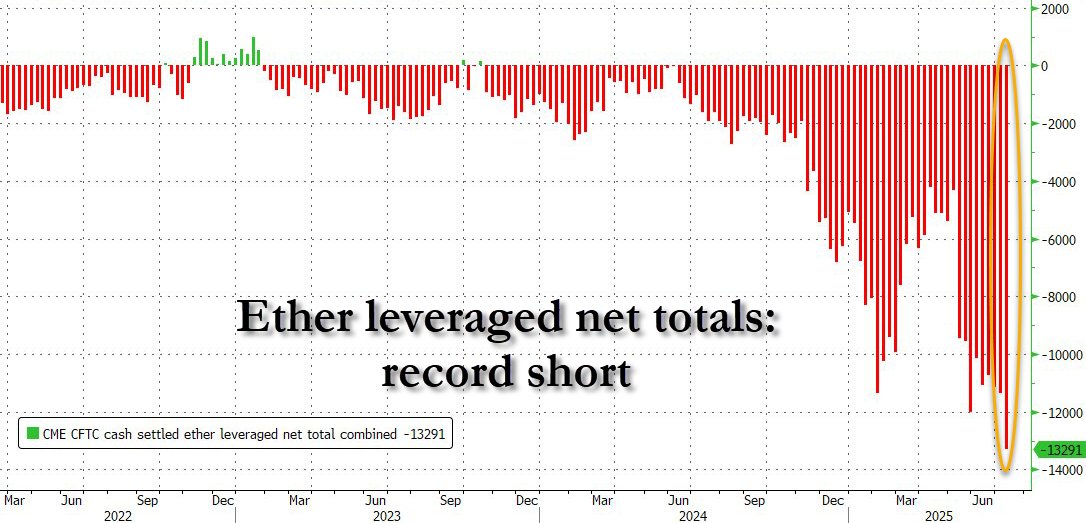 Ether leveraged the biggest shorts on record. Source:
ZeroHedge
Ether leveraged the biggest shorts on record. Source:
ZeroHedge
Crypto expert Fejau notes on X that this isn’t driven by bearish sentiment but by a basis trade strategy. Hedge funds exploit price differences between ETH futures on CME and spot markets, securing consistent profits amid contango.
“Reason for the huge ETH shorts is basis trade. Funds can capture an annualized basis of 9.5% by shorting the CME futures and buying ETH spot with a staking yield of 3.5% (this why its mostly ETH not BTC) for a delta neutral 13%.” Fejau explained.
The ETH supply shock is further intensified by staking surging to an all-time high. According to Dune Analytics, over 29.03% of the total supply is locked, leaving roughly 121 million ETH circulating.
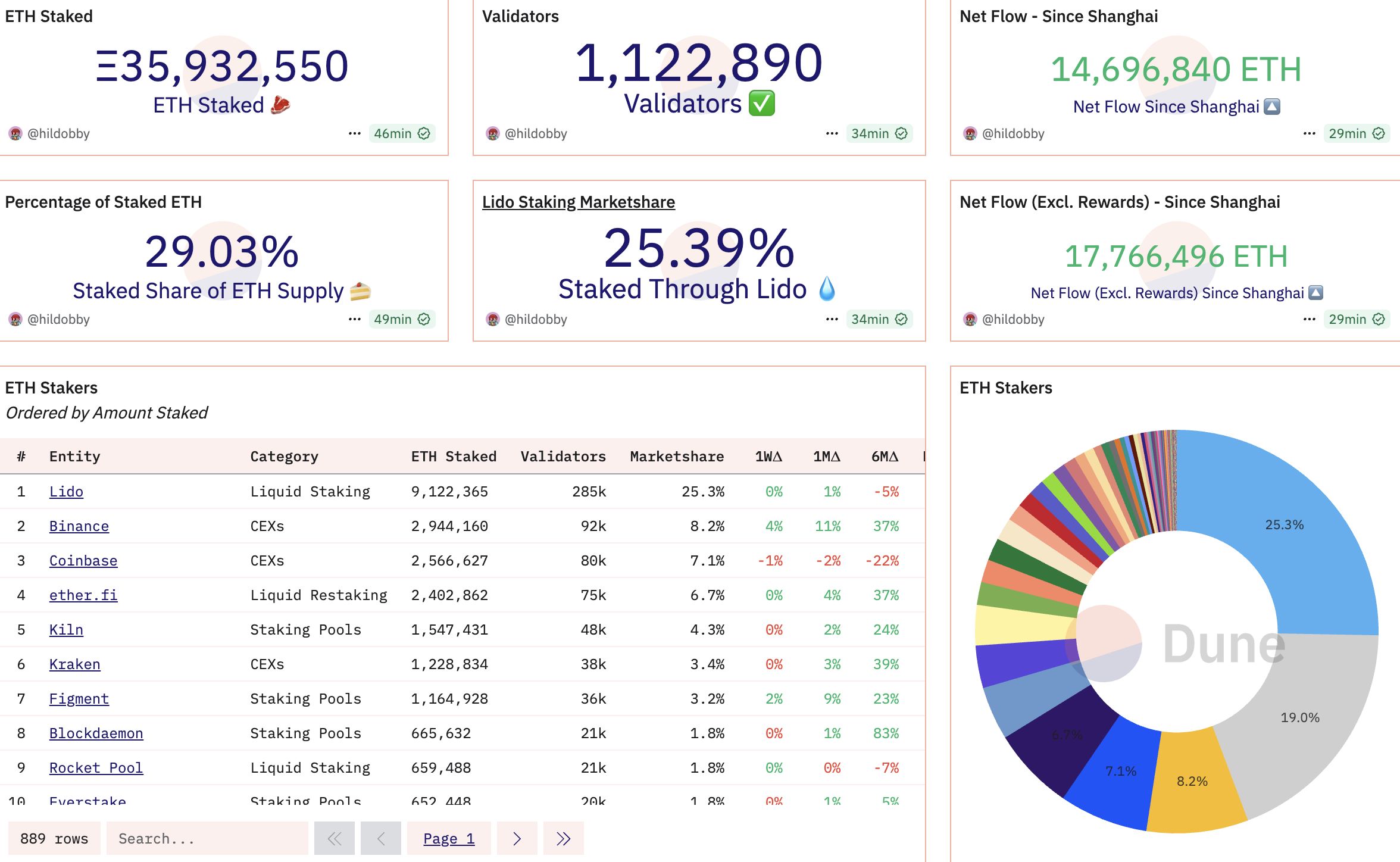 ETH staking ratio. Source:
Dune
ETH staking ratio. Source:
Dune
On-chain data also shows that ETH has been leaving exchanges recently, coinciding with the price of ETH returning to its current $3,000 mark. This is partly due to the accumulation strategy of whales or large companies like SharpLink.
Reduced liquidity also contributes to the upward pressure on prices when demand exceeds supply. Last Friday, 140,120 ETH valued at approximately $393 million were withdrawn from crypto exchanges.
“More than 140,000 ETH, worth roughly $393 million, flowed out of exchanges, marking the largest single-day withdrawal in over a month,” Sentora noted.
MerlijnTrader on X forecasts ETH hitting $10,000 in this cycle, propelled by a potential short squeeze and staking dynamics. ETF staking approvals are expected by year-end, reinforcing the ETH supply shock narrative.
Yet, risks loom large. The basis trade, while lucrative, is vulnerable to sudden volatility, as seen in 2020’s “Black Thursday.” If the Ethereum supply shock fails to drive a price surge, funds could face losses, shaking market confidence.
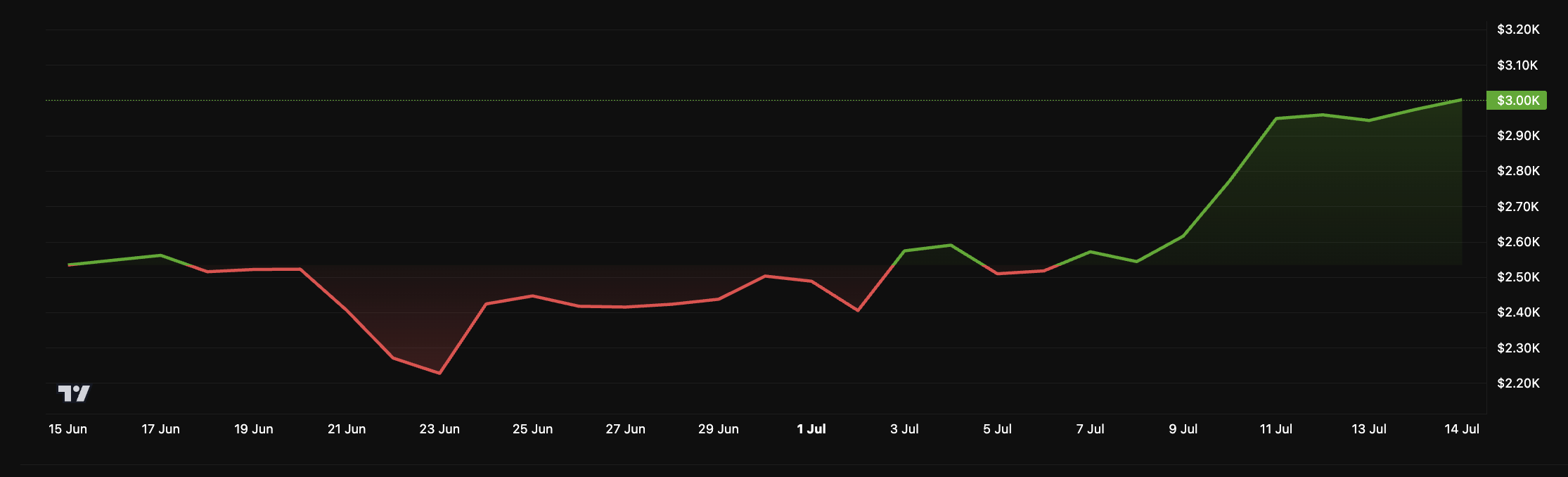 ETH price action. Source:
BeInCrypto
ETH price action. Source:
BeInCrypto
ETH has broken back above the $3,000 mark at the time of this writing. However, the current price is still 38% below the all-time high it reached in November 2021.
Disclaimer: The content of this article solely reflects the author's opinion and does not represent the platform in any capacity. This article is not intended to serve as a reference for making investment decisions.
You may also like
Societe Generale “Super Bear” Questions the AI Bull Market: Frenzy Reminiscent of the Eve of the 1997 Asian Financial Crisis, Productivity Slowdown Masked by Capital Expenditure
Societe Generale strategist Albert Edwards compares the current artificial intelligence (AI) investment boom to the economic bubble before the 1997 Asian financial crisis. He warns that large-scale capital expenditures may be masking stagnant productivity growth, raising doubts about whether the AI frenzy can meet investors’ high expectations.

1.7 Trillion Unlock V.S 1.7 Trillion Buyback: Goldman Sachs Bets on the Latter to Sustain the US Stock Market Bull Run
Goldman Sachs expects US companies to raise $600 billion in 2027, sets S&P target at 8,700 points, and states that buybacks and profits can withstand supply shocks.
Next target 8%? US mortgage rates soar to a three-year high as “higher for longer” trades sweep the real estate market
U.S. mortgage rates are experiencing a sharp upward surge. In just over a month, the average 30-year fixed mortgage rate has climbed by a full percentage point, reaching above 7.5%, the highest level in three years. As a result, homebuyer demand has plummeted, and existing home sales in September are expected to show a significant decline.
Bank of America Hartnett: Interest rate hikes become the biggest bullish factor, the logic of ending the bond bubble is spreading
Bank of America strategist Hartnett has made a counterintuitive assessment: the most favorable event for the stock market before the end of the year would be for the Federal Reserve to proactively raise interest rates in October—using a tightening move to curb the out-of-control long end. If the Fed proves its willingness to control inflation and term premium through an October rate hike, the market may actually stop worrying about the 10-year yield surging toward 6%, thereby easing pressure on stocks. Currently, while US stocks have not yet been brought down by interest rates, cracks are quietly spreading in South Korean brokers, French government bonds, and CCC-rated credit bonds.
Crypto prices
More


