
US Treasury Secretary Bessent says government won't buy bitcoin for strategic reserve but will retain seized assets as crypto markets see red

Quick Take Treasury Secretary Scott Bessent said in a television interview that the U.S. would not be buying bitcoin for its strategic reserve. However, he reiterated that the government would continue to use confiscated assets to build it up and would not sell bitcoin currently in the reserve, valuing it at $15 to $20 billion.
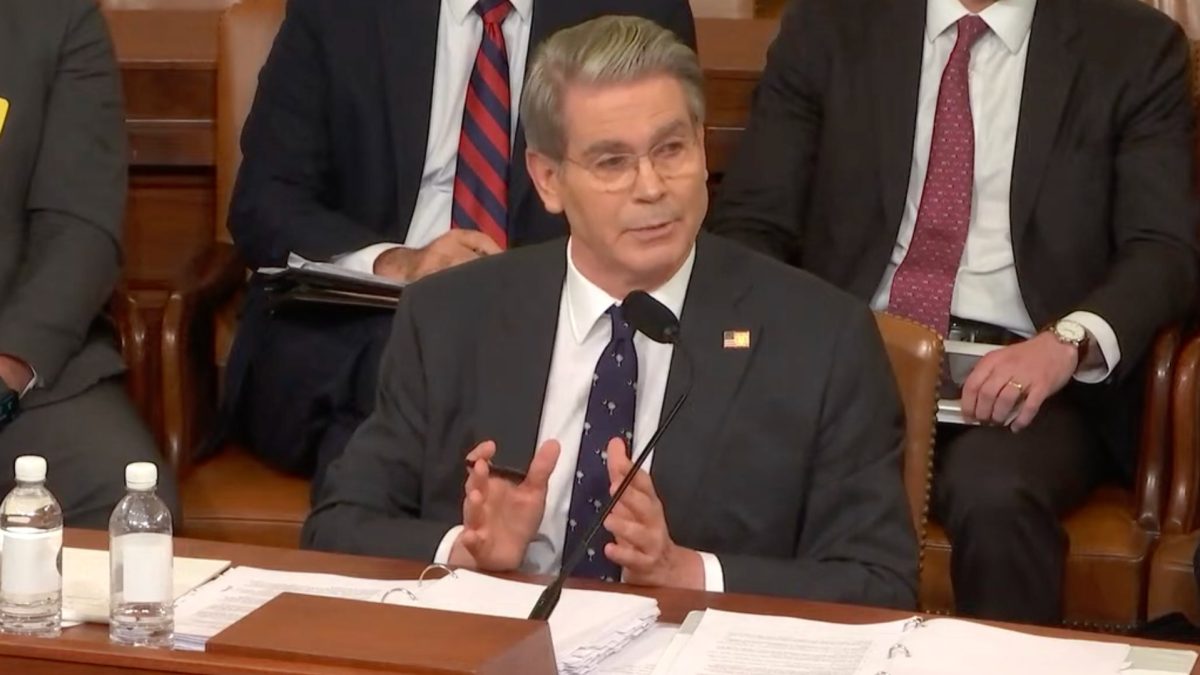
In a short segment of an interview with Fox Business on Thursday morning, U.S. Treasury Secretary Scott Bessent said the government would not be buying additional bitcoin for President Trump's strategic reserve, valuing the country's current holdings at $15 to $20 billion.
Describing the Strategic Bitcoin Reserve as the U.S. "starting to get into the 21st Century," Bessent did reiterate that current seized assets would continue to be held, with no bitcoin sold, and that future confiscations could add to the government's holdings over time.
"We're not going to be buying that, but are going to use confiscated assets and continue to build that up. We're going to stop selling that," he told host Maria Bartiromo. "You know, I believe that the bitcoin reserve at today's prices is somewhere between $15 and $20 billion."
Responding to a question on whether the U.S. would revalue its 261.5 million ounces of gold holdings, officially valued at around $11 billion based on a $42.22 per ounce price set back in 1973 but now worth around $750 billion at market prices, Bessent said he doubts it would be revalued, but it would also be kept as a store of value.
How we got here
Trump's first crypto-related executive order came within a few days of his inauguration on Jan. 20, creating a "President's Working Group on Digital Asset Markets" chaired by White House crypto czar David Sacks — tasked with developing a federal regulatory framework for digital assets and working to evaluate the creation of a "strategic national digital assets stockpile."
However, Trump accelerated this work on March 6, signing another executive order to create a U.S. Strategic Bitcoin Reserve, established from the approximately 198,022 BTC already owned by the federal government per Arkham data that was forfeited as part of criminal or civil proceedings, minus those that still need to be returned to victims of crime.
Additionally, Trump directed Bessent and Commerce Secretary Howard Lutnick to develop budget-neutral strategies for acquiring additional bitcoin, provided they have no incremental costs to American taxpayers.
The executive order also established a U.S. Digital Asset Stockpile, consisting of digital assets other than bitcoin forfeited in criminal or civil proceedings. However, the government already confirmed it would not acquire additional assets for the stockpile beyond those obtained through forfeiture proceedings.
The White House working group was given a 180-day deadline to submit a comprehensive report on its crypto roadmap, which subsequently arrived at the end of July, though with little further detail on the proposed bitcoin reserve.
Federal agencies were scheduled to submit reports by April 5 outlining their authority to transfer digital assets to the reserve. Details on budget-neutral acquisition strategies were then expected 60 days after the executive order, around May 5, when Bessent was due to deliver an evaluation of the legal and investment considerations for the reserve.
However, those deadlines came and went without any public announcements of their findings. Unless Bessent misspoke and meant to only refer to the crypto stockpile, he appears to have confirmed the government will not be buying bitcoin for that separate reserve, too. The Treasury Department could not be immediately reached for comment by The Block.
Crypto markets turn red following Bessent's comments and hot PPI data
Following Bessent's interview and hotter-than-expected PPI inflation data on Thursday, the crypto market saw red, with bitcoin swiftly dropping more than 4% from above $121,000 to below $118,000 at one point. Bitcoin is currently trading for $118,327, according to The Block's BTC price page.
Ether fell over 5% to below $4,500 in the same period, while the GMCI 30 index of the leading cryptocurrencies dropped 4% in about an hour.
BTC/USD price chart. Image: The Block/TradingView .
The U.S. producer price index (PPI) for July rose 3.3% year-over-year, above the 2.5% forecast and up from a revised 2.4% in June — marking the highest annual increase since February. On a monthly basis, PPI climbed 0.9%, the largest gain since June 2022.
Disclaimer: The content of this article solely reflects the author's opinion and does not represent the platform in any capacity. This article is not intended to serve as a reference for making investment decisions.
You may also like
Up 20% in October, funds bet on another 30% surge! "Self-destructing" Snap (SNAP.US) call options soar as specs push for $5 billion valuation
As of Monday during the U.S. stock market hours, Snap has risen by more than 20% this month, and its options trading volume has surged to over four times the monthly average. Of the approximately $5.5 million in total options premiums traded, about $5 million came from call options.
Ahead of Earnings Report, Bank of America Raises Target Price for TSMC: 2nm Capacity Ramp-Up Boosts Sales Expectations and Profit Margins
Ahead of TSMC’s Q3 earnings report, Bank of America Merrill Lynch raised its US stock target price to $620 and maintained a Buy rating. Q3 revenue is expected to exceed the upper end of guidance, with the proportion of 2nm process rising from 3% to 11% in a single quarter, becoming the biggest highlight. Q4 sales are expected to increase by another 11% quarter-on-quarter, targeting a full-year growth rate of 40%. The current stock price corresponds to a forward P/E ratio of 16, which is still at the historical median. Bank of America believes the valuation is “not demanding,” implying approximately 37% upside to the target price.
AI trading cools down and storage chip competition intensifies, Korean stocks plunge over 5%, marking a second consecutive day of sharp decline; SK Hynix drops nearly 8%
On Tuesday, the Korea Composite Stock Index (KOSPI) dropped by as much as 5.1%, triggering the Sidecar circuit breaker mechanism on the exchange and suspending programmatic sell orders for five minutes. Both Samsung Electronics and SK Hynix fell more than 6%, marking five consecutive days of decline. Japan's SoftBank Group plunged over 8%, while AI industry-related stocks such as Tokyo Electron and Advantest also dropped by more than 5%.
Wall Street giants' financial reports tonight: With stock prices trapped in technical correction, even a 20% profit increase can hardly ease triple anxiety
Shares of major US banks hovered in a technical correction zone on Tuesday as the earnings season kicked off, with long-term borrowing costs rising to their highest levels in decades. This has heightened market attention on bank executives’ assessments of US consumer health and credit prospects.
Crypto prices
More


