
Should the Fed cut 50bps in September?

We’re beginning to price in the chance of not just a 25 basis point cut, but a 50 bps one
This is a segment from the Forward Guidance newsletter. To read full editions, subscribe .
It’s amazing how quickly things can change in one week.
It feels like only yesterday that the Fed appeared unlikely to cut rates at all in September. Now, we’re beginning to price in the chance of not just a 25 basis point cut, but a 50 bps one!
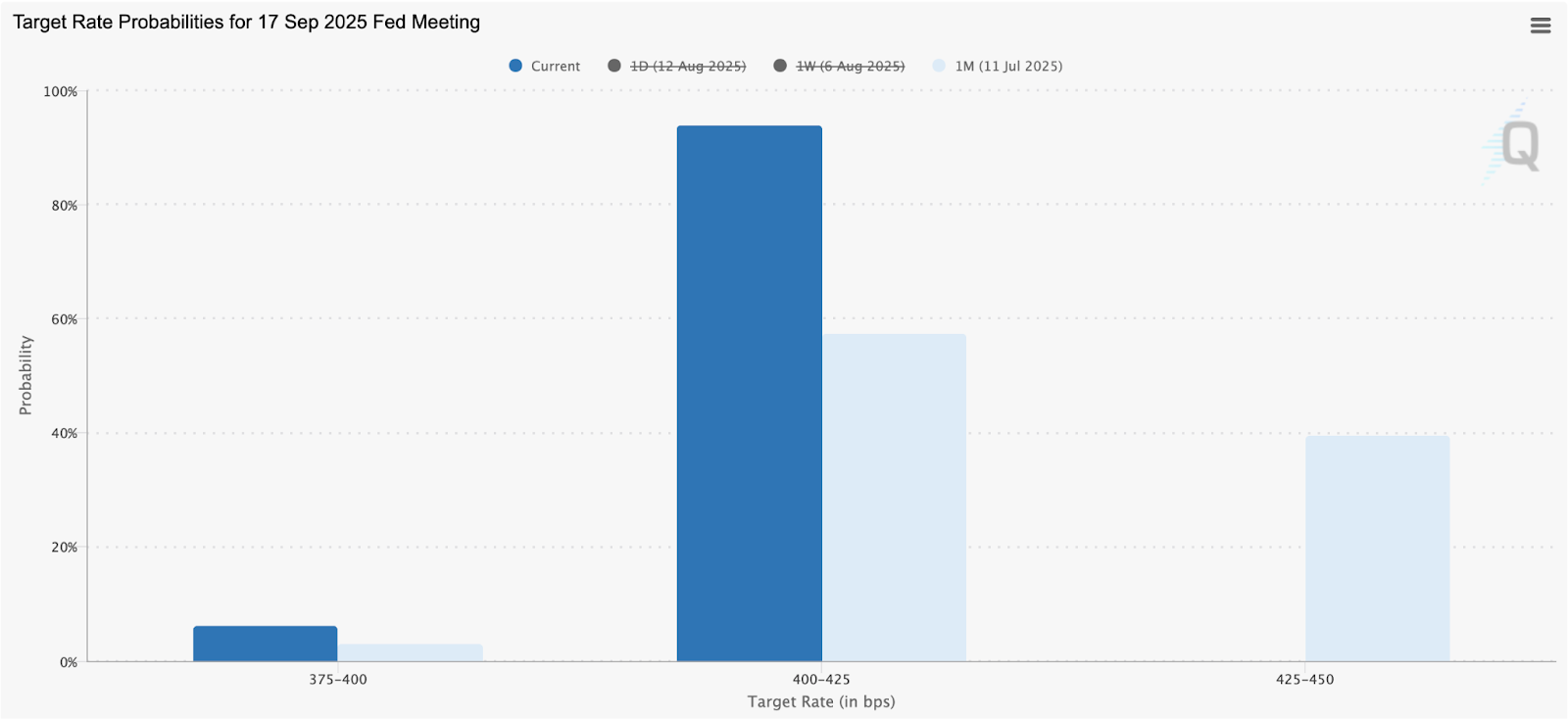
In a Tuesday Fox Business interview, Treasury Secretary Bessent added fuel to the speculation by saying “the real thing now to think about is: Should we get a 50 basis point rate cut in September?”
I’m old enough to remember when Bessent said he wouldn’t comment on future monetary policy decisions. But here we are.
So, should the Fed cut 50 bps in September? Let’s look at both sides of the argument.
No cuts
Although this month’s CPI print was pretty tame and consensus, there are some underlying inflation pressures building.
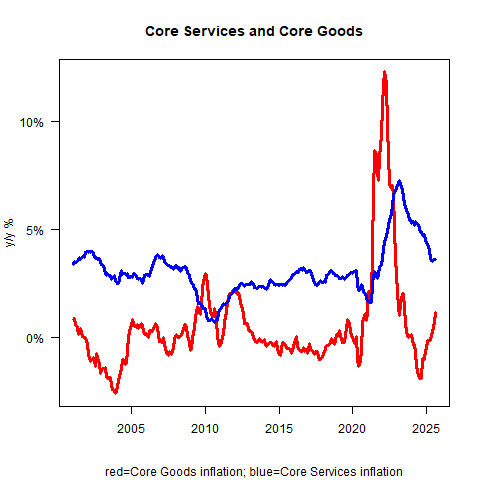
Core goods, one of the biggest drivers of the disinflation story over the last couple years, is now beginning to accelerate higher, largely driven by tariffs:
Despite a pretty nasty jobs report last week, forward-looking estimates point to a labor market that is beginning to reaccelerate again.
In the most recent business headcount surveys, the amount of businesses that planned on meaningfully increasing headcount in the next year bounced higher: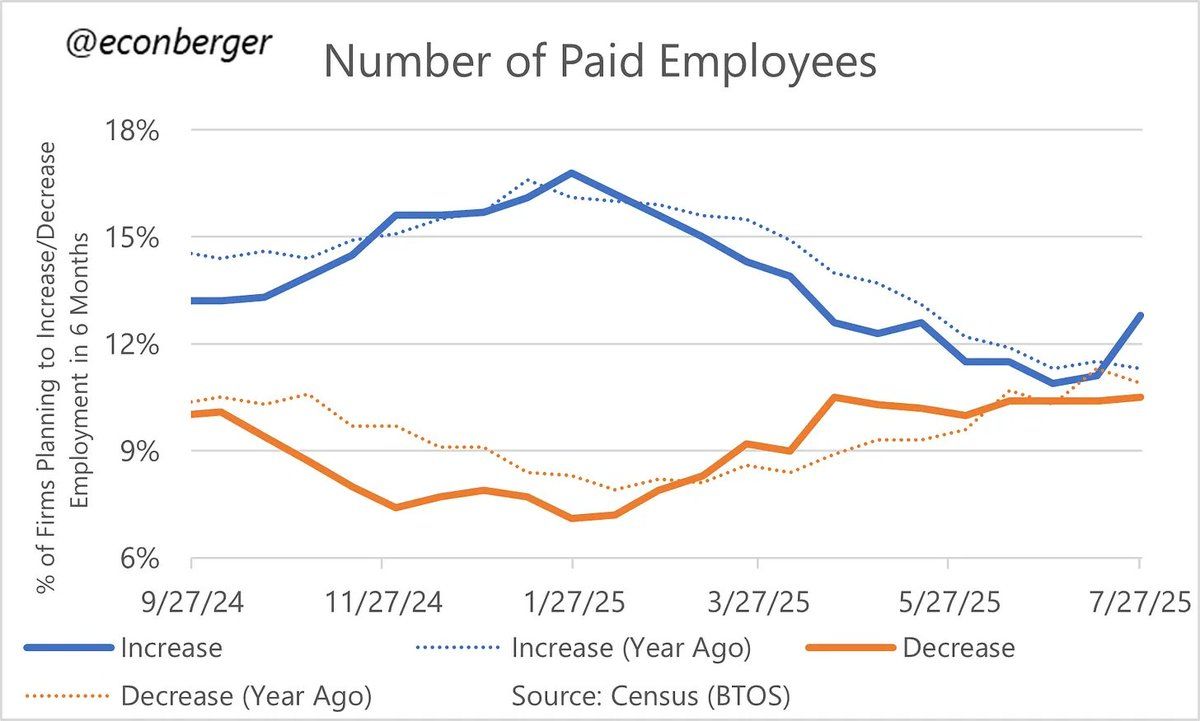
Looking at Visa’s US spending momentum index, the consumer appears pretty resilient in the face of tariffs and their spending habits are looking like they’re beginning to tick higher: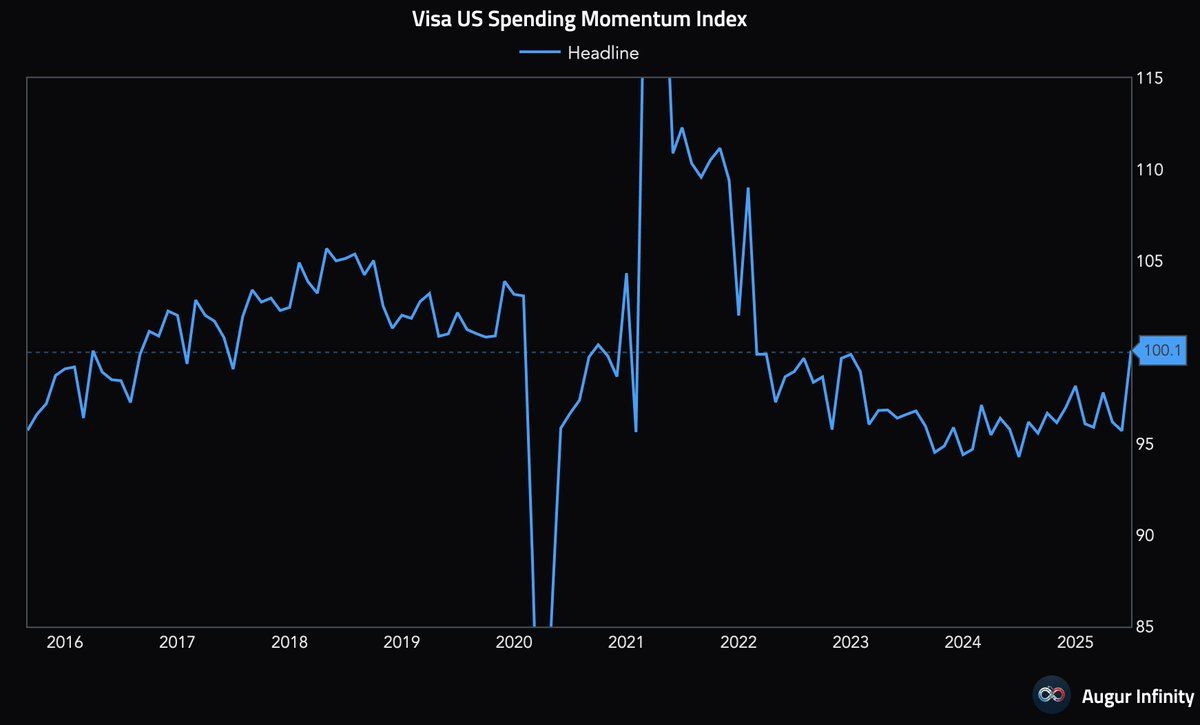
Based on this confluence of data, I could make the argument that the economy is beginning to reaccelerate. If the Fed were to cut in September based on lagging data such as NFP, it could end up being a mistake that makes the bond market sell off like it did last year when the Fed did the same thing.
Cut and go big
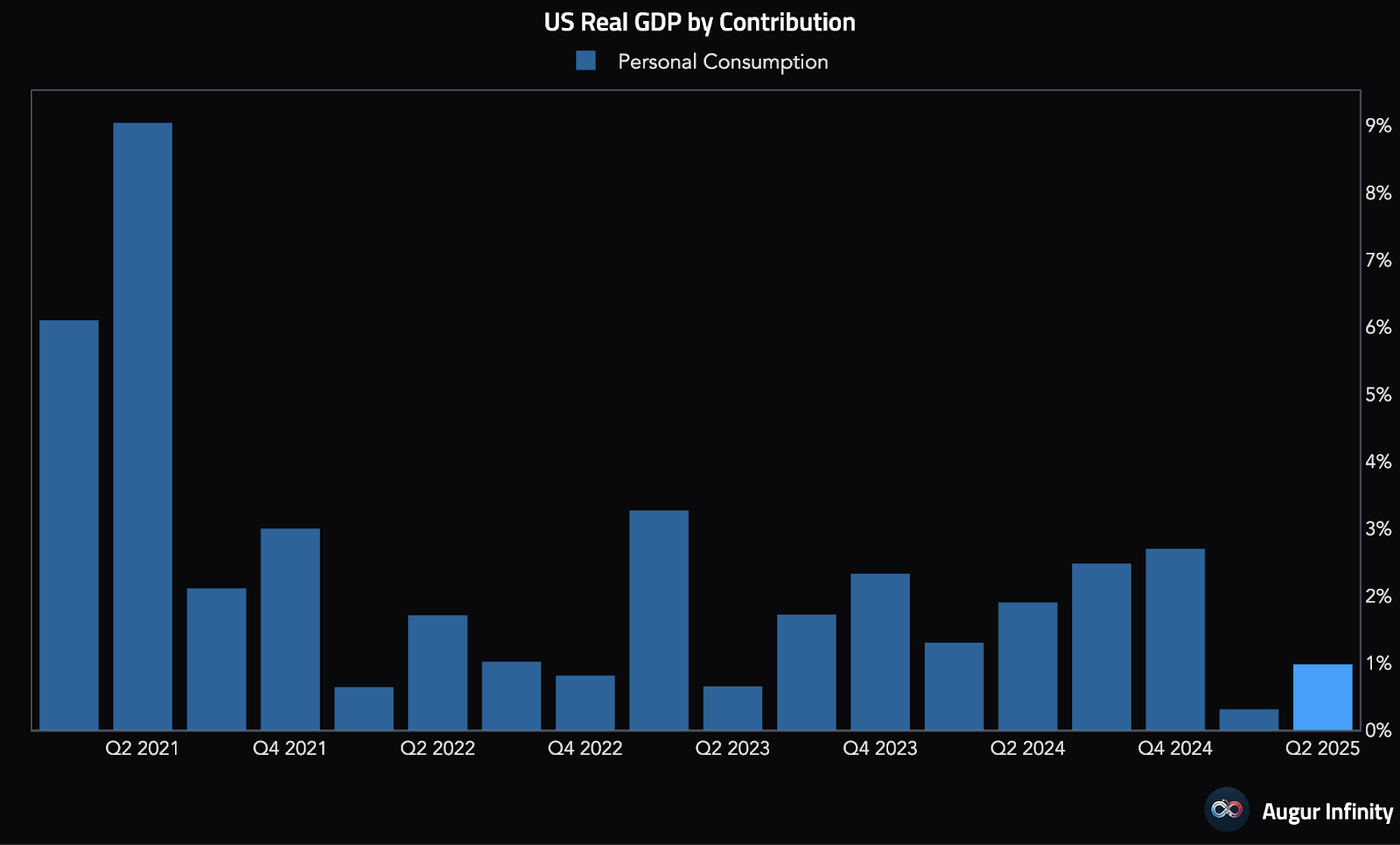
Consumption is the engine that drives the US economy. Ever since Q4 2024, it’s been meaningfully slowing.
If purchasing power decreases due to the continued implementation of tariffs, we could well see further weakening in consumer spending that could quite quickly look recessionary.
Meanwhile, tariff collections continue to surge higher — and someone needs to foot that bill: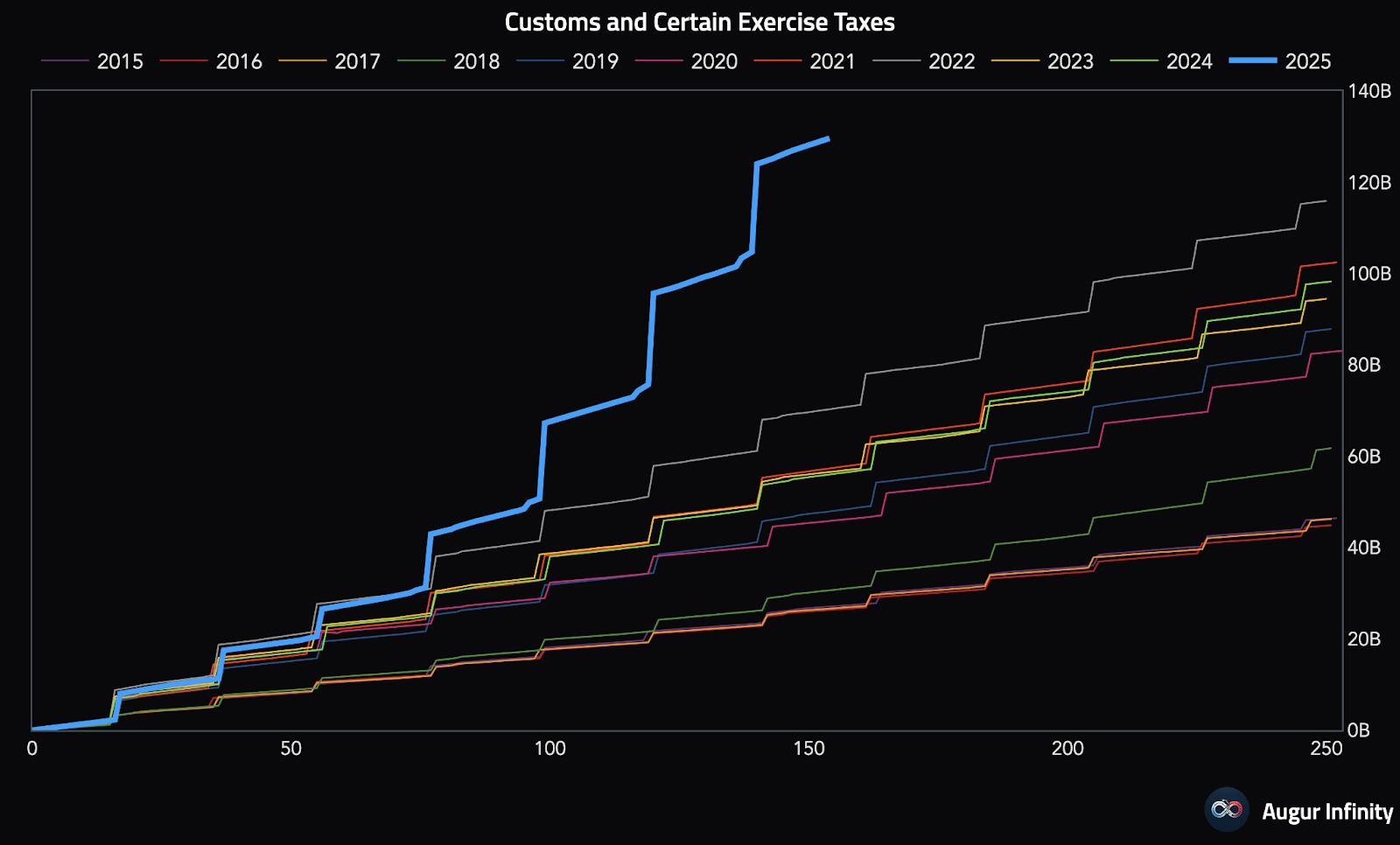
If companies pass on the tariffs to the consumer, those higher prices will eventually hurt aggregate demand since that additional price increase means that money cannot be spent elsewhere. Without an offset, this is negative for growth.
If companies absorb the price hikes, it will squeeze their corporate profit margins, which will also lower economic output. Either way, it’s negative for the growth outlook.
Finally, with a labor market that continues to surprise to the downside with downward revisions that continue to tick lower pro-cyclically, some sort of insurance rate cut could make sense here. 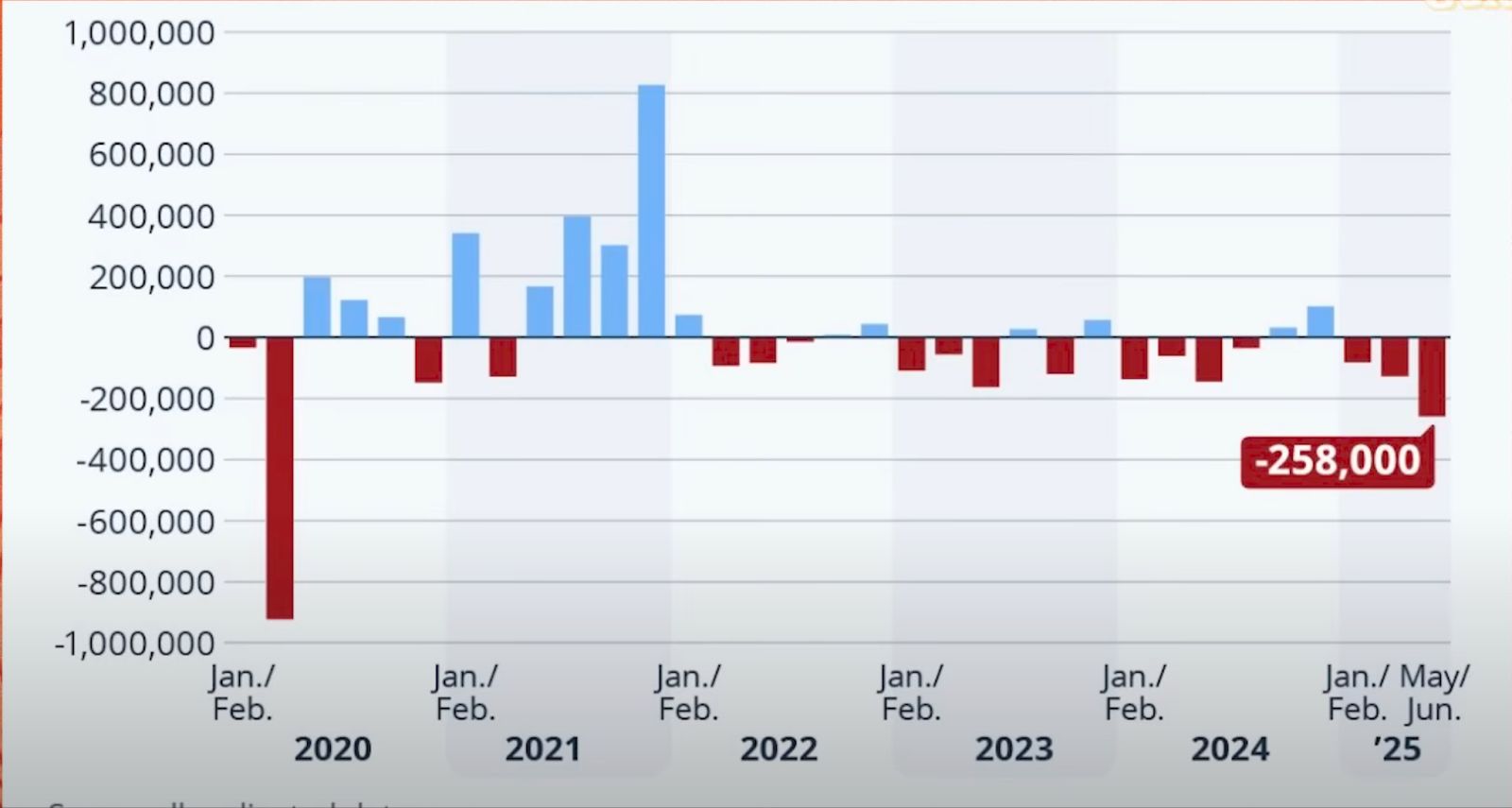
Putting it all together, I can make the case for a pause as much as I can make a case for substantial cuts.
It’s no wonder the FOMC, on the question of where to go from here, is the most divided it’s been in decades.
Get the news in your inbox. Explore Blockworks newsletters:
- The Breakdown : Decoding crypto and the markets. Daily.
- 0xResearch : Alpha in your inbox. Think like an analyst.
- Empire : Crypto news and analysis to start your day.
- Forward Guidance : The intersection of crypto, macro and policy.
- The Drop : Apps, games, memes and more.
- Lightspeed : All things Solana.
- Supply Shock : Bitcoin, bitcoin, bitcoin.
Disclaimer: The content of this article solely reflects the author's opinion and does not represent the platform in any capacity. This article is not intended to serve as a reference for making investment decisions.
You may also like
Musk on chip production: China's large-scale manufacturing capacity often exceeds the sum of all other regions worldwide
After ChangXin Memory Technologies announced a key breakthrough in DDR5 server memory, the Philadelphia Semiconductor Index in the US stock market fell 2.7% overnight, with shares such as Micron and SK Hynix ADR dropping collectively. Musk commented on this trend, saying that when China figures out the manufacturing method of a product, its ability to scale production often exceeds that of the rest of the world combined, and stated that "China seems to be rapidly conquering" general standard specifications such as LP5 and LP6.

IREN reports $702.6 million net loss despite $4 billion in AI cloud contracts
The current AI frenzy: featuring both "Tech and Internet" and "Real Estate" bubble characteristics, reminiscent of the 2008 global capital cycle
This wave of the AI boom exhibits dual characteristics: On a micro level, the heavy-asset nature of AI data centers is driving the industry toward "real estate-like" debt financing models, such as corporate bonds, private credit, and computing power ABS. On a macro level, nearly $2 trillion in overseas excess savings is flowing into core AI assets in the U.S. stock market through private institutions, reconstructing a transnational capital cycle reminiscent of the period before the 2008 subprime mortgage crisis. With nearly $3 trillion in off-balance sheet debt and rising interest rates, the industry is facing an impending major liquidity test.

AI Trading Faces a "Vulnerable Moment"! Japan and South Korea Stock Markets Experience "Black Tuesday" as SK Hynix, Samsung, and SoftBank Plunge Together
On Tuesday, Asian tech stocks faced a new round of systemic sell-off as the overnight weakness in the US semiconductor sector spread to the Asia-Pacific market. Concerns intensified over increasingly fierce competition due to the technological breakthrough by Chinese memory chip manufacturer ChangXin Memory Technologies, as well as worries about the returns on AI capital expenditure and the overall financing environment.
Crypto prices
More


