
Solana News Today: Will Solana Foundation Stay Centralized or Embrace the Decentralized Future?
- Kevin Ricoy criticized Solana Foundation for elitism and centralization, calling for its phased dismantling to decentralize resources. - Foundation defenders argue large events and strategic hubs like Abu Dhabi and New York are vital for growth and institutional engagement. - Akshay BD emphasized event-driven capital inflows and accessible developer-focused initiatives to sustain ecosystem expansion. - Debate highlights tensions between centralized coordination and grassroots innovation in blockchain gov
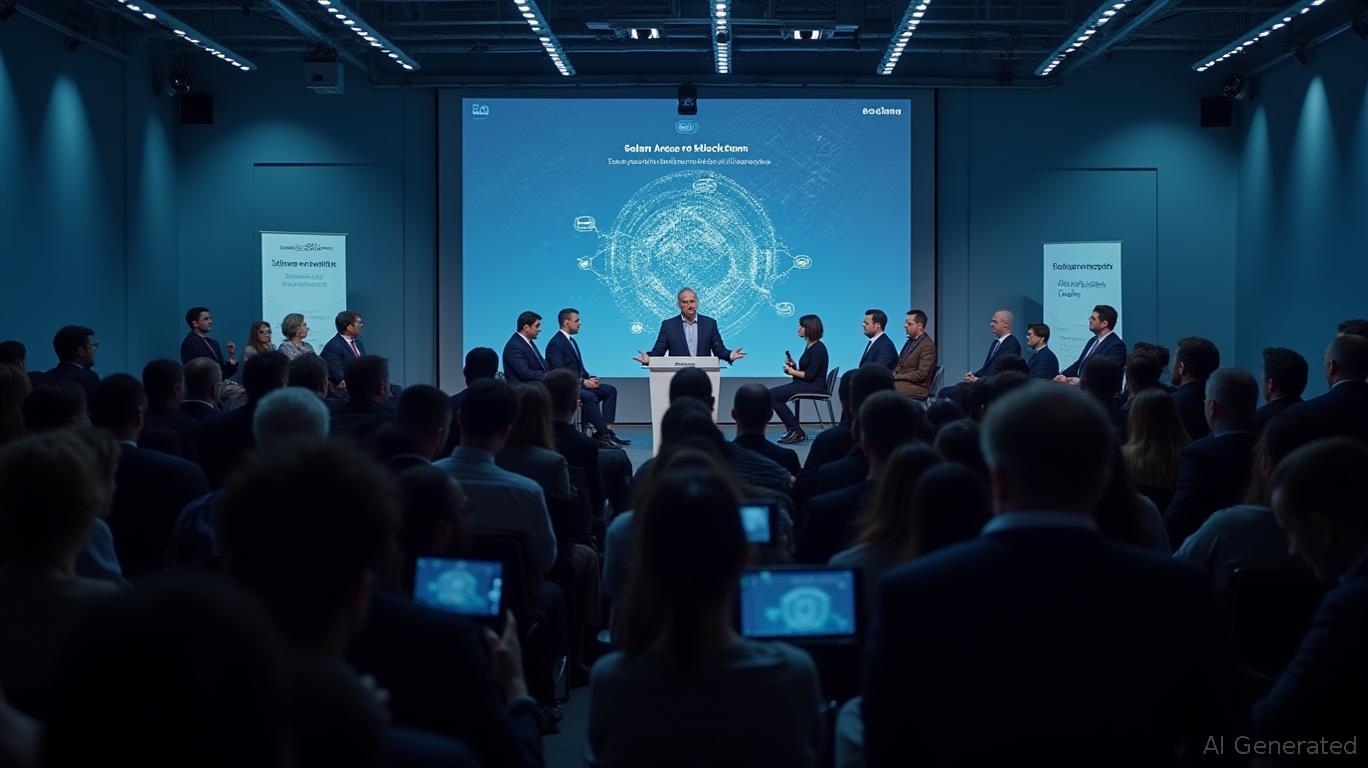
The Solana Foundation has found itself at the center of a heated internal debate over its strategic direction and spending practices, following an open letter from Kevin Ricoy, founder of crypto media startup Allmight. Ricoy accused the foundation of becoming an "elitist peanut gallery" and a "bureaucratic ruling class," arguing that its operations increasingly resemble a centralized authority rather than a steward of decentralization. He specifically criticized the high costs of events such as Breakpoint in Abu Dhabi and a planned New York gathering, which he viewed as out of touch with the struggles of smaller builders in the ecosystem [1].
In the open letter, published on X, Ricoy proposed a phased dismantling of the organization, suggesting that a target shutdown date be announced to allow for a more decentralized distribution of resources to independent teams and local initiatives. He emphasized that the foundation should act more as a facilitator rather than a governing body, calling into question the accountability and efficiency of its current structure [1].
However, several key figures in the Solana ecosystem have defended the foundation's role. Kash Dhanda, co-founder of Jupiter and Superteam, dismissed the idea of dissolution, stating that the Solana Foundation has been essential to the growth of both the community and the network. Dhanda acknowledged some shortcomings but argued that large-scale events are necessary for marketing, community engagement, and attracting institutional attention. He also noted that other blockchain ecosystems are attempting to replicate the Solana model, highlighting its broader influence [1].
Akshay BD, head of strategy at the Solana Foundation, provided additional context for the foundation’s event strategy, explaining that hosting high-profile gatherings in financial hubs like Abu Dhabi and New York aims to position Solana alongside Wall Street and sovereign wealth funds. He argued that such efforts would eventually benefit developers by generating a net inflow of capital and talent. BD also emphasized that developer-focused events remain ongoing and are designed to be accessible and hyperlocal to accommodate broader participation [1].
While the debate has highlighted tensions within the community, it has also revealed a shared understanding of the importance of balancing centralized coordination with grassroots innovation. Ricoy conceded that a complete shutdown may not be feasible, but he suggested that opening the foundation to greater competition and broader involvement could help prevent it from evolving into the centralized authority it was meant to avoid. The conversation reflects broader concerns across the crypto space regarding the role and structure of ecosystem foundations [1].
The Solana Foundation’s response to this criticism will be closely watched, as the organization continues to play a pivotal role in the growth and development of the Solana network. Whether it will adapt to incorporate more decentralized governance or maintain its current structure remains to be seen.
Source:
Disclaimer: The content of this article solely reflects the author's opinion and does not represent the platform in any capacity. This article is not intended to serve as a reference for making investment decisions.
You may also like
Risks to Middle Eastern energy facilities escalate as Saudi Aramco headquarters reportedly hit and set on fire by Houthi forces
According to reports, during a missile attack launched by Yemen's Houthi forces against Saudi Arabia on Tuesday, the headquarters of Saudi Aramco in Dhahran was hit, causing a fire in part of the complex, which was later extinguished. It could not be confirmed whether the fire was caused by a direct missile hit. The Saudi government and Saudi Aramco have not confirmed reports of an attack on the headquarters.

Metals weaken as front-end yields, Hormuz risk offset softer dollar - Kitco PM Report
Siri AI integration: Apple bets on new smart home entry! First display “brain” HomeView debuts, complete smart home accessory set unveiled
The HomeView is priced at $299, featuring a 7-inch square screen and powered by the A18 chip. It comes in both desktop and wall-mounted versions, supports facial recognition linked to Siri AI, and can recognize up to six users. It will not be released in the EU for now, as Siri AI is not available locally. Apple has teamed up with LG and Schneider to launch an Apple Home Collection smart home accessory series, including indoor and outdoor floodlight cameras, video doorbells, thermostats, and door locks. The new generation Apple TV 4K is equipped with the A19 chip, supports Siri AI voice interaction, and is priced at $299. The second-generation HomePod mini is priced at $149, featuring new interactive lighting effects, with both products seeing price increases from previous models. Analysts are optimistic about Apple’s opportunities in expanding its home business, while the foldable iPhone set to begin pre-sale on Friday remains the recent highlight.
Crypto prices
More


