
Criminals are ‘vibe hacking’ with AI at unprecedented levels: Anthropic

Despite “sophisticated” guardrails, AI infrastructure firm Anthropic says cybercriminals are still finding ways to misuse its AI chatbot Claude to carry out large-scale cyberattacks.
In a “Threat Intelligence” report released Wednesday, members of Anthropic’s Threat Intelligence team, including Alex Moix, Ken Lebedev and Jacob Klein shared several cases where criminals had misused the Claude chatbot, with some attacks demanding over $500,000 in ransom.
They found that the chatbot was used not only to provide technical advice to the criminals, but also to directly execute hacks on their behalf through “vibe hacking,” allowing them to perform attacks with only basic knowledge of coding and encryption.
In February, blockchain security firm Chainalysis forecasted crypto scams could have its biggest year in 2025 as generative AI has made it more scalable and affordable for attacks.Anthropic found one hacker who had been “vibe hacking” with Claude to steal sensitive data from at least 17 organizations — including healthcare, emergency services, government and religious institutions —with ransom demands ranging from $75,000 to $500,000 in Bitcoin.
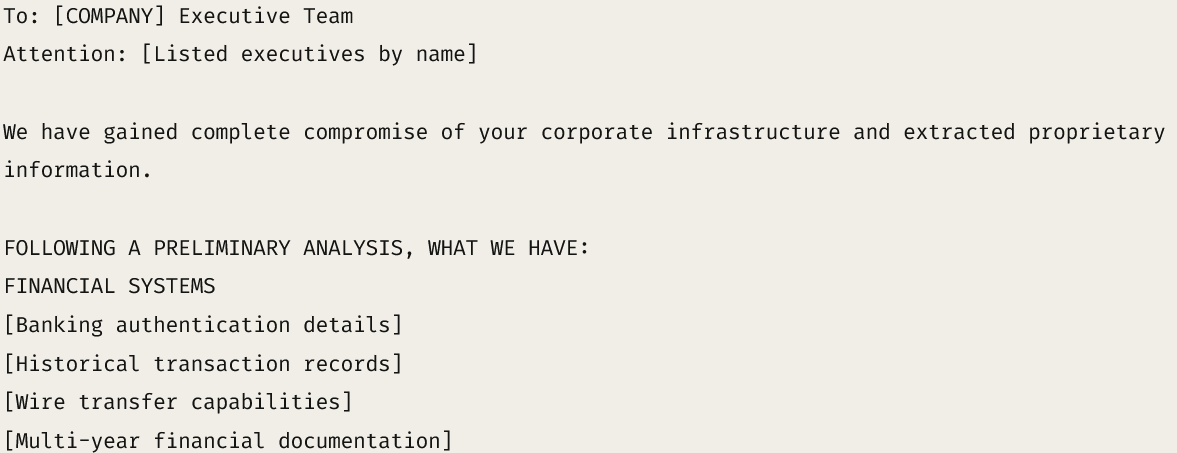 A simulated ransom note demonstrates how cybercriminals leverage Claude to make threats. Source: Anthropic
The hacker trained Claude to assess stolen financial records, calculate appropriate ransom amounts and write custom ransom notes to maximize psychological pressure.
While Anthropic later banned the attacker, the incident reflects how AI is making it easier for even the most basic-level coders to carry out cybercrimes to an “unprecedented degree.”
“Actors who cannot independently implement basic encryption or understand syscall mechanics are now successfully creating ransomware with evasion capabilities [and] implementing anti-analysis techniques.”
North Korean IT workers also used Anthropic’s Claude
Anthropic also found that North Korean IT workers have been using Claude to forge convincing identities, pass technical coding tests, and even secure remote roles at US Fortune 500 tech companies. They also used Claude to prepare interview responses for those roles.
Claude was also used to conduct the technical work once hired, Anthropic said, noting that the employment schemes were designed to funnel profits to the North Korean regime despite international sanctions.
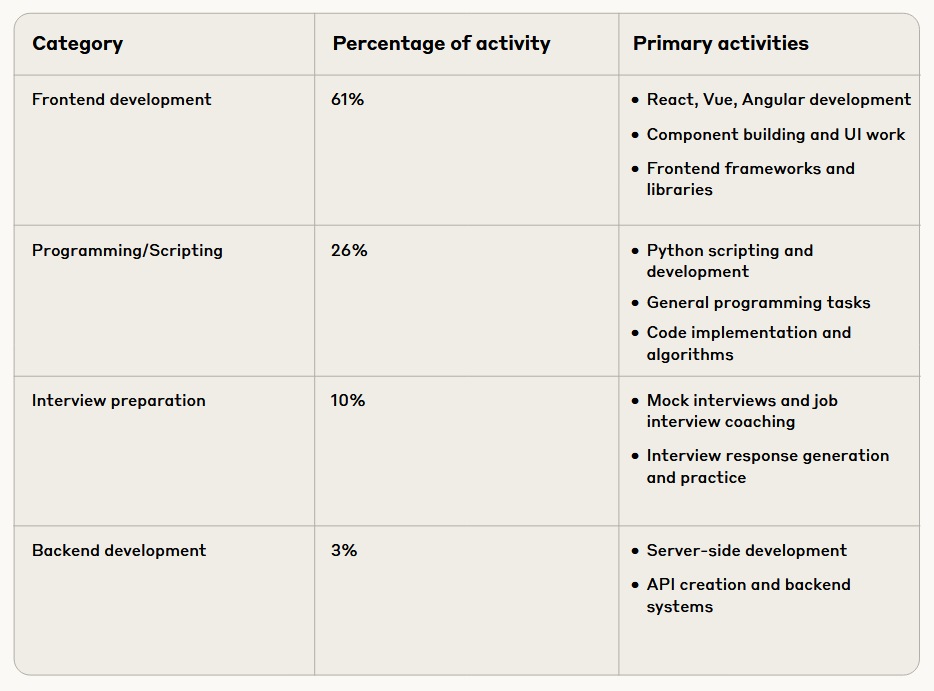 Breakdown of Claude-powered tasks North Korean IT workers have used. Source: Anthropic
Earlier this month, a North Korean IT worker was counter-hacked, where it was found that a team of six shared at least 31 fake identities, obtaining everything from government IDs and phone numbers to purchasing LinkedIn and UpWork accounts to mask their true identities and land crypto jobs.
One of the workers supposedly interviewed for a full-stack engineer position at Polygon Labs, while other evidence showed scripted interview responses in which they claimed to have experience at NFT marketplace OpenSea and blockchain oracle provider Chainlink.
Anthropic said its new report is aimed at publicly discussing incidents of misuse to assist the broader AI safety and security community and to strengthen the wider industry’s defense against AI abusers.
It said that despite implementing “sophisticated safety and security measures” to prevent the misuse of Claude, malicious actors have continued to find ways around them.
Disclaimer: The content of this article solely reflects the author's opinion and does not represent the platform in any capacity. This article is not intended to serve as a reference for making investment decisions.
You may also like
Will Bitmine outperform expected crypto bull market after acquiring another 12,532 ETH?

The Reserve Bank of India’s Efforts to Save the Rupee Deplete Reserves: $50 Billion Plunge in Forex Holdings, $200 Billion Forward Dollar Liabilities Become a Ticking Time Bomb
Foreign investors have made net sales of $31 billion in Indian stocks this year, and administrative controls are accelerating hedging demand towards the offshore NDF market, with the effectiveness of interventions continuously diminishing. The most critical risk lies in the fact that the yield spread between Indian and US 10-year government bonds has sharply dropped from 600 basis points in 2013 to just 200 basis points, with the traditional interest rate defense line nearly breached. India faces a dilemma: persisting on the current path will exhaust policy space, while relying on rate hikes to rebuild the yield spread would directly stifle economic growth.

As Starlink challenges telecom operators' pricing power, AT&T (T.US) sells its Mexico business for $2 billion, shifting focus to AI connectivity demand.
AT&T has agreed to sell its Mexico operations to Televisa and Fintech for $2 billion. The transaction is expected to be completed in the first quarter of 2027, pending approval from Mexican regulators.


Crypto prices
More


