
Businesses are absorbing Bitcoin 4x faster than it is mined: Report

Private businesses and public companies are absorbing Bitcoin (BTC) nearly four times faster than the rate at which miners are producing new coins, according to Bitcoin financial services company River.
These businesses included publicly traded Bitcoin treasury companies and conventional or private businesses, which collectively purchased 1,755 BTC per day on average in 2025, according to River.
Exchange-traded funds (ETFs) and other investment vehicles also bought an additional 1,430 BTC per day on average in 2025, and governments purchased about 39 BTC per day, River’s data shows.
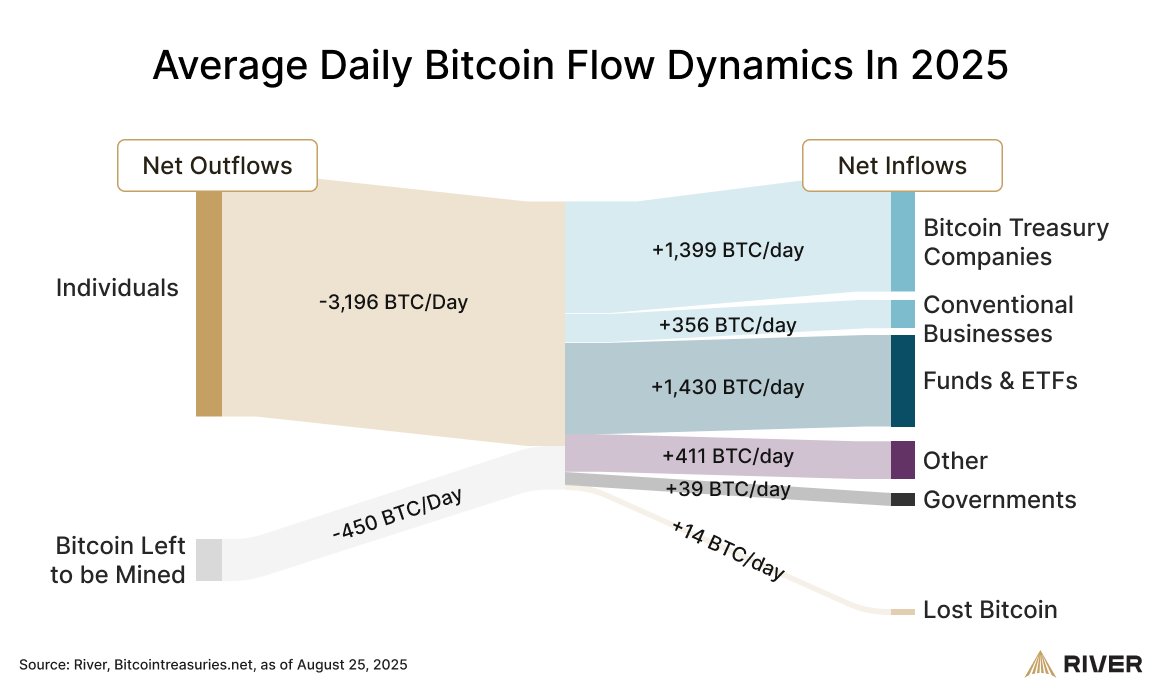
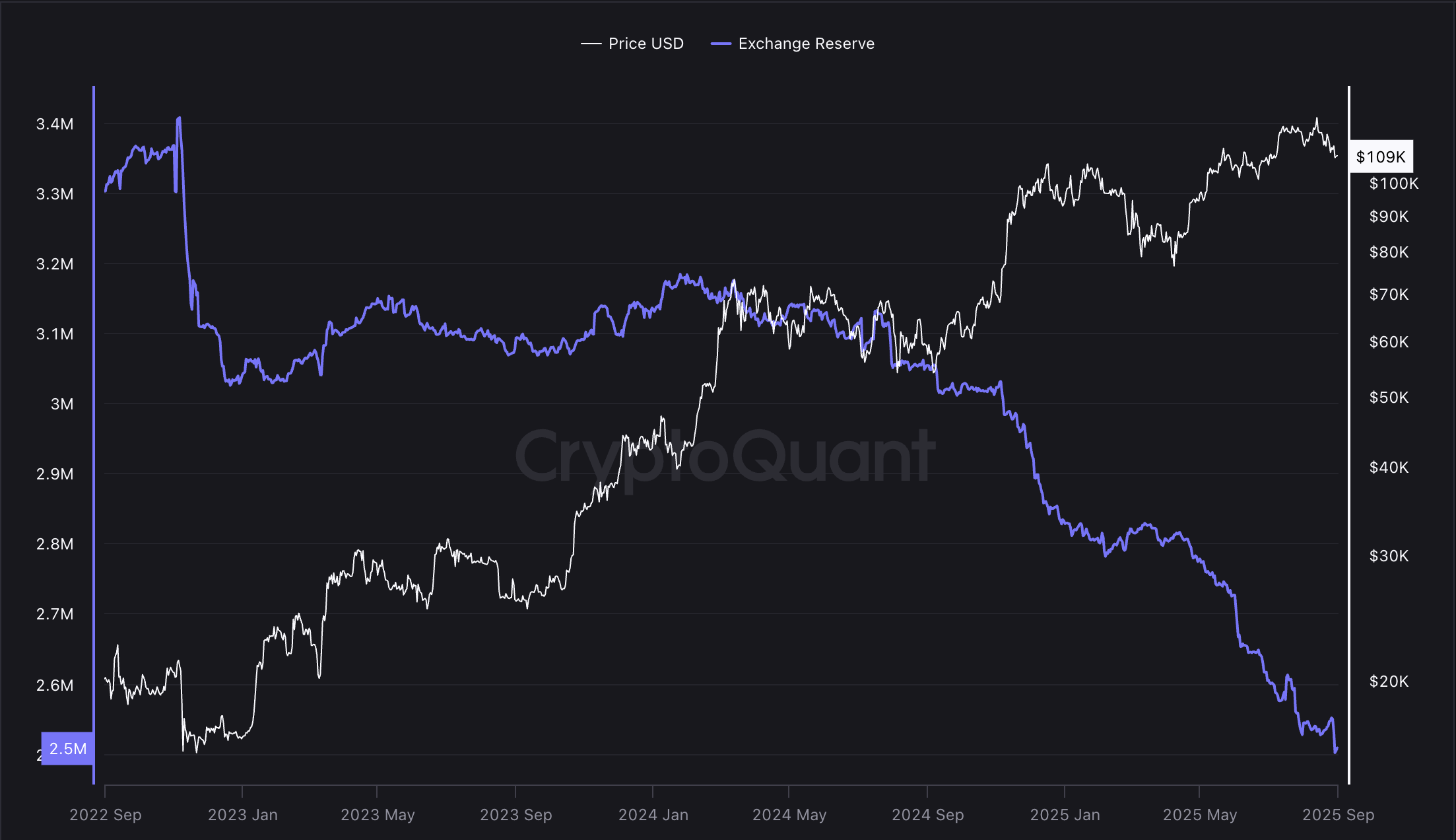
Bitcoin miners produce an average of about 450 new BTC per day, triggering a potential supply shock if exchange reserves continue to shrink and institutions continue to HODL their coins.
Analysts continue to speculate over the likelihood and potential impact of such a supply shock, with some predicting that it will be a bullish catalyst for Bitcoin’s price.
Bitcoin treasury companies generating massive demand for BTC
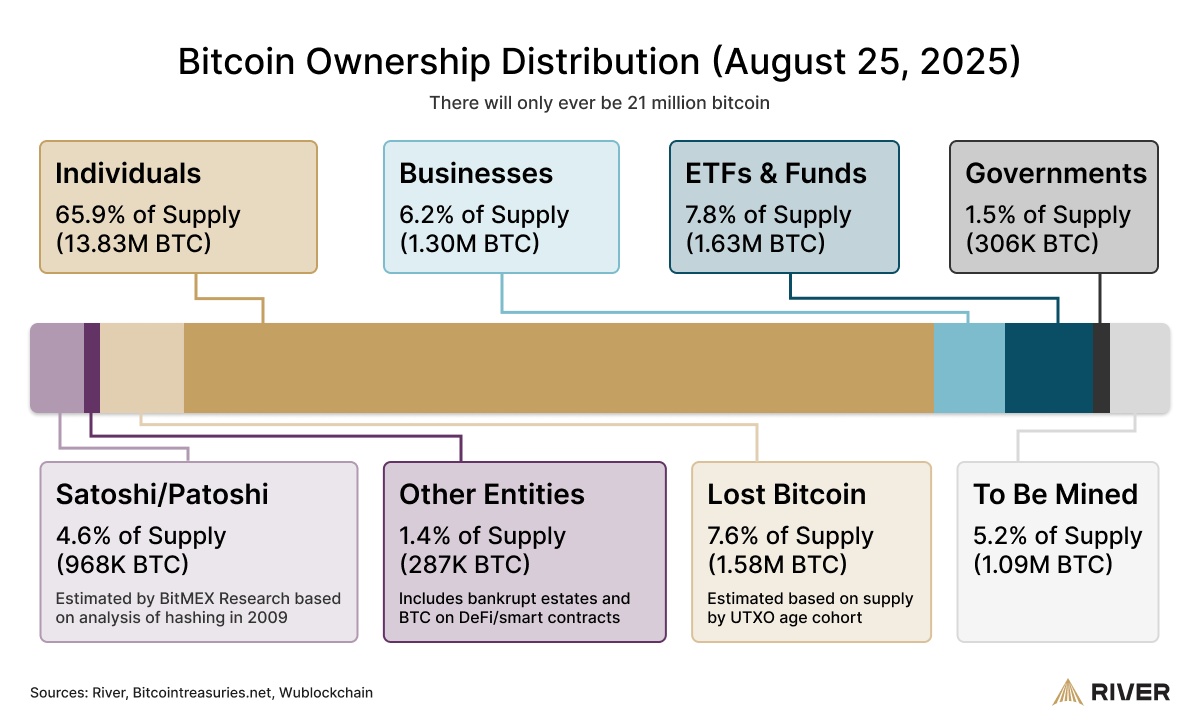
Bitcoin treasury companies acquired 159,107 BTC in Q2 2025, bringing the total amount of Bitcoin held by businesses to about 1.3 million BTC, according to River.
These holding firms are led by Michael Saylor’s Strategy, which is the largest known Bitcoin holder in the world, and holds a whopping 632,457 BTC in its corporate reserve, according to BitcoinTreasuries.
Adam Livingston, author of "The Bitcoin Age and The Great Harvest," previously said that Strategy is single-handedly “synthetically” halving Bitcoin through its rapid accumulation.
Despite Strategy’s frenzied BTC buying, the company’s corporate treasury officer, Shirish Jajodia, says that Strategy does not impact short-term Bitcoin prices through its purchases.
Jajodia said that the company spreads out its buying through over-the-counter (OTC) transactions that occur off exchanges and do not impact spot markets or move prices.
“Bitcoin’s trading volume is over $50 billion in any 24 hours — that’s huge volume. So, if you are buying $1 billion over a couple of days, it’s not actually moving the market that much,” he also said.
Disclaimer: The content of this article solely reflects the author's opinion and does not represent the platform in any capacity. This article is not intended to serve as a reference for making investment decisions.
You may also like
US September CPI to be released tonight: Overall inflation may rise to 3.6%. Can slowing core inflation dispel the Federal Reserve's October rate hike expectations?
Although energy has driven overall inflation higher, cooling core inflation gives the Federal Reserve confidence to hold rates steady in October. Currently, there is an extreme divergence in pricing between the stock and foreign exchange markets: the stock market remains calm, while the forex market is turbulent beneath the surface. Tonight, one side is destined to face a rude awakening.
AI agents ignite a new battle in the payment industry! Bernstein: Visa (V.US), Mastercard (MA.US), etc. embrace new opportunities
Bernstein believes that as agent commercialization evolves, payments may become increasingly strategic, and the next major battle in the payment industry could soon begin.
Insurance funds become new sponsors for AI computing power: CoreWeave (CRWV.US) and other AI infrastructure financing collectively turn to insurance capital pools
CoreWeave plans to use insurance funds to finance its AI infrastructure, and co-founder McBee aims to secure an investment-grade rating for chip-backed debt. The company's financing this year has exceeded $35 billion.
Iron ore price drop and rising costs lead BHP (BHP.US) to lay off 300 workers at Western Australia mines
On October 14, BHP (BHP.US) announced the elimination of approximately 300 positions at its iron ore operations in Western Australia's Pilbara region, affecting the South Flank, Area C, Newman, and Jimblebar mines.

Crypto prices
More


