
Three-Stage Script of the Crypto Market: Short-Term Volatility, Mid-Term Boom, Long-Term Concerns — Cycle Analysis of BTC, ETH, and Altcoins

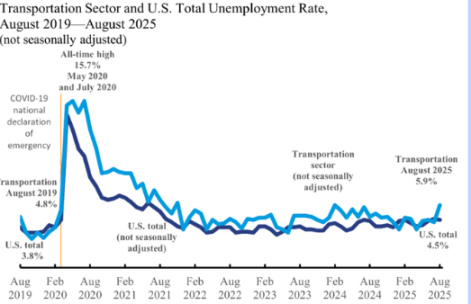
Recently, a turning point has emerged in the US macroeconomy: the unemployment rate has risen to 4.3% (the highest since 2021), and non-farm payrolls increased by only 22,000, far below market expectations. This is the first time since the pandemic that there has been a dual warning of "rising unemployment + slowing job growth."
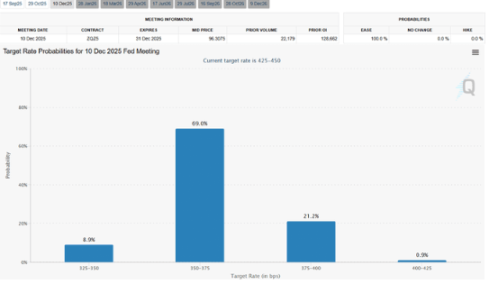
The market responded quickly: futures have fully priced in a rate cut in September (most likely 25 basis points, but 50 basis points is still possible), and traders expect at least three rate cuts in 2025. The Federal Reserve's policy pivot is now a foregone conclusion.
However, a rate cut does not mean that risk assets will immediately enter a unilateral uptrend. For the cryptocurrency market, the short-term, mid-term, and long-term will each display completely different logic in their trends.
1. Short-term (next 3–4 weeks): Panic and Correction
Weak economic data triggers concerns about recession;
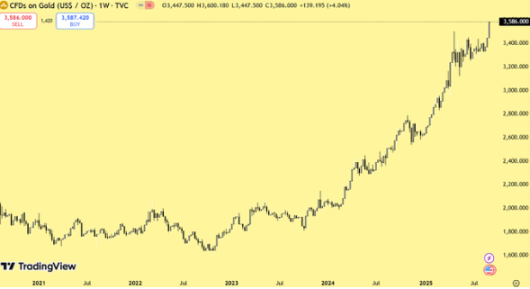
Gold hits a record high, while risk assets come under pressure;
Bitcoin may retest previous lows, while Ethereum and altcoins could drop by 10–20%;
This is not the end of the bull market, but rather a risk-averse reaction at the onset of bad news.
2. Mid-term (2025 Q4 – 2026 Q1): Liquidity Drives New Highs
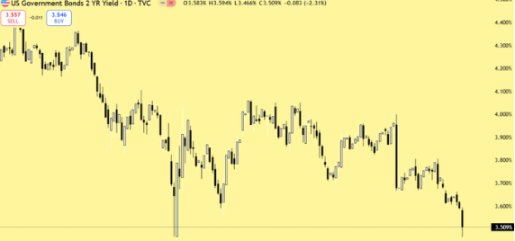
The implementation of rate cuts will drive bond yields lower, increase borrowing and spending, and strengthen corporate profits and the stock market;
Historical patterns show that when stocks rise, Bitcoin and altcoins often see even greater gains;
The unique aspect of this cycle is the entry of institutional funds:
Spot Bitcoin and Ethereum ETFs have opened funding channels for pension funds and asset management companies;
Altcoin ETF approvals are approaching;
Once the $7.2 trillion money market funds start to flow out due to declining Treasury yields, even if only 1% flows into the crypto market, it would be enough to push BTC and altcoins to new all-time highs.
Therefore, Q4 2025 will be a key window for an explosion of liquidity in the crypto market.
Bitcoin is likely to strengthen first, while the frenzy phase for altcoins may play out in early 2026.
3. Long-term (after 2026 Q1): Inflation Returns and Cycle Risks
The new tariffs implemented in 2025 will gradually be reflected in inflation data after 6–8 months;
If inflation rebounds while unemployment remains high, the Federal Reserve may be forced to pause rate cuts or even resume hikes, putting the market at risk of stagflation;
History shows that this often signals the peak of the stock and crypto market cycles, followed by a bear market.
Conclusion
Overall, the script for the crypto market is roughly as follows:
Short-term (next 3–4 weeks): turbulence and correction, with BTC, ETH, and altcoins possibly seeing a 10–20% pullback;
Mid-term (2025 Q4 – 2026 Q1): liquidity-driven rally, BTC likely to hit new highs, and altcoins entering a frenzy phase;
Long-term (from 2026 Q1): inflation risk and policy reversal may trigger the end of this bull market.
Core takeaway:
Short-term corrections are instinctive responses to economic signals and do not signal the end of the bull market. The real big opportunity lies in Q4 2025, but investors must also plan ahead for risk management and exit strategies in 2026.
Disclaimer: The content of this article solely reflects the author's opinion and does not represent the platform in any capacity. This article is not intended to serve as a reference for making investment decisions.
You may also like
Anthropic’s performance is “good but not good enough”: under “adjusted profitability,” revenue growth sharply brakes!
Anthropic's third-quarter revenue reached $16.8 billion, an increase of nearly 50% quarter-over-quarter, and achieved "adjusted profitability"—but the market remains unconvinced. The main concern lies in monthly growth slowing sharply from 33% to single digits, leaving a gap of several billion dollars short of the year-end $100 billion target. Token prices have hit historic lows, with the disconnect between volume and price becoming increasingly prominent. Whether this "good but not good enough" performance can support a $2 trillion IPO valuation remains uncertain.
CoreWeave Drops 15%, AI Computing Power Business Faces Financing Test
CoreWeave bonds have fallen below 80% of face value, with yields surpassing 15% and a default probability exceeding 50% within five years. The company’s CEO attempted to reassure the market by citing an order backlog of over $100 billion, but analysts pointed out that orders do not equate to cash: “If borrowing costs are 9% but project returns are only 5%, the larger the scale, the greater the value destruction.” AI infrastructure-related stocks such as Oracle have also seen significant declines, with concerns spreading across the entire high-yield bond market. Musk sighed: "Oh dear!"
XRP, Chainlink and Zcash hover at key support levels as volume dries up
Berkshire increases investment by $330 million, this "APP Renovation Factory" sees its stock price soar over 40% in a single day
Berkshire Hathaway has made an additional $330 million investment in Bending Spoons, increasing its stake to 4%. This news sent Bending Spoons’ stock soaring over 41% in a single day. The transaction marks the latest major capital deployment under new CEO Greg Abel. Bending Spoons specializes in acquiring "outdated apps" and uses AI to restructure cost structures and business models to generate cash flow.
Crypto prices
More


