Bitget App
Trade smarter
Buy cryptoMarketsTradeFuturesStocksEarnInstitutionAI & More
TRON’s 60% Gas Cut Could Lower Fees and Revenues While Boosting USDT Remittance Activity, Data Suggests

TRON’s 60% Gas Cut Could Lower Fees and Revenues While Boosting USDT Remittance Activity, Data Suggests

CoinotagCoinotag2025/09/14 16:00
By:Crypto Vira

  • 60% gas price cut on Aug 29, 2025

  • Average fee dropped to $0.59 (Sept 8), daily fees fell to ~$5M (Sept 7)

  • Whales drove 86% of USDT volume on high-activity days; network processed ~11M transactions

TRON transaction fees cut: TRON lowers gas costs 60%, reduces fees to $0.59 and spurs stablecoin remittance activity — read the analysis and implications.

What is the TRON transaction fees reduction and why does it matter?

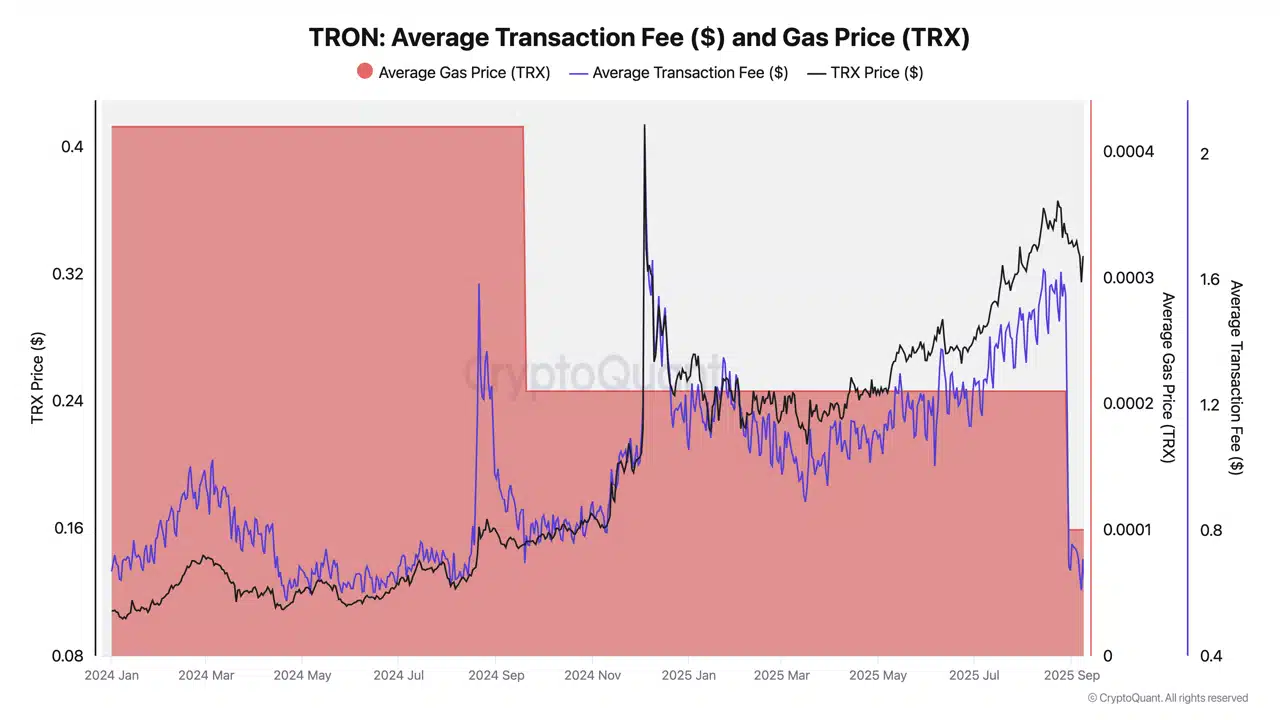
TRON transaction fees were reduced by about 60% on August 29, 2025, when the energy unit price moved from 210 sun to 100 sun. The cut immediately lowered average per-transaction costs and daily fee revenue, improving affordability for stablecoin remittances and encouraging higher on-chain activity.
TRON’s 60% Gas Cut Could Lower Fees and Revenues While Boosting USDT Remittance Activity, Data Suggests image 0

Source: CryptoQuant

How did the fee cut affect network revenue and average transaction costs?

The fee reduction brought the average transaction fee down to $0.59 by September 8, the lowest since April 2024. Total daily network fees declined from approximately $13.9 million before the cut to about $5 million on September 7, reflecting a near threefold revenue drop while improving per-transaction economics for users.
TRON’s 60% Gas Cut Could Lower Fees and Revenues While Boosting USDT Remittance Activity, Data Suggests image 1

Source: CryptoQuant

Why is TRON network activity rising despite lower fees?

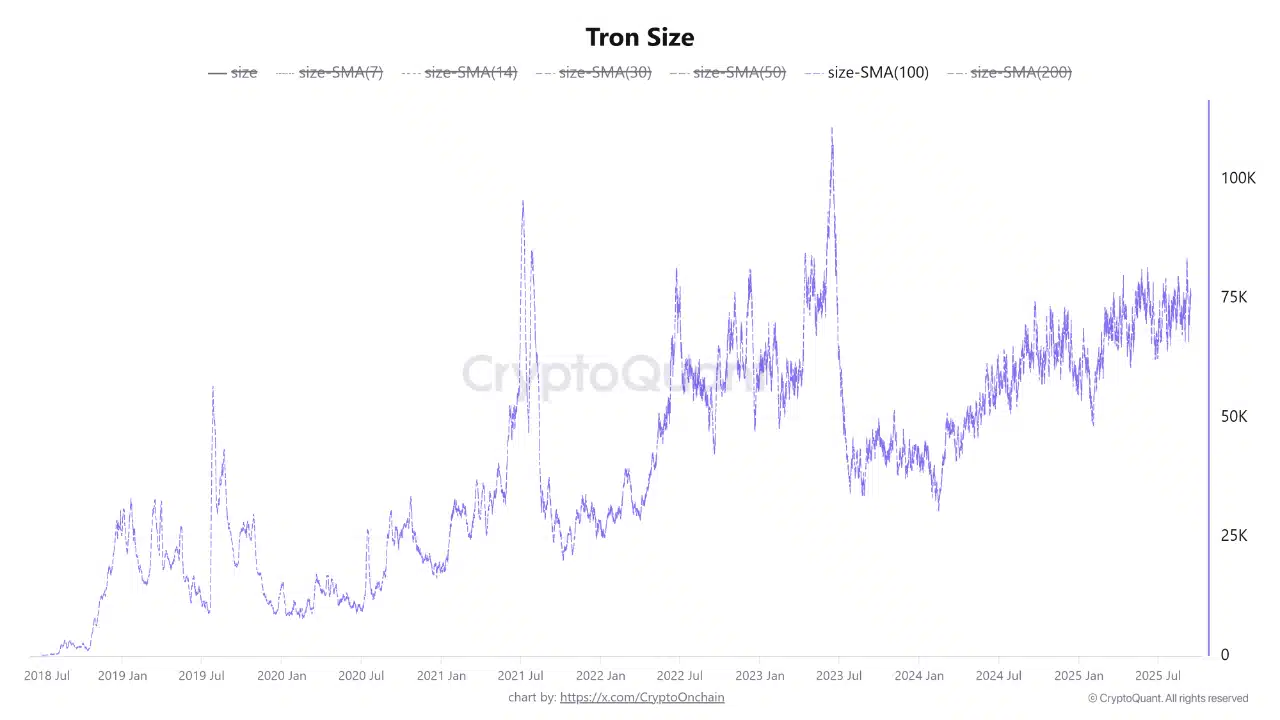
Lower fees have reduced friction for large stablecoin transfers and micropayments, encouraging sustained usage. On-chain indicators show the 100-day moving average of block size climbed to highs not seen since July 2023, signaling increased transaction volume and data throughput on the chain.

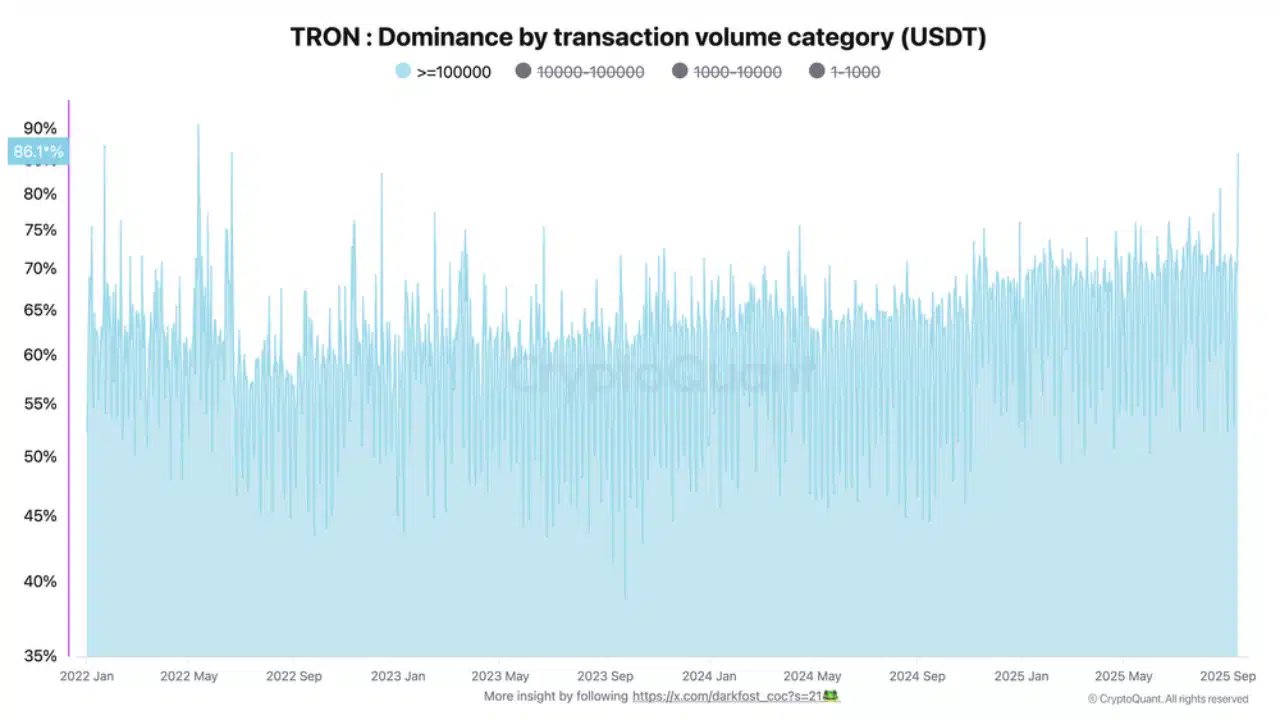
On September 12, analysts noted heavy whale transactions (>$100k) representing roughly 86% of that day’s USDT transfer volume. High-value transfers and an overall processing level near 11 million transactions point to growing institutional and remittance-oriented demand.
TRON’s 60% Gas Cut Could Lower Fees and Revenues While Boosting USDT Remittance Activity, Data Suggests image 2

Source: CryptoQuant

How does TRON compare with Ethereum for USDT settlement?

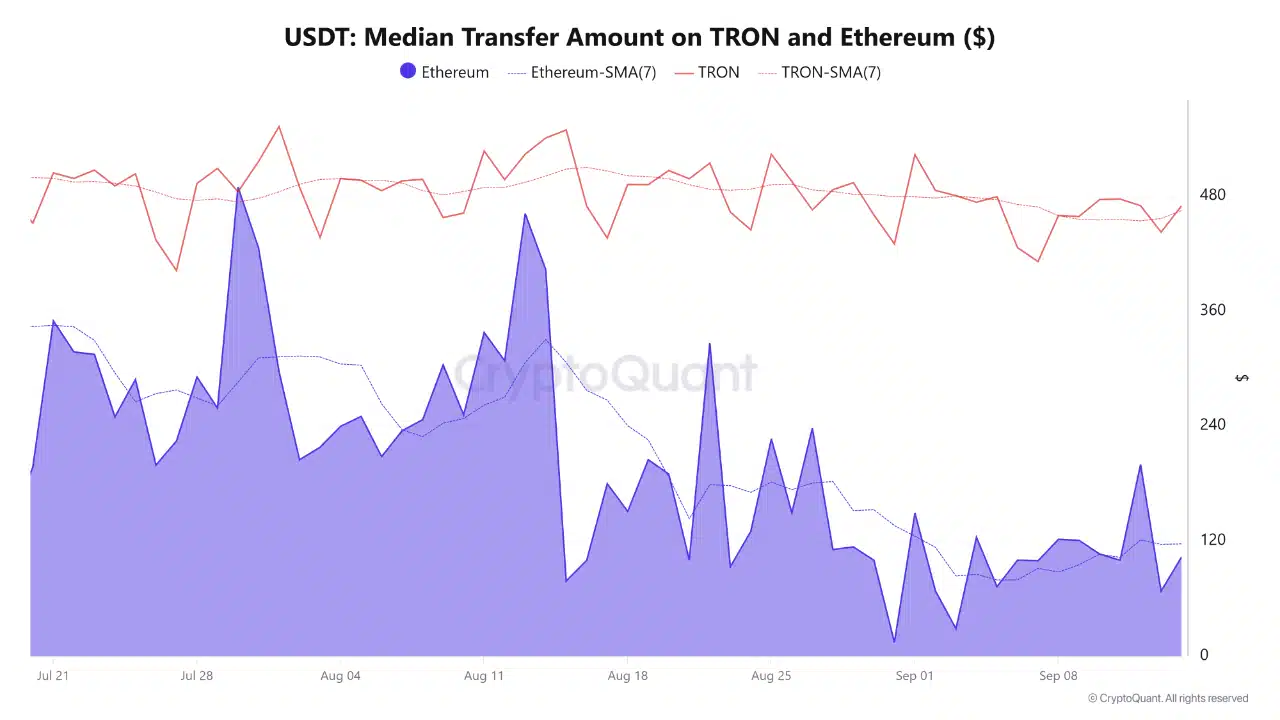
TRON shows larger average USDT transaction sizes than Ethereum. A recent 7-day SMA put TRON’s average USDT transfer at about $465 versus Ethereum’s $117, indicating TRON is being used for larger-value stablecoin settlements while Ethereum activity skews smaller and DeFi-focused.
TRON’s 60% Gas Cut Could Lower Fees and Revenues While Boosting USDT Remittance Activity, Data Suggests image 3

Source: CryptoQuant

Frequently Asked Questions

Did TRON’s gas price cut cause the revenue decline?

The gas price cut directly reduced per-unit revenue, causing daily network fees to drop from ~$13.9M pre-cut to about $5M on Sept 7. Lower fees improved transaction affordability but reduced short-term fee income.

Will lower fees harm long-term network security?

Lower fees decrease fee-derived revenue but do not by themselves change consensus incentives; long-term security impact depends on block reward economics and validator incentives beyond transaction fees.

Key Takeaways

  • Immediate effect: Transaction gas price cut from 210 sun to 100 sun reduced average fees to $0.59 and daily fees to ~$5M.
  • Usage growth: Block size 100-day MA and transaction counts rose, indicating stronger on-chain adoption for stablecoin remittances.
  • Market role: TRON continues to lead as a preferred layer for large USDT transfers versus Ethereum, with higher average transfer sizes.

Conclusion

The TRON network’s 60% gas-price reduction has reshaped fee dynamics: costs for users have fallen while network revenue declined in the short term. On-chain metrics — larger block size, high whale-driven USDT volume and ~11M transactions — highlight growing adoption of TRON as a primary stablecoin remittance layer. Stakeholders should monitor fee economics and validator incentives as usage scales.


In Case You Missed It: Solana Could Rally After Double Bottom Breakout as $17B TVL, $1.65B Inflows and ETF Anticipation Build Momentum
0
0

Disclaimer: The content of this article solely reflects the author's opinion and does not represent the platform in any capacity. This article is not intended to serve as a reference for making investment decisions.

Understand the market, then trade.
Bitget offers one-stop trading for cryptocurrencies, stocks, and gold.
Trade now!

You may also like

Wall Street sets a positive tone for the long-term prospects of AI; the Fed's interest rate path for October remains uncertain! Cooling US Treasury yields open a window for tech sector rebound?

Waller’s series of speeches at the IMF reinforced the view that cutting-edge AI technology will fundamentally reshape the economy in the long term, but he did not commit to a pause in rate hikes in October. For global semiconductor stocks, which have recently experienced heavy sell-offs and entered a correction phase, the positive aspect is that he did not further intensify short-term rate hike expectations.

智通财经•2026/10/16 04:46
Wall Street sets a positive tone for the long-term prospects of AI; the Fed's interest rate path for October remains uncertain! Cooling US Treasury yields open a window for tech sector rebound?

Tesla's sports car can really fly!

Tesla's second-generation Roadster was unveiled at the SpaceX test site, marking a significant debut nine years after pre-orders first began in 2017. Mass production is scheduled for 2028. The new vehicle features a fan suction system and compressed air thrusters, enabling genuine "flight." Elon Musk confirmed that this will be Tesla's last model to support manual driving. Analysts predict that sales of 7,000 units in the first year could generate nearly $2 billion in revenue, with extremely high profit margins being its core commercial value.

华尔街见闻•2026/10/16 04:07

Earnings season is here! Citadel Securities: The next few weeks will be the real stress test for U.S. stock fundamentals

The US stock market enters Q3 earnings season, with market expectations for S&P 500 earnings per share to grow 27% year-over-year, marking the third highest threshold ahead of earnings seasons since 2010. However, the growth is highly concentrated—Micron and Nvidia alone contribute 36% of expected gains. Retail investors’ weekly net buying surged to $9.1 billion, with semiconductor purchases reaching a historic peak. Citadel Securities warns that index volatility has fallen to its calmest range in nearly 30 years, while individual stock risks are quietly rising, making stock picking preferable to simply increasing index allocations.

华尔街见闻•2026/10/16 04:07

Dangerous signal? CoreWeave founders cash out $3.3 billion after IPO

The founder's sell-off objectively avoided a 60% drop in share price, and some have already liquidated nearly 40% of their wealth. Behind this stark contrast, the company is burdened with a massive $52 billion debt, with a five-year default probability exceeding 60%. The current debt stands at $52 billion, and the cumulative negative free cash flow for 2026-2028 is projected to reach $71 billion. Its model of "borrowing at 9% interest to earn a 1% return" has been harshly criticized as the "subprime crisis" of the AI industry. The high-leverage computing power financing game is now facing the market's ultimate test.

华尔街见闻•2026/10/16 04:07
Dangerous signal? CoreWeave founders cash out $3.3 billion after IPO