
Solana DeFi TVL Hits $13,38 Billion as Users Surge

- Solana DeFi TVL Surpasses $13 Billion
- Solana Network Sees Increase in Transactions and Users
- SOL cryptocurrency accumulates an increase of almost 25% in the week
The Solana network has reached a significant new milestone in the decentralized finance (DeFi) sector, with its total value locked (TVL) surpassing $13,38 billion. This growth represents an 18% increase in the last week, according to data from DeFiLlama, reflecting the consistent increase in capital inflows into the Solana ecosystem's leading protocols.
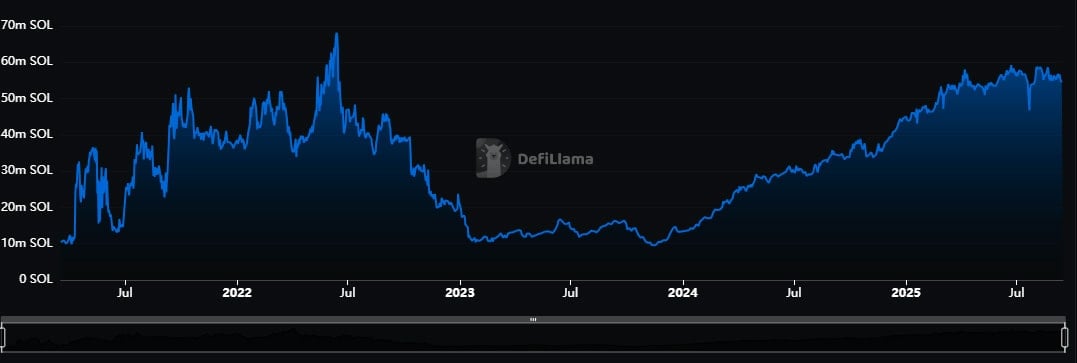
This growth is primarily driven by increased user demand, accompanied by increased network activity. Data from Artemis indicates that the number of daily active addresses, which participated in at least one transaction involving SOL, increased 37% in seven days. At the same time, the daily transaction count increased 17%, demonstrating increased network utilization.
The recent performance of the SOL cryptocurrency reflects this positive movement in the ecosystem. The digital asset has accumulated a nearly 25% appreciation in the last seven days, solidifying its position among the market's highlights.
The expansion of DeFi's TVL, coupled with the growth of on-chain interactions, signals user and developer confidence in Solana's solutions. These factors tend to favor both protocol liquidity and the network's attractiveness to new projects.
The combination of a high locked value, a significant increase in the user base, and strong appreciation of the cryptocurrency reinforces the positive momentum of blockchain, which continues to gain ground among the main competitors in the cryptocurrency market.
SOL's recent performance has caught the attention of analysts, who are monitoring whether this momentum could lead the asset to retest its all-time highs. The current pace of ecosystem expansion is one of the key indicators investors monitor to gauge the network's potential appreciation.
Disclaimer: The content of this article solely reflects the author's opinion and does not represent the platform in any capacity. This article is not intended to serve as a reference for making investment decisions.
You may also like
Over $10 billion in market value evaporated in four trading days as CoreWeave (CRWV.US) debt risks trigger sell-off, but Deutsche Bank sees it as a buying opportunity
Deutsche Bank believes that the recent sell-off of CoreWeave lacks sufficient company fundamentals to justify it, and the sharp price correction has instead created a buying opportunity for investors.

Overnight US Stock Market | Inflation Pressure Continues to Rise, All Three Major Indexes Up, Dell (DELL.US) Down 6.8%
At the close of trading, the Dow Jones Industrial Average rose 557.51 points, or 1.08%, to 52,178.99 points; the S&P 500 Index gained 25.18 points, or 0.33%, to 7,744.12 points; and the Nasdaq Composite Index increased by 20.16 points, or 0.08%, to 26,713.03 points.
Interactive Brokers (IBKR.US) Q3 revenue increased by 16% year-on-year, announces over 70% increase in quarterly dividend
Driven by growth in net interest income and commission income, Interactive Brokers' Q3 net revenue increased by 16% year-on-year, with adjusted earnings per share rising by approximately 18% year-on-year.
CoreWeave default probability exceeds 60%! Jensen Huang "puts out the fire": Financing costs are declining, no need for NVIDIA to backstop
After Jensen Huang's speech, CoreWeave's stock price, which had fallen by as much as 9.5% in early trading, turned positive. The company's five-year CDS rose above 1,190 basis points during Thursday’s session, a historical high reflecting the cost of debt default protection, while yields on some of its corporate bonds have climbed above 15% to 16%. The five-year CDS spreads for Oracle, Amazon, Google’s parent company, and Meta are all at historically high levels. Deutsche Bank analysts believe that as the AI capital expenditure cycle is increasingly supported by debt rather than free cash flow, investors must place greater emphasis on signals from the credit market. Overall, while AI-related financing costs are not yet excessively high, worrying signs have begun to emerge.

Crypto prices
More


