
Bitcoin Loses Strength as DOGE Falls 10%, BTC Falls Below $115

- Bitcoin Retreats After Technical Rejections
- DOGE plummets almost 10%
- Altcoins face intense selling pressure
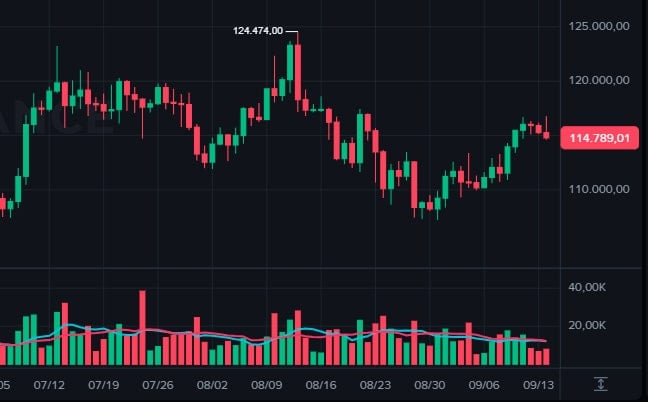
Bitcoin (BTC) price underwent a significant correction on Monday, falling below $115.000 after unsuccessfully trying to break resistance above $116.000. BTC started the day trading near $114.994, down nearly 1%, but fell as low as $114.600.
This week will be marked by the US central bank's meeting on Wednesday, in which the Fed may cut interest rates for the first time in more than two years.
BTC's market cap has fallen to less than $2,29 trillion, even as its dominance over other cryptocurrencies has risen to around 56%, with altcoins suffering greater losses.
Dogecoin (DOGE) was one of the hardest hit. After a strong weekend rally, the token fell nearly 10%, trading below $0,26—reinforcing the prevailing negative tone.
Other altcoins also saw significant declines. Solana (SOL), Cardano (ADA), and SUI each lost approximately 5–6%. Chainlink (LINK) and Avalanche (AVAX) also fell around 5%. Ethereum (ETH), meanwhile, fell from around $4.750 to near $4.500, with a daily decline of around 3%. XRP broke through key support levels after a 3,5% drop.
Amid this movement, Monero (XMR) appears as an exception among the major altcoins, up approximately 8%, trading close to US$310.
In the broader market, the total value of cryptocurrencies lost about $80 billion in the last 24 hours, falling to just above $4,09 trillion. This massive decline indicates strong pressure on liquidity and confidence in the short term, with investors reacting to technical resistance, macroeconomic concerns, and signs of profit-taking.
Disclaimer: The content of this article solely reflects the author's opinion and does not represent the platform in any capacity. This article is not intended to serve as a reference for making investment decisions.
You may also like
SUI Eyes 528% Upside: Key Breakout Levels From $1.34 to a Potential $6.70 Target

Wall Street sets a positive tone for the long-term prospects of AI; the Fed's interest rate path for October remains uncertain! Cooling US Treasury yields open a window for tech sector rebound?
Waller’s series of speeches at the IMF reinforced the view that cutting-edge AI technology will fundamentally reshape the economy in the long term, but he did not commit to a pause in rate hikes in October. For global semiconductor stocks, which have recently experienced heavy sell-offs and entered a correction phase, the positive aspect is that he did not further intensify short-term rate hike expectations.

Tesla's sports car can really fly!
Tesla's second-generation Roadster was unveiled at the SpaceX test site, marking a significant debut nine years after pre-orders first began in 2017. Mass production is scheduled for 2028. The new vehicle features a fan suction system and compressed air thrusters, enabling genuine "flight." Elon Musk confirmed that this will be Tesla's last model to support manual driving. Analysts predict that sales of 7,000 units in the first year could generate nearly $2 billion in revenue, with extremely high profit margins being its core commercial value.
Earnings season is here! Citadel Securities: The next few weeks will be the real stress test for U.S. stock fundamentals
The US stock market enters Q3 earnings season, with market expectations for S&P 500 earnings per share to grow 27% year-over-year, marking the third highest threshold ahead of earnings seasons since 2010. However, the growth is highly concentrated—Micron and Nvidia alone contribute 36% of expected gains. Retail investors’ weekly net buying surged to $9.1 billion, with semiconductor purchases reaching a historic peak. Citadel Securities warns that index volatility has fallen to its calmest range in nearly 30 years, while individual stock risks are quietly rising, making stock picking preferable to simply increasing index allocations.
Crypto prices
More


