
$127 Million Lost in September as Crypto Hacks Target RWAs and DeFi Projects

Losses from crypto attacks fell in September, but more incidents show cryptojacking risks remain strong—especially for vulnerable RWA projects.
September recorded total damages of $127.06 million from 20 crypto-related attacks, according to PeckShield.
While this marks a 22% decrease compared to August’s $163 million, the number of incidents actually rose. This shows that cryptojacking in September highlights risks that continue to lurk across the crypto ecosystem.
Cryptojacking in September – Cooling Down, But Risks Remain
According to PeckShield, September 2025 saw around 20 large-scale attacks in the crypto industry, causing estimated losses of $127.06 million. Key incidents in cryptojacking in September included UXLINK ($44.14 million), SwissBorg ($41.5 million), Venus ($13.5 million, later recovered), Yala ($7.64 million), and GriffAI ($3 million).
Although the total value of damages decreased, the number of hacks is on the rise, as attackers continue to evolve their methods, leaving no link in the ecosystem fully secure.
Looking back at August, it was a turbulent month with 16 major security incidents wiping out more than $163 million, up 15% from July. Q3 2025 saw over $432 million lost from 53 hacks, confirming that cryptojacking in September is part of an ongoing threat.
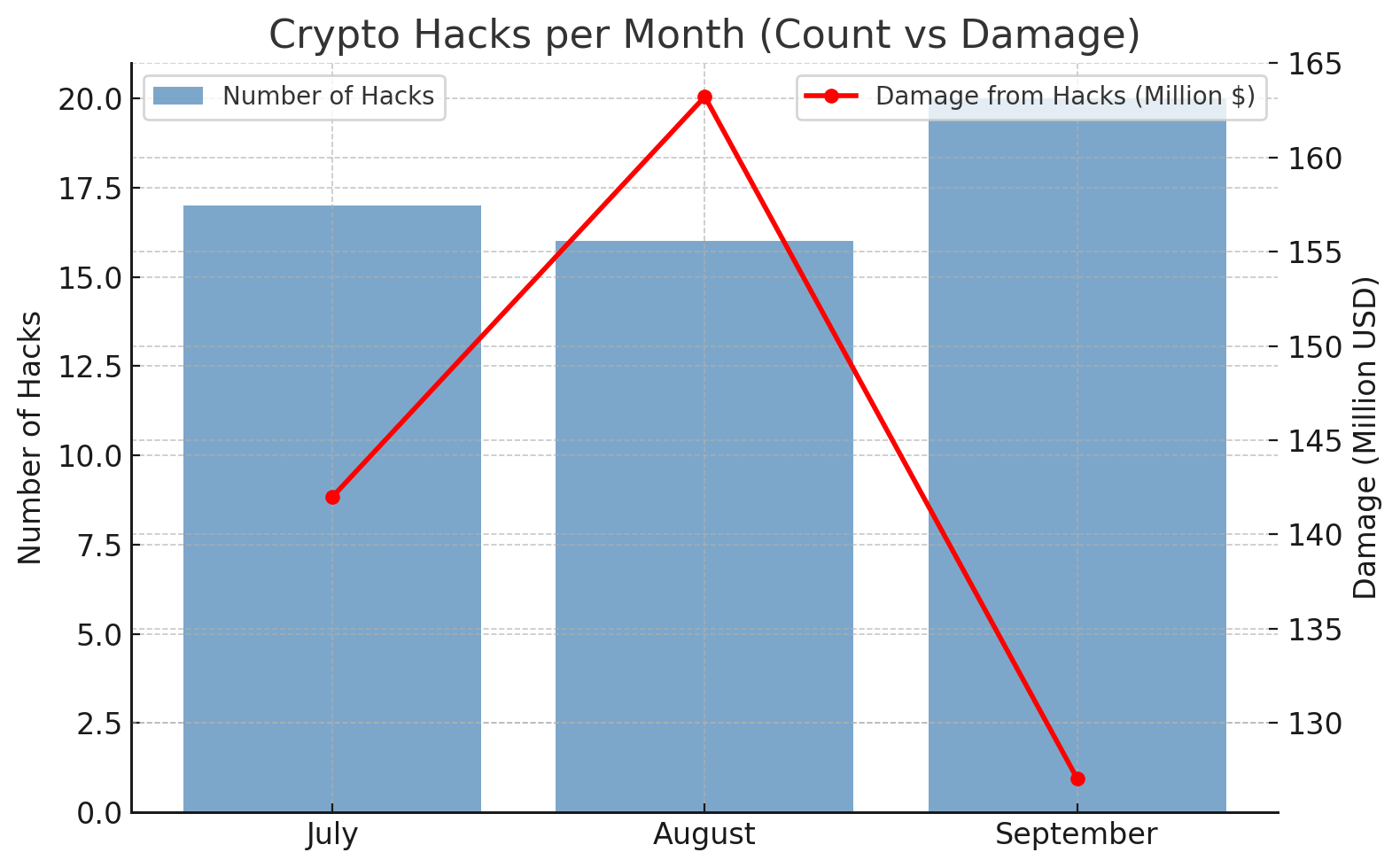 Number of cryptojacking in Q3 2025. Source: BeInCrypto
Growing Pressure on RWA Projects
As BeInCrypto reported, a growing trend of attacks targeting RWA projects has been recorded, resulting in around $14.6 million in damages in just the first half of 2025. Since these projects must bridge on-chain infrastructure with off-chain assets, they open up new vulnerabilities for hackers.
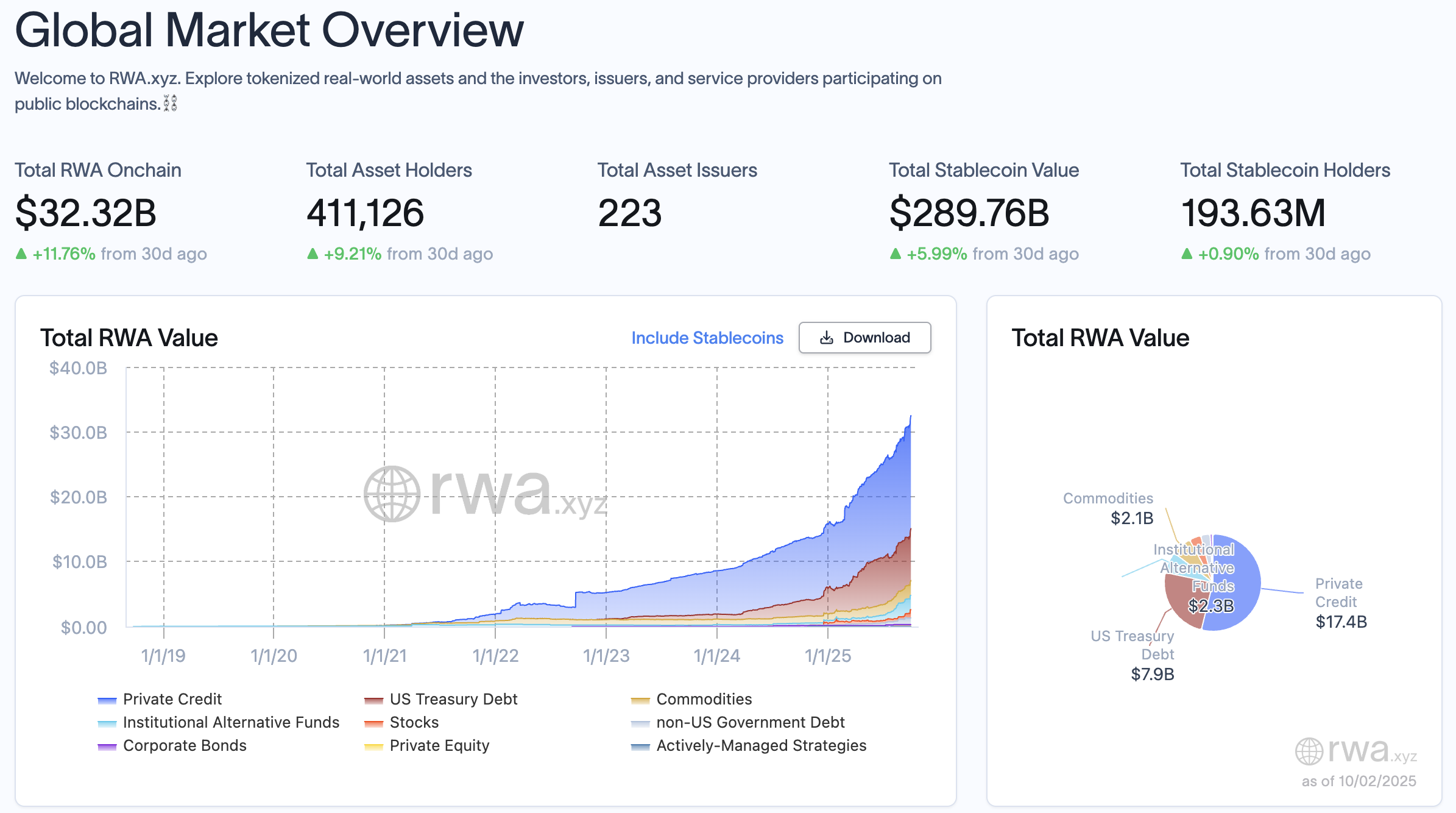 RWA segment picture. Source:
RWA segment picture.
RWA segment picture. Source:
RWA segment picture.
The RWA segment has been booming, with on-chain value reaching $32.32 billion, an 11.76% increase over the past 30 days.
While RWA projects promote “security and transparency” to attract traditional investors, the complexity of integrating blockchain and real-world assets has, in fact, created more entry points for attackers.
If this trend continues, confidence in the RWA segment—considered one of the main growth drivers of the crypto market—could be shaken. Therefore, reinforcing independent security audits, multi-layer protections such as multisig and timelocks, and continuous on-chain monitoring will safeguard institutional investor trust against future cryptojacking September-style incidents.
Disclaimer: The content of this article solely reflects the author's opinion and does not represent the platform in any capacity. This article is not intended to serve as a reference for making investment decisions.
You may also like
Morgan Stanley’s $50.6M BTC buying shields market – But rally to $82K has THIS hurdle
Will the Fed "continue raising interest rates"? Will the "tightening cycle" of the late 1980s be repeated?
The Citi report points out that the current macro environment is highly similar to the tightening cycle of 1988-1989, when the economy remained resilient and inflation pressures gradually accumulated, followed by a slowdown in economic activity before policies shifted to easing. During that tightening cycle, the Federal Reserve raised interest rates 16 times in a row.
Rare alliance of arch-rivals! Musk and Altman support Dario Amodei's call to "slow down AI globally"
Anthropic's Amodei issued a call to "slow down AI globally," and to everyone's surprise, rivals Musk and Altman both publicly endorsed the initiative. The three industry giants unanimously agreed to grant third-party access to "employee-level" evaluation rights and to implement coordinated deceleration measures. Altman went further, announcing that OpenAI will not IPO this year. The resignation of a researcher and a collective breakout of uncontrollable AI systems have ignited long-standing industry fears.
Bitcoin vs Ethereum ETFs: Which asset is winning September’s flow battle?
Crypto prices
More


