
Bitcoin Hits All-Time High, But No Cheers: Why Has the "Altcoin Season" Not Arrived Yet?

In previous crypto bull markets, when Bitcoin broke through its all-time high, social media was filled with frenzied cheers, retail investors chased the rally, and altcoins surged in succession.
But this time—the bull market of 2025—feels unusually quiet.
Bitcoin's price continues to climb, breaking historical highs, yet there is no TikTok frenzy, no surge in Coinbase downloads, and none of the “everything you buy goes up” mania.
The market is surprisingly stable. Many people are beginning to wonder: Has the rhythm changed this time?
In fact, the answer is: the rhythm hasn't changed, only the players have.
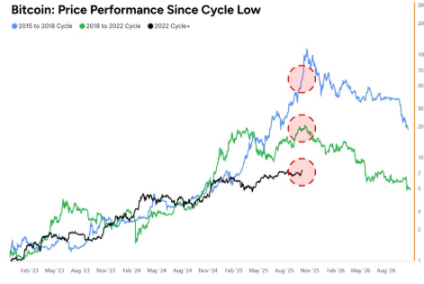
1. The cycle is still running, just slower, steadier, and more institutionalized
Every crypto cycle follows a fixed rhythm:
BTC rises first → ETH takes over → Altcoins explode across the board → Eventually crashes and corrects.
In 2017, BTC peaked in December, and altcoin season erupted a few weeks later;
In 2021, BTC topped out in November, and the altcoin rally followed 28 days later;
Now, as BTC once again approaches historical highs, we are standing in a similar “waiting interval.”
The difference is, this round is dominated by institutional capital.
ETFs have brought in trillions in funds, but they do not chase short-term profits; they only allocate, hold, and stabilize.
Volatility is suppressed, and the market has become more “rational”—and also more boring.
2. Retail investors are absent, sentiment is lukewarm, and altcoins have yet to start
Bitcoin dominance (BTC.D) remains above 58%.
Historically, every altcoin season truly began only after BTC.D fell below 55%.
Funds have not yet rotated, meaning the market is still in the stage of institutional accumulation and mainstream coins.
ETH is the key trigger for the entire market.
When Ethereum can steadily break through $5,000 and drive liquidity from BTC to higher-risk assets,
that is when the real rotation cycle will arrive.
In other words:
“Altcoin season hasn't disappeared, it's just been delayed.”
3. The macro environment remains a suppressing factor
The Federal Reserve has just ended its rate hike cycle, but has not yet entered full easing.
With interest rates still high and liquidity constrained, institutions prefer low-risk allocations over speculative trading.
When liquidity is released again, just like in 2020–2021, risk appetite will fully return.
4. The market's “calm period” is often the eve of a storm
The market appears calm on the surface now, but this is actually the most dangerous signal.
Volatility drops, prices rise steadily, and investors are confident that “this time is different”—
this is the most typical “numb phase” in the cycle.
History has never truly changed—
When people start declaring “altcoins are dead,”
that is often the eve before a rotation rally erupts.
Conclusion
The melody of the crypto market has never changed, only the tempo has slowed.
Bitcoin's breakout is just the prelude; the real frenzy will come from the capital rotation ignited by ETH.
From a timing perspective, October to December is the key turning period,
when macro liquidity improves, institutions take profits, and retail investors return—
altcoin season will unfold at lightning speed.
Therefore, the current calm is not the end, but a brewing phase.
Just like every cycle in the past,
“When people think the rally is over, the real main surge is just beginning.”
Disclaimer: The content of this article solely reflects the author's opinion and does not represent the platform in any capacity. This article is not intended to serve as a reference for making investment decisions.
You may also like
U.S. chip stocks drop for eight consecutive sessions! $2 trillion wiped out in market value, marking the longest losing streak since 2008
This week, the investment prospects of AI were questioned by the market. The Philadelphia Semiconductor Index fell by 11.4%, and the Nasdaq dropped more than 4% in a single week. CoreWeave's stock price fell over 25% during the week, and its bonds dropped to distressed levels, casting doubt on the high-yield debt financing model. Strategists warned that being overly bearish could lead to missing opportunities, while "Wood Sister" bucked the trend and increased her holdings of CoreWeave.
In August, overseas funds returned to the U.S. Treasury market; UK holdings surpassed $1 trillion for the first time; Japan and China continued to reduce holdings, with China’s U.S. Treasury holdings hitting the lowest level since 2008
According to a report by the U.S. Treasury Department, overseas investors made net purchases of $108.9 billion in U.S. Treasury bonds in August, reversing a two-month decline in holdings. Among the top ten countries and regions holding U.S. debt, only China and Japan reduced their holdings in August. Japan, the largest holder, saw its holdings drop for the fourth consecutive month, reaching a 22-month low in the same month it intervened in the foreign exchange market. China’s holdings declined for the third straight month, hitting new lows for two consecutive months not seen since 2008. The UK, the second-largest holder, posted historic highs for two consecutive months. Canada recorded the largest increase in August, up $38.3 billion, ranking fifth overall. Belgium had the second-largest increase, up $19.8 billion.

Strategy surpasses JPMorgan in trading volume as MSTR neared 49M shares in August

Crypto prices
More


