
AI predicts XRP price for end of 2025

XRP is currently experiencing a significant capital outflow in line with the broader market, but an artificial intelligence (AI) tool estimates the asset could potentially end 2025 valued above $3.
As of press time, XRP was trading at $2.48, having dropped nearly 12% in the past 24 hours. On the weekly timeframe, the token is down over 17%.
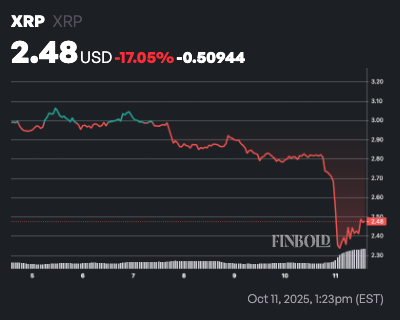
AI predicts XRP price
Regarding the asset’s outlook for the end of 2025, Finbold consulted OpenAI’s ChatGPT, which highlighted several factors likely to shape XRP’s trajectory.
The model noted that approval of an XRP-focused exchange-traded fund (ETF) could inject $3 to $10 billion in institutional capital, potentially driving the price higher. Conversely, a delay or denial of the ETF could stall growth or lead to a decline.
However, despite the approval being delayed due to the ongoing government shutdown, expectations remain high that regulators will grant the nod in 2025.
At the same time, ChatGPT noted that global macroeconomic conditions, geopolitical tensions, and Bitcoin’s performance are key influences. A positive end-of-year crypto rally could lift XRP alongside broader market momentum, while continued uncertainty could weigh on prices.
Additionally, Ripple’s adoption in cross-border payments and expanding partnerships in Europe and Asia provide further support for the asset, strengthening its fundamental demand.
XRP price key levels to watch
Considering current trends, support levels, and the potential impact of ETF approval, the AI analysis projects XRP could realistically end 2025 around $3.10 and $3.20 under a moderate scenario.
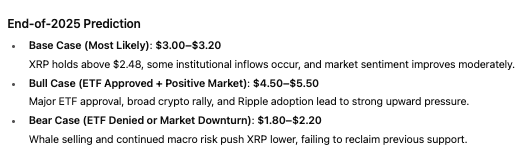
In a bullish outcome with ETF approval and a strong crypto market, XRP could reach $4.50 or higher. However, risks from whale selling and macroeconomic pressures could see the price fall to the $1.80 and $2.20 range.
Featured image via Shutterstock
Disclaimer: The content of this article solely reflects the author's opinion and does not represent the platform in any capacity. This article is not intended to serve as a reference for making investment decisions.
You may also like
U.S. chip stocks drop for eight consecutive sessions! $2 trillion wiped out in market value, marking the longest losing streak since 2008
This week, the investment prospects of AI were questioned by the market. The Philadelphia Semiconductor Index fell by 11.4%, and the Nasdaq dropped more than 4% in a single week. CoreWeave's stock price fell over 25% during the week, and its bonds dropped to distressed levels, casting doubt on the high-yield debt financing model. Strategists warned that being overly bearish could lead to missing opportunities, while "Wood Sister" bucked the trend and increased her holdings of CoreWeave.
In August, overseas funds returned to the U.S. Treasury market; UK holdings surpassed $1 trillion for the first time; Japan and China continued to reduce holdings, with China’s U.S. Treasury holdings hitting the lowest level since 2008
According to a report by the U.S. Treasury Department, overseas investors made net purchases of $108.9 billion in U.S. Treasury bonds in August, reversing a two-month decline in holdings. Among the top ten countries and regions holding U.S. debt, only China and Japan reduced their holdings in August. Japan, the largest holder, saw its holdings drop for the fourth consecutive month, reaching a 22-month low in the same month it intervened in the foreign exchange market. China’s holdings declined for the third straight month, hitting new lows for two consecutive months not seen since 2008. The UK, the second-largest holder, posted historic highs for two consecutive months. Canada recorded the largest increase in August, up $38.3 billion, ranking fifth overall. Belgium had the second-largest increase, up $19.8 billion.

Strategy surpasses JPMorgan in trading volume as MSTR neared 49M shares in August

Crypto prices
More


