

Zcash (ZEC) fully recovered losses from Friday’s crash, rallying to a recent high near $291 before stabilizing around $273; the ZEC price recovery highlights strong demand for the privacy-focused layer‑1 token despite a broad market liquidation triggered by U.S.–China tariff fears.
-
ZEC regained pre‑crash value and hit ~$291
-
Zcash climbed nearly 4x since October 1, outperforming many top tokens
-
ZEC fell ~45% during the liquidation event; now only ~5.5% below its recent peak
Zcash price recovery: ZEC rallies to $291 after market crash, now trading near $273 — read the latest on ZEC price action and market impact.
ZEC recovered all losses from Friday’s liquidation and reached a short‑term high of $291 before retracing to the low $270s.
What is driving the Zcash price recovery?
Zcash price recovery was driven by strong buyer interest after an extreme liquidation event; ZEC surged to about $291 on Saturday as traders covered short positions and rotation into privacy‑focused layer‑1 assets increased. Market sentiment improved despite macro shockwaves from tariff announcements.
How did ZEC behave during and after the Friday crash?
ZEC plunged roughly 45% on Friday, sliding from about $273 to near $150 amid a fast, market‑wide selloff following U.S. tariff announcements. Within 48 hours, Zcash reversed the move, forming a new recent high near $291 before consolidating around $273 at the time of reporting.
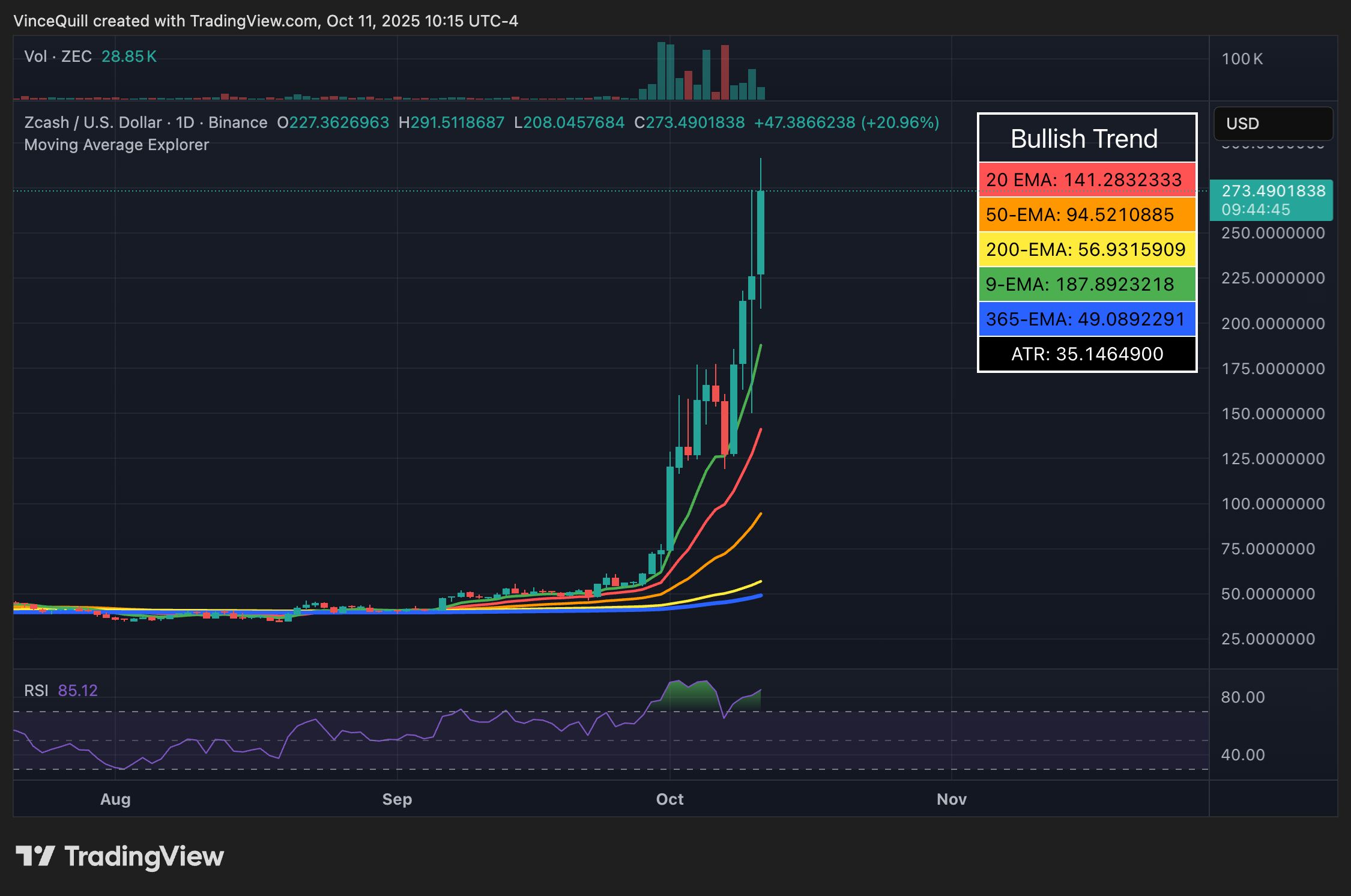
Zcash experienced a massive rally in October and is trading at pre-crash levels. Source: TradingView
Why did ZEC outperform many tokens during the rebound?
Several factors supported ZEC’s outperformance: a prior rapid rally that concentrated bids at higher levels, rotation into privacy and layer‑1 projects, and short‑squeeze dynamics as liquidations forced position covering. By contrast, major tokens such as Ether remained deeper below recent highs, reflecting broader risk‑off positioning.
Before the downturn, ZEC had rallied from roughly $74 on October 1 to about $291 on Saturday — almost a fourfold rise in under two weeks. The speed of that move contributed to the sharp retracement and equally swift recovery.
The liquidation event that triggered the selloff was one of the largest in recent history, with marketwide liquidations estimated near $20 billion within hours of the tariff announcement. This forced many leveraged positions to close and amplified volatility across spot and derivative markets.
Plain text mention of sources: Reuters reported concentration of rare earth production in China; TradingView provided price charts and short‑term market data. No external links are provided.
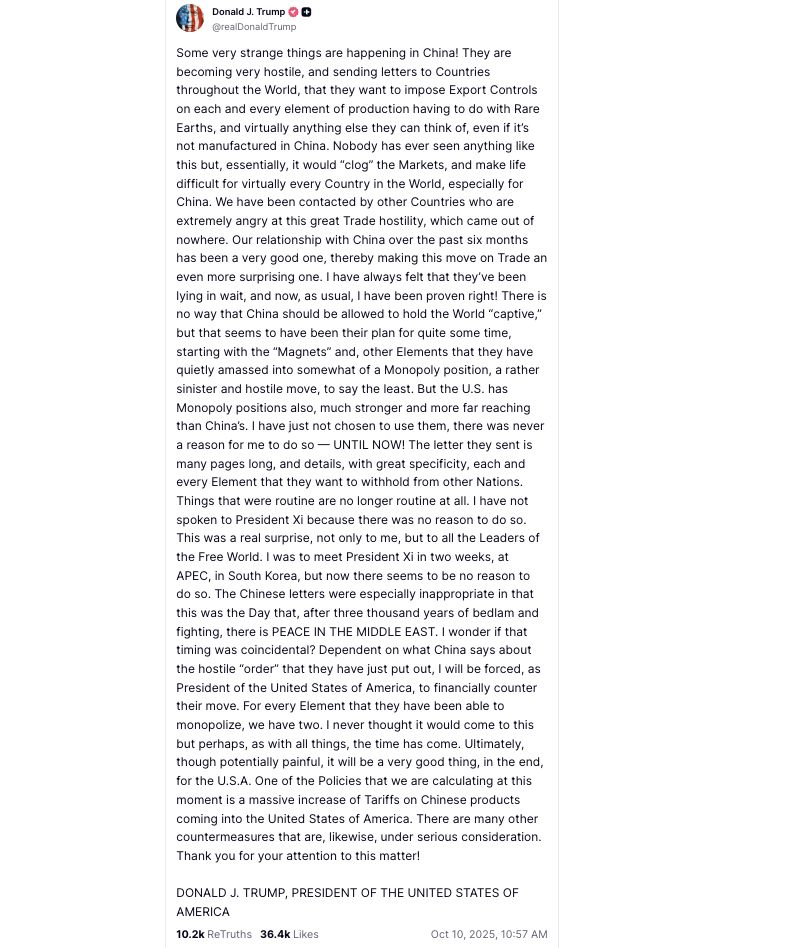
Source: Donald Trump
When did the macro shock occur and what triggered it?
The shock came on Friday after U.S. presidential social media posts signaled expanded tariffs and trade restrictions, including a 100% tariff announcement set to take effect on November 1, 2025. Those posts reignited fears of a steep global trade escalation and sent equities and crypto markets into rapid decline.
Frequently Asked Questions
Is Zcash (ZEC) back to pre‑crash levels?
ZEC briefly reached a recent high of ~$291 and was trading around $273 at the time of reporting, effectively recovering most losses from the Friday crash and sitting approximately 5.5% below the short‑term peak.
How big was the Friday crypto liquidation?
Marketwide liquidations were estimated at about $20 billion within hours of the tariff announcement, triggering steep declines across many crypto assets and forcing significant margin calls.
Key Takeaways
- Rapid rebound: ZEC returned to roughly $291 then settled near $273, recovering most losses.
- Event driver: U.S. tariff announcements triggered a large liquidation event that affected the whole crypto market.
- What to watch: Monitor volume, macro headlines, and relative performance versus major tokens for confirmation.
Conclusion
The Zcash price recovery reflects concentrated buying and short‑covering after one of the market’s sharpest liquidation events. ZEC’s return to near‑peak levels underscores demand for privacy‑focused layer‑1 tokens even amid macro uncertainty. Stay updated with COINOTAG for continuing coverage and data‑driven analysis.
Published: 2025-10-11 — Updated: 2025-10-11 — Author: COINOTAG
Related: Bitcoin may get ‘dragged around a bit’ amid Trump tariff fears: Exec
Magazine: Ether could ‘rip like 2021’ as SOL traders brace for 10% drop: Trade Secrets



