
Tariffs and a $19b wipeout: Santiment explains how US-China tensions hit crypto

A flash crash triggered by rising U.S.-China trade tensions resulted in $19 billion in liquidated cryptocurrency positions on Friday. This marked the most significant single-day purge of leveraged bets in cryptocurrency history.
- $19B in crypto positions liquidated after Trump’s hostile US-China remarks.
- Bitcoin fell 16% to $104K before rebounding; 1.6M traders wiped out in hours.
- Altcoins hit harder: LTC -51%, TON -41%, DOGE -39% before partial recovery.
According to Santiment , President Trump’s posts on Truth Social are to blame. Trump accused Beijing of becoming “very hostile” and threatened massive tariff increases on Chinese goods in retaliation for export controls on rare earth metals.
Bitcoin ( BTC ) dropped from approximately $124,000 to briefly touch $104,100 in a matter of hours before rebounding to $113,000.
As of the last check on Sunday, Bitcoin was trading just below $112,000, down over 9% in the past week.
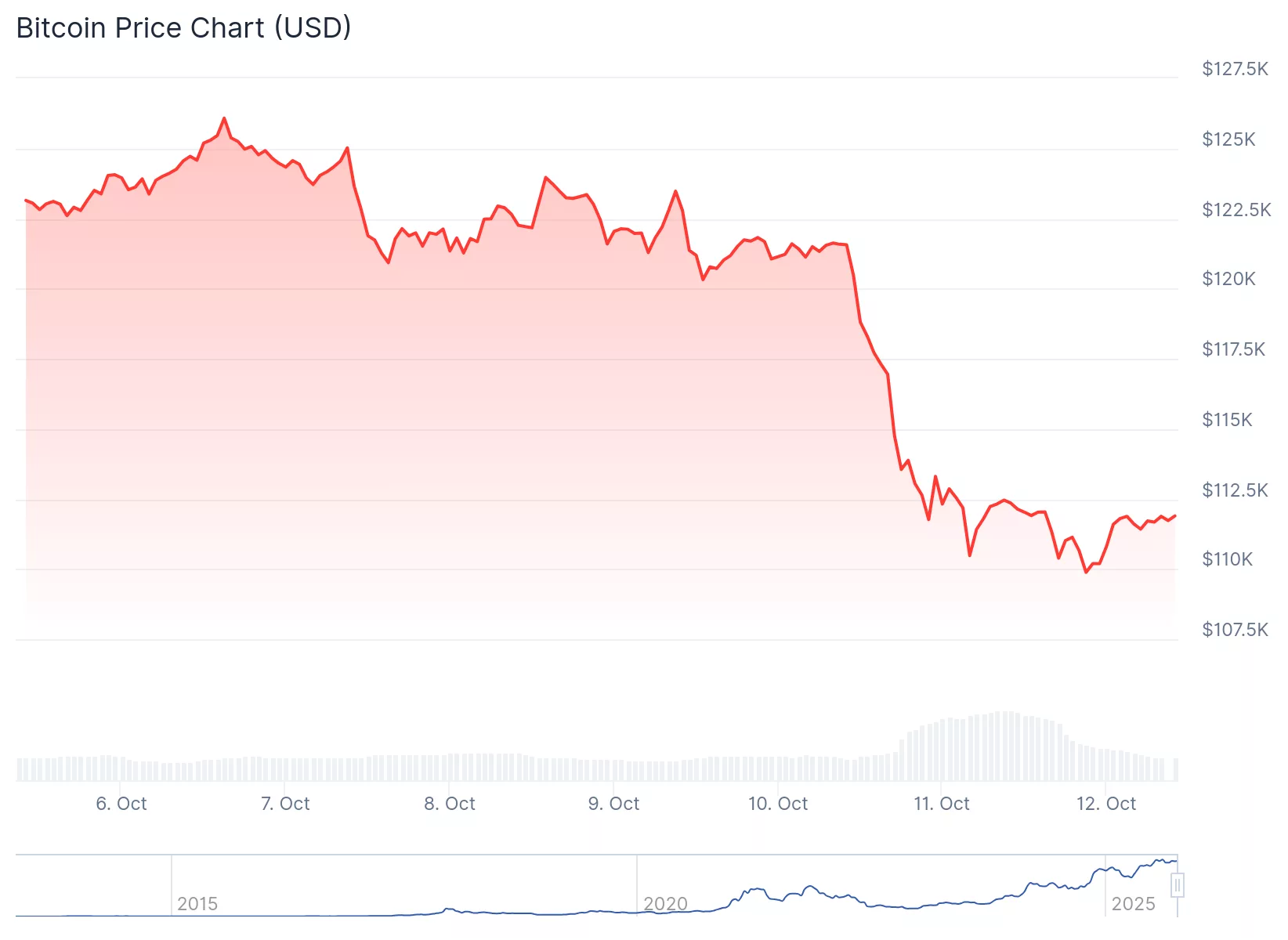 Source: CoinGecko
The selloff intensified about six hours after Trump’s initial post, with over 1.6 million estimated traders affected.
Of the $19 billion liquidated, approximately $16.6 billion came from long positions, while only $2.4 billion represented short position liquidations.
Altcoins experience severe market dislocations
While Bitcoin’s 12% temporary price drop led the headlines, altcoins faced more severe drawdowns during the crash.
Over the course of less than an hour, liquidations swept through leveraged positions, with percentage moves far exceeding Bitcoin’s decline:
- Litecoin ( LTC ), -51%
- Toncoin ( TON ), -41%
- Dogecoin ( DOGE ), -39%
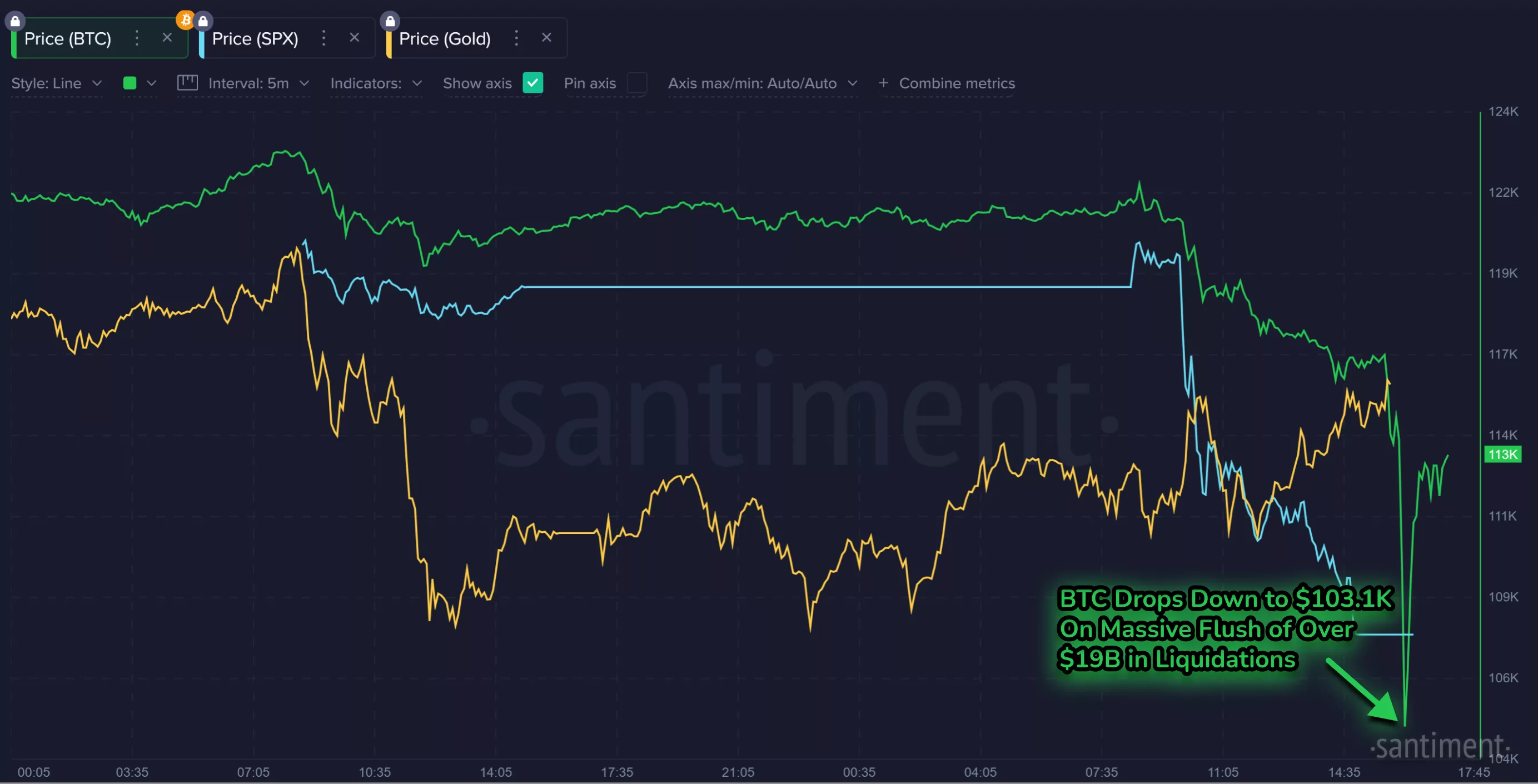 Source: Santiment
When forced liquidations begin, the relatively minor order books for altcoins compared to Bitcoin mean that price impacts are magnified as positions unwind.
Santiment’s analysis noted that discussions related to U.S.-China tariff concerns spiked after the crash, with retail traders quickly reaching consensus about attributing the flush to geopolitical events.
Retail sentiment shifts to bearish expectations
For the first time in October, Santiment data showed a four-hour stretch where words like “lower” or “below” received higher mention frequency than “higher” or “above” in crypto discussions.
The sentiment reversal occurred after months of predominantly bullish positioning, with the crash serving as a reminder that crypto remains vulnerable to sharp corrections.
Santiment noted that Trump and Xi relationship developments will likely remain central to trading decisions in the near term.
If diplomatic talks yield positive developments, retail sentiment toward crypto is likely to improve correspondingly.
However, if the relationship deteriorates further, Santiment warns that predictions of “Bitcoin sub-$100K” could become more prevalent among traders who reassess their risk.
Meanwhile, precious metals gained as traders sought tangible safe havens amid currency devaluation fears. Gold surged past $4,000 per ounce as Bitcoin exhibited behavior more consistent with risk assets than that of safe havens during periods of geopolitical tension.
Disclaimer: The content of this article solely reflects the author's opinion and does not represent the platform in any capacity. This article is not intended to serve as a reference for making investment decisions.
You may also like
The Kiwi defies hot US inflation as Fed pause bets weaken the USD
Apple says iPhone Duo demand is "unprecedented," pre-orders sold out within minutes, deliveries postponed until January next year
Within minutes of opening pre-orders for Apple's first foldable screen phone, iPhone Duo, the delivery period was extended to the end of January next year, affecting all colors and storage configurations. Analysts from Bloomberg Intelligence have raised their sales expectations, believing that sales may surpass the target of 14 million units and $28 billion. On Friday, Apple's stock price rose slightly by 0.43%.

Credit panic hits AI trading: CoreWeave bond yields remain high, Nasdaq posts biggest weekly drop since late June
Concerns over the debt risk of AI infrastructure companies continue to rise. Yields on some CoreWeave bonds briefly exceeded 15% on Thursday and remained elevated on Friday. CoreWeave's stock price plunged another 12% on Friday, and the Nasdaq Composite Index fell about 4.5% for the week. Analysts point out that as capital costs rise to unbearable levels, companies will have no choice but to reduce their capital expenditures.
Philadelphia Semiconductor Index Experiences Longest Losing Streak Since 2008; Jensen Huang Responds Calmly: Short-term Fluctuations Won't Change AI's Long-term Growth Prospects
Despite recent sell-offs in AI-related stocks, Nvidia CEO Jensen Huang remains confident in the long-term prospects of the AI industry.
Crypto prices
More


