
The Real Recovery Phase: How Should the Market Rebuild After Leverage Liquidation?

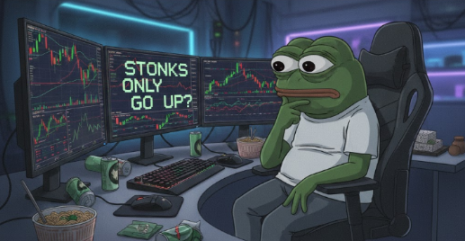
The crash is over.
Leverage has been liquidated, funding rates have returned to zero, and open interest (OI) has been almost completely wiped out.
Now, the real question arises—
How will the market rebuild from the ruins?
1️⃣ A rebound that's too fast is not strength, but a trap
If prices surge rapidly,
OI spikes again, and funding rates turn positive,
that is usually not a “strong comeback,” but rather a **“repeat of the same mistake”**.
Those leveraged positions that were liquidated last week
will add to their positions again at the same levels,
causing the market to replay a “bull trap.”
A quick rebound only creates the illusion of liquidity,
not a true recovery of buying interest.
2️⃣ Real recovery comes from being “slow” and “steady”
If the market starts to climb slowly,
OI grows moderately, funding rates remain neutral,
and spot inflows steadily rise—
that means the market is rebuilding on the basis of real buying.
When this kind of “clean accumulation” begins,
volatility will decrease, trading volume will stabilize, and on-chain accumulation by long-term addresses will appear.
This is the healthiest phase before the bull market restarts.
3️⃣ Four key indicators to watch right now
1️⃣ Speed of OI rebuilding
Too fast = replay of the trap
Slow = healthy recovery
2️⃣ Funding Rate
Neutral = stable structure
Positive = overheating signal
3️⃣ Spot Inflows
Steadily rising = confidence returning
4️⃣ Market Sentiment
Fear is good, greed is dangerous.
4️⃣ Leverage flush brings a short-term “purification window”
This “comprehensive leverage reset” often brings a 2–3 week purification period.
During this time, the impact of spot buying will be amplified 2–3 times,
because the market has temporarily lost the interference of high-leverage funds.
In other words:
Those investors who gradually build positions during this period, stick to spot, and avoid chasing the rally,
will become the biggest winners in the next upward move.
Conclusion:
Now is not the time to “rush in and bet on a rebound,”
but rather the time to observe market structure and let the system naturally rebuild.
The market needs to find its “underlying support” again—
driven by real buying, not leverage.
When you see the following three signals appear at the same time:
✅ OI stabilizes below $55B
✅ Funding rates remain neutral
✅ Net inflows of stablecoins continue to increase
that will mean the market has truly “restarted,”
and the new upward cycle will be more sustainable.
Disclaimer: The content of this article solely reflects the author's opinion and does not represent the platform in any capacity. This article is not intended to serve as a reference for making investment decisions.
You may also like
Stablecoin supply has stalled in 2026, but payments rose by 45% to $480B: Report
The most dangerous divergence in U.S. stocks: ordinary stocks have already plummeted, how much longer can AI giants hold on?
Significantly tightened financial conditions are heavily impacting ordinary stocks in the US stock market, with the median S&P 500 constituent falling 15% from its peak and the equity risk premium dropping below zero. Rising US Treasury yields and oil prices have pushed the financial conditions index sharply higher, resulting in a severe deterioration in breadth beneath the apparent calm of the index. Market divergence is intensifying, raising the core uncertainty of whether ordinary stocks will catch up or the index will converge downward.

Will APT’s price clear $0.87 after Aptos’s launch of Block-STM v2 upgrade?

Sui integrates Alibaba Cloud for AI payments, price eyes $1.40 target

Crypto prices
More


