
Who is the real "controller" behind the evaporation of $1.9 billion?

The drop in October was not an ordinary correction,
but a blatant display of power.
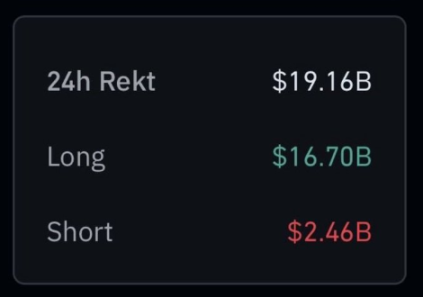
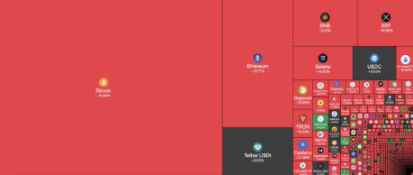
1.9 billions dollars in positions were wiped out overnight,
this was not a "black swan," but the system telling you—
who is the real operator behind the scenes.

❶ This is not a crash, but a "reminder"
Last week's events were far more than just a price collapse.
If you still think the crypto market runs freely,
then you haven't seen the truth at all.
The rules here are not written on the blockchain,
but deep inside the wallets of whales and the matching engines.
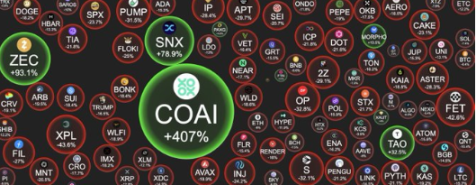
❷ 1.9 billions dollars evaporated overnight
No Trump tariffs, no China FUD,
no external news catalyst.
The real trigger was—Binance's oracle glitch.
The whales were the first to spot the anomaly,
quietly cleared the table,
while retail investors hadn't even realized the game was over.

❸ The problem is not liquidation, but vulnerability
You can perfectly control leverage and set stop-losses,
but when the exchange misprices your collateral,
all risk management becomes meaningless.
This is the hidden cost of centralized infrastructure—
you think you are trading,
but in reality, you are borrowing someone else's game engine.
❹ The crypto world is like an F1 car
It is incredibly fast, technologically advanced, and endlessly innovative.
But no one checks—
whether the tires can withstand such speed.
When liquidity cracks appear,
the whole machine can spiral out of control within seconds.
This is not a hacker attack, nor macro headwinds,
but the system itself overloading and losing balance.
❺ A 24/7 market, built on a 9-to-5 foundation
Traditional finance can hit the "pause button" in times of panic,
but the crypto market cannot.
This is both its strength and its curse.
The market never sleeps,
and sometimes it collapses in its dreams.
❻ The problem is not Binance, but complexity itself
Every new innovation brings new vulnerabilities.
Every cycle exposes the same fragility in different forms.
This round just came with a new "system error" shell.
❼ So, what is the real defense?
If you can still be wiped out even with proper risk management,
what you need is not smarter bets,
but more thorough protection.
The survival rule in the crypto world is not to make you rich overnight,
but to let you survive long enough to witness the next wave of wealth.
❽ Survival Rule One: Never put all your funds on an exchange
Cold wallets are for secure storage,
hot wallets are for daily trading.
If you play with contracts,
please set up separate accounts to isolate risk.
Convenience is poison—security is the real return.
❾ Survival Rule Two: Refuse full position and cross margin
Every trader without risk controls
will eventually be liquidated.
Only invest what you can afford to lose.
If you refuse to set limits,
the market will set them for you.
❿ 1.9 billions dollars is not a loss, but tuition
Optimists see progress, analysts see mistakes,
while realists see—inevitability.
Market crises never repeat,
they only rhyme in new lines of code.
We haven't fully understood this line of code yet,
but the lesson is already written on the chain.
Conclusion:
This crash is not the end, but a reminder.
Reminding us:
The crypto market has never been a decentralized paradise,
but a system fueled by speed and leverage,
where any tiny mistake can ignite the whole system.
Next time the market falls into chaos,
smart money won't panic,
they will first make sure—they are not under the system's loopholes.
Disclaimer: The content of this article solely reflects the author's opinion and does not represent the platform in any capacity. This article is not intended to serve as a reference for making investment decisions.
You may also like

CoreWeave, the "Eye of the Storm" in the Latest AI Crash amid "Double Blow to Stocks and Bonds"
CoreWeave's stock price plummeted 25% in a single week, with junk bond yields soaring to 15% and the default probability exceeding 60%, triggering a financing crisis in AI infrastructure. This "double whammy" in both stocks and bonds has led to an 11% drop in the Philadelphia Semiconductor Index and the Nasdaq 100 experiencing its worst weekly performance of the year. Market participants warn that this marks a turning point in AI hype credit pricing—the high-leverage, heavy-debt expansion model is now facing a severe test amid elevated interest rates.

Japan taps Chainlink’s CCIP to accelerate tokenization — Details

Bank of America’s Hartnett, who accurately predicted major declines: “Sell signal” is over, investors will "return to tech stocks in mid-November”, the key lies in “chip prices”
Bank of America’s “sell signal” has ended, but this is by no means a call to bottom fish. Currently, the AI financing gap is widening, and technology stocks are extremely crowded. Strategists warn that the key to whether technology stocks can rebound in November depends entirely on “semiconductor prices.” In the short term, it is advised to avoid technology stocks, maintain a defensive stance, and position in small caps and REITs.

Crypto prices
More


