
Puffpaw: How Can an E-cigarette Project Help Users Quit Smoking?

Puffpaw is very similar to a combination of StepN and Helium Mobile. Although its core is DePIN physical infrastructure, the user participation in the "mining" process is gamified.
Puffpaw is very much like a combination of StepN and Helium Mobile. Although its core is DePIN physical infrastructure, the process of users participating in "mining" is gamified.
Written by: Sleeping in the Rain
Why has the e-cigarette project Puffpaw become one of the most anticipated projects before the launch of Berachain's mainnet?
Why is the main concept of an e-cigarette project "quitting smoking"?
What kind of chemistry will occur between Puffpaw and Berachain?
I will share my own views in the following article ⬇️
1/ How does Puffpaw help users quit smoking?
Its core is similar to Stepn, where tokens are used to reward users' correct behaviors, aiming to help users quit smoking. Puffpaw allocates rewards based on users' daily inhalation volume, the duration of each smoking session, and time points. Users who exhibit correct behaviors can receive more rewards.
You can check out @0xYond's tweets for more details.
2/ Next, let's dive deeper into the three questions mentioned above about Puffpaw.
1. Background
Puffpaw is incubated by Berachain's official incubator Build-A-Bera and has a very strong official background. In other words, this project is part of Berachain's core circle.
2. Uniqueness and Consumer Application
Unlike traditional DePIN projects, Puffpaw uses tokens to drive user behavior, with its physical device—the e-cigarette—serving as middleware connecting the project and users. This difference gives Puffpaw greater development potential.
The basic logic of previous DePIN projects is similar to PoW: "sell mining machines - users mine to earn tokens - use the money from selling mining machines to raise funds and attract more buyers - sell more mining machines." The only difference is that DePIN projects assign a special mission to their mining machines, such as solving a problem in the traditional world.
The problem, however, is that these physical mining machines are difficult to apply in everyday life (Helium Mobile does a good job in this regard), making it hard to enter daily scenarios and thus difficult to expand into the traditional world, let alone achieve mass adoption.
Puffpaw's entry point is the everyday scenario of "smoking & quitting smoking"—smokers have a continuous need to quit, while non-smokers can recommend Puffpaw to their smoking friends to help them quit (and share token incentives proportionally with friends). The implementation of everyday scenarios increases user stickiness to the product.
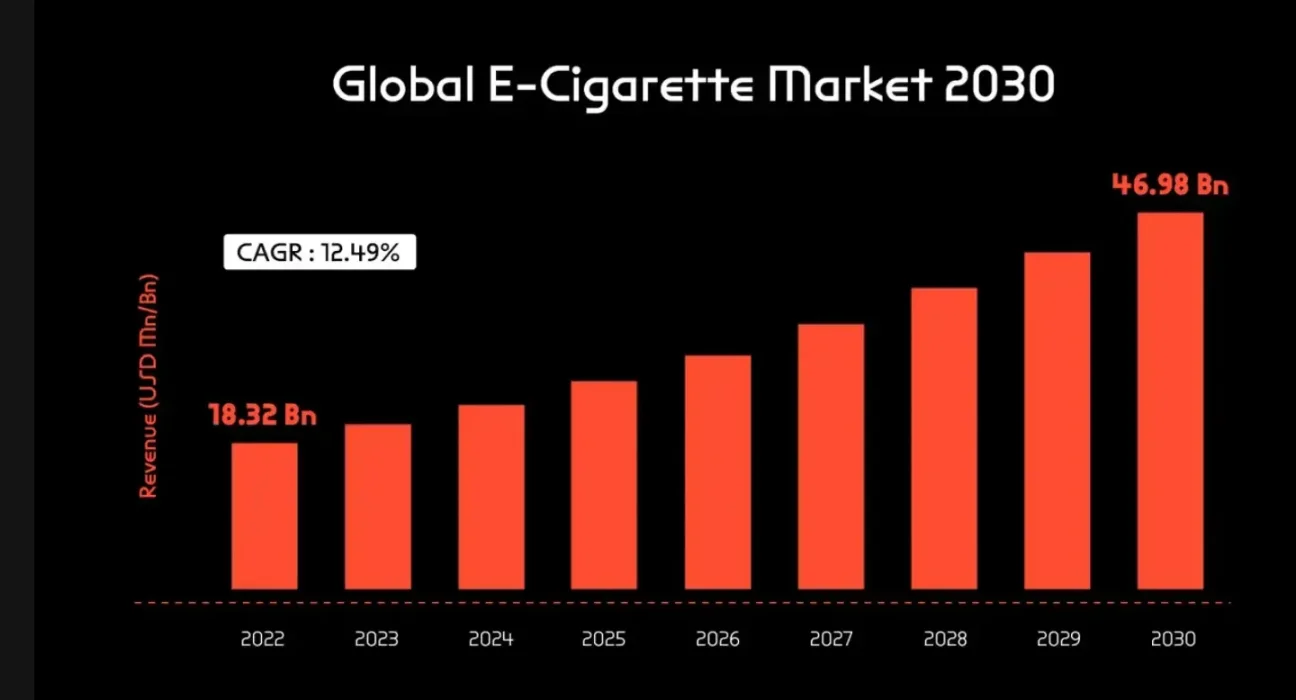
At the same time, the e-cigarette market is growing rapidly. According to statistics, the entire market is expected to reach $46.98 billions by 2030, with a compound annual growth rate of 12.49%. Puffpaw will also benefit from the expansion of the market size.
3. Gamification
In my opinion, Puffpaw is very much like a combination of Stepn and Helium Mobile. Although its core is DePIN physical infrastructure, the process of users participating in "mining" is gamified. While using the Puffpaw e-cigarette, users cannot earn more token incentives by simply smoking more. They need to rationally follow the task framework set by Puffpaw to earn token rewards (including a TG mini-game launched before the mainnet, as well as social and NFT gameplay).
This is also one of the reasons why I am optimistic about Puffpaw.
For recent updates on Puffpaw, you can check out the introduction by Bear Home @0xBerahome.
3/ Next, let's talk about Berachain's core design PoL and how it might interact with Puffpaw.
I won't elaborate too much on the likelihood of earning BGT emissions by providing Puffpaw token LPs, as this is a basic function of Berachain. Here, I mainly want to discuss the new information released by Berachain: "Any token that meets the ERC20/4626 standard can apply to become a 'Reward Vault' and receive BGT emissions from nodes as rewards."
In my opinion, this BGT emission model is very friendly to games and other products that require users to complete specific actions. As long as the proposal passes, users can receive BGT emissions after performing specific actions and obtaining proof. Puffpaw can fully utilize this model to provide higher token incentives for senior/loyal users, attracting more users while maintaining high user stickiness.
The above is my answer to the previous three questions, along with some of my personal opinions.
Disclaimer: The content of this article solely reflects the author's opinion and does not represent the platform in any capacity. This article is not intended to serve as a reference for making investment decisions.
You may also like
Anthropic has been profitable for two consecutive quarters ahead of its IPO
Anthropic has achieved positive adjusted operating profit for two consecutive quarters, with Q2 revenue surging 14-fold year-on-year to $11.5 billion and annualized revenue reaching $65 billion. The gross margin exceeds 80%. The company has chosen to list on Nasdaq, with a potential valuation of up to $2 trillion. Dramatically, the CEO has made a rare call to slow down AI development just before the IPO. Analysts believe that balancing safety concerns with commercial competition will become the core challenge.
Anthropic signs $13.7 billion computing power agreement with "Trump-linked company" Rum Group
Anthropic has signed a $13.7 billion, six-year computing power agreement with Rum Group. The core of the agreement is a data center under construction in Georgia. Rum Group was formerly the conservative video platform Rumble, whose early investors include current U.S. Vice President Vance.
Will the midterm elections cause the US stock market to crash? 75 years of history give an unexpected answer
Currently, with less than eight weeks until the midterm elections, one of the greatest uncertainties facing Wall Street is imminent. But will the reshuffling of power in Congress lead to a stock market crash? Looking back over 75 years of history, the answer is surprising, and ultimately leans toward optimism.

Crypto prices
More


