
Bitcoin falls to its lowest point since June, with the "after-effects" of October's flash crash still lingering!

Multiple negative factors are weighing on the market! Trading sentiment in the cryptocurrency market remains sluggish, and experts had previously warned of a potential 10%-15% correction risk.
On Tuesday, Bitcoin declined for the second consecutive trading day, falling below the $104,000 mark, with an intraday drop of up to 3.1%, reaching its lowest level since the end of June. Ethereum fell as much as 3.9%, and several so-called "altcoins" also experienced similar declines. Multiple indicators highlight the depressed sentiment among cryptocurrency traders.
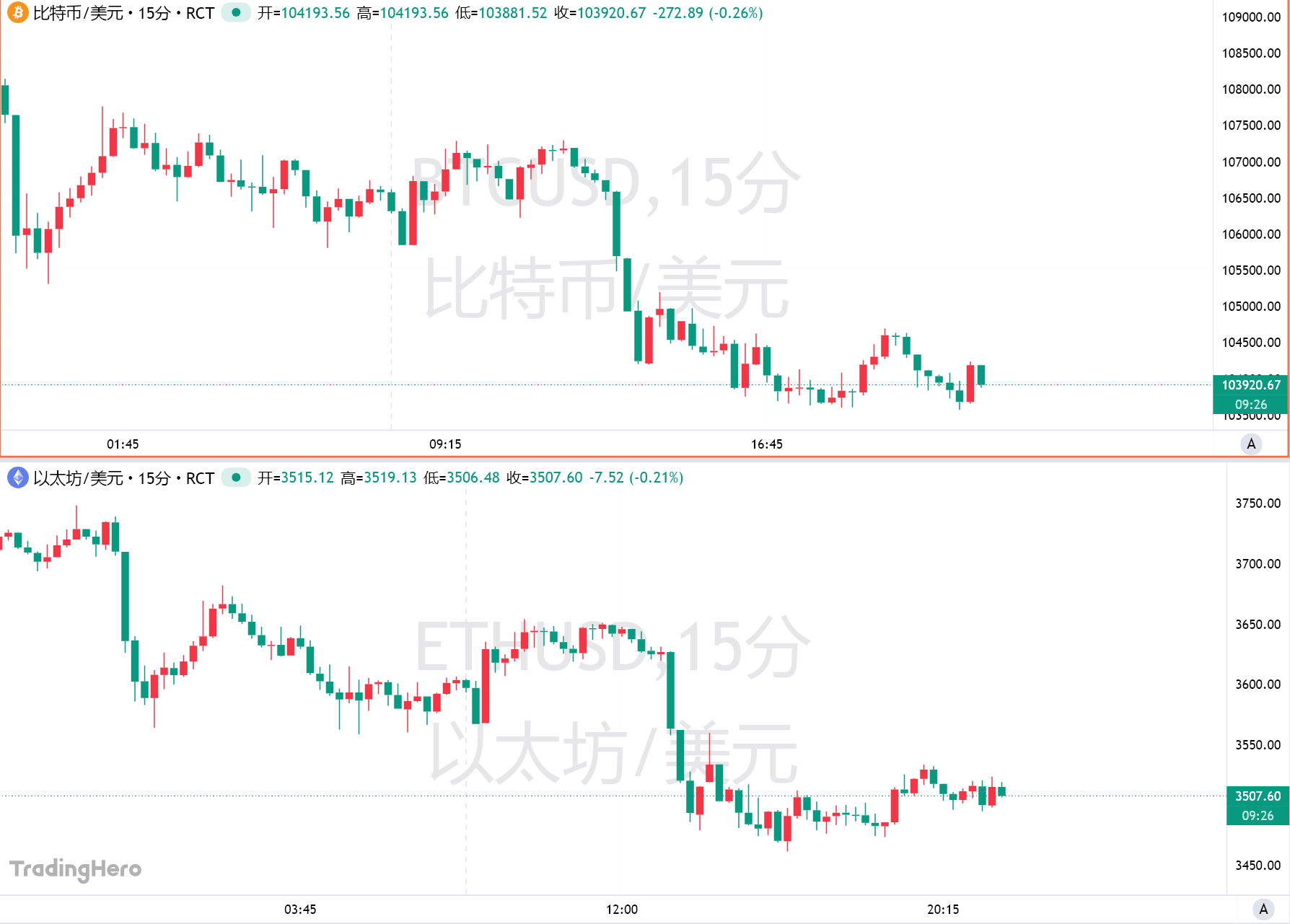
This decline occurred three weeks after a historic liquidation event—which wiped out billions of dollars in leveraged cryptocurrency positions. Since then, investors appear reluctant to bet on a rebound in Bitcoin and smaller tokens.
Cryptocurrencies are facing numerous headwinds, including ETF outflows and concerns that digital asset management firms may sell off holdings. If Bitcoin falls further, investors' attention will focus on the closely watched $100,000 level, which Bitcoin only briefly dipped below in mid-June.
Market maker Keyrock stated in a report that traders are "unwilling to reinvest large amounts of capital." Open interest in Bitcoin perpetual futures contracts is around $68 billion, down about 30% from the October peak. According to CoinGlass data, liquidations are ongoing: in just the past 24 hours, selling pressure across the entire cryptocurrency market wiped out $1.2 billion in long positions.
Meanwhile, over the past four trading days, investors have withdrawn more than $1.8 billion from spot Bitcoin and Ethereum ETFs.
The macroeconomic environment is also unfavorable. Expectations for a Federal Reserve rate cut in December have dropped sharply, meaning the high-interest-rate environment may persist for longer. XS.com market analyst Lin Tran pointed out that this "raises the opportunity cost of holding non-yielding assets like Bitcoin, while also dampening short-term speculative momentum."
Greater uncertainty comes from a crisis in the decentralized finance sector. On Monday, the Ethereum-based decentralized finance protocol Balancer suffered a hacker attack, with over $100 million in digital assets stolen. This vulnerability is the latest in a series of bearish events over the past few weeks, leaving digital asset investors on edge.
Previously, fintech expert and Concord Fintech Solutions co-founder Olena Sosiedka warned that after the rapid rise in cryptocurrency prices from September to early October, Bitcoin would enter a "correction and consolidation period." The expert predicted: "Clearly, Bitcoin will remain volatile in the coming weeks."
Sosiedka warned that if institutional interest cools significantly or the Federal Reserve shifts its policy, it could trigger a 10%-15% correction in Bitcoin prices.
She advised: "Current market sentiment is extremely sensitive, so it is important not to chase highs, but to remain calm and take strategic, gradual actions."
Disclaimer: The content of this article solely reflects the author's opinion and does not represent the platform in any capacity. This article is not intended to serve as a reference for making investment decisions.
You may also like
10-year Yield Plunges 17 Basis Points in One Week! AI Trading Turbulence Rekindles Safe-Haven Appeal of US Treasuries
AI trading has loosened, reactivating the safe-haven attribute of US Treasury bonds. Last week, the 10-year yield dropped 17 basis points in a single week, synchronizing with the decline in tech stocks—a phenomenon not seen since the tariff storm in April 2025. The unusually concentrated short positions amplified the bond market rally, and large-scale short-covering by CTA funds has also become a key driver in this round of bond rebound.
From Digital Assets to Reshaping Financial Pipelines! BlackRock (BLK.US) Accelerates Integration of Tokenized Funds into the Core of Wall Street
Wall Street’s embrace of blockchain technology is moving beyond simply creating digital versions of stocks, bonds, and money market funds, aiming instead for a broader goal—to transform the way these assets circulate within the financial system.

AI bubble alarm rings across Wall Street! Oaktree Capital's Marks disagrees: The market hasn't reached its most dangerous moment yet, and investors are not completely oblivious to risks.
Although investors are displaying typical FOMO (fear of missing out) sentiment regarding further gains in tech stocks, the market continues to draw comparisons between the current situation and past bubbles, indicating that investors are not unaware of the risks.

Barclays: Dual restrictions of physical and capital, data center growth will slow significantly in 2027!
Barclays' latest report reveals that the global data center construction boom is approaching a turning point—the year-on-year growth rate of new capacity will plummet from over 100% in 2026 to about 35% in 2027, and stabilize by 2028. Facing both physical constraints and tightened financing, hyperscale cloud providers will absorb more than 60% of new capacity, while the risk of project suspension for small and medium developers will sharply increase.

Crypto prices
More


