
AI’s Growing Demand for Power Drives Political Changes in Virginia, Georgia, and New Jersey
- Virginia, New Jersey, and Georgia election outcomes highlight AI data centers' energy demands as a rising political issue. - Democratic candidates won by demanding tech firms fund grid upgrades and renewable energy projects amid soaring electricity costs. - Georgia's Democratic PSC victories triggered utility downgrades and regulatory scrutiny over sweetheart deals with big tech. - Public opposition to data centers grew as 44% of Americans now reject local facilities due to cost and environmental concern
This year, Democratic wins in Virginia’s governor’s race, New Jersey’s gubernatorial contest, and Georgia’s Public Service Commission were propelled by a surprising and increasingly prominent political issue: the energy consumption of artificial intelligence infrastructure. As AI-powered data centers multiply, their heavy use of electricity and water has sparked local controversies that are now influencing state politics, with voters paying closer attention to how these operations are managed and financed.
In Virginia, Governor-elect Abigail Spanberger placed data centers at the forefront of her campaign, insisting that technology companies help pay for upgrades to the power grid. Likewise, New Jersey’s Mikie Sherrill advocated for laws requiring data centers to support renewable energy initiatives financially. In Georgia, Democrats Alicia Johnson and Peter Hubbard ousted Republican members of the Public Service Commission—which oversees utility pricing—by criticizing favorable arrangements between regulators and major tech companies, especially as household electricity bills soared. These victories signal a rising populist response to the economic and environmental consequences of AI infrastructure, particularly in areas experiencing a surge in new data center construction.
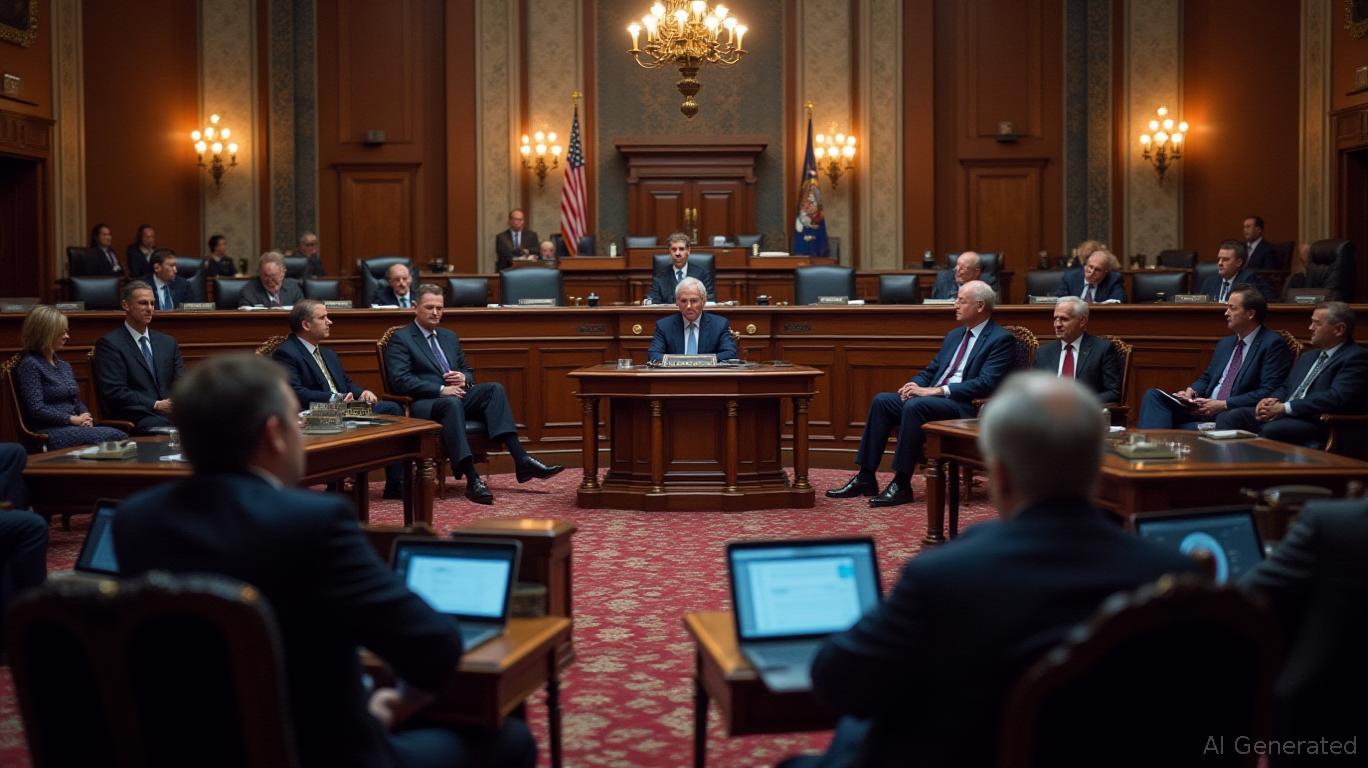
The controversy arises from the immense scale of AI data centers, which can use as much power as a medium-sized city and require significant water for cooling. In Georgia, for instance, summer power bills for Georgia Power customers using 1,000 kilowatts have jumped 41% since 2021, partly due to overruns in nuclear projects and the added burden from new data centers. Environmental advocates and consumer groups contend that regulators have been too lenient with utilities, permitting rate increases without adequate checks. “They weren’t prioritizing the public in their choices,” said Hubbard, who campaigned on fair energy pricing and investment in renewables.
The political landscape is further complicated by the economic benefits data centers can bring. Supporters, including many municipal leaders, claim these facilities generate tax income and employment, even if they drive up energy expenses. Yet, public attitudes seem to be shifting. A poll from September showed just 44% of Americans would be open to having a data center in their neighborhood, reflecting worries about higher bills and environmental impacts. This concern crosses party boundaries: Missouri’s Josh Hawley, a Republican aligned with Trump, has joined others in cautioning against unchecked expansion of data centers and the risk of escalating power costs.
The results in Georgia highlight what’s at stake. The state’s Public Service Commission, once entirely Republican, will now have a Democratic majority after Johnson and Hubbard’s victories. Their success has already led Jefferies to downgrade Southern Co.—Georgia’s largest utility—citing the likelihood of stricter regulatory oversight as a threat to future rate increases. “This is a verdict on the management of energy policy,” said Patty Durand of Georgians for Affordable Energy, adding that the outcome could push other states to reconsider how they balance technological growth with keeping energy affordable for consumers.
Looking forward, the debate over AI infrastructure is set to become even more heated. Industry analysts predict global investment in data centers will rise at a 26% annual rate through 2030, suggesting that disputes over energy, water, and regulatory control will continue to be divisive. For policymakers, the task will be to find a middle ground between encouraging high-tech development and responding to public concerns about rising costs—a balance that may shape future elections.
Disclaimer: The content of this article solely reflects the author's opinion and does not represent the platform in any capacity. This article is not intended to serve as a reference for making investment decisions.
You may also like
 VIPAI Asset Sell-Off and Selective Rotation in Crypto
1. Technology stocks fell sharply as investor interest shifted toward energy and selected defensive assets. From October 10 to 16, the Nasdaq 100 declined 5.49% and the S&P 500 fell 1.95%, while the Dow gained 0.67% and WTI crude rose 10.41%. BTC, ETH, and SOL declined 1.27%, 2.65%, and 4.44%, respectively. This week's technology earnings will be an important test of whether revenue growth, margins, and cash flow can justify current valuations. Better-than-expected results could help stabilize markets in the near term. 2. Crypto continues to see pockets of strong activity, but a broad-based altcoin season has yet to materialize. CoinMarketCap's (CMC) Altcoin Season Index stood at 54 as of the October 18 UTC daily observation, below the altcoin-season threshold of 75, while BTC dominance rose to 60.08%. Our proxy leverage ratio fluctuated between 4.00 and 4.07 during the week, showing no sustained increase and suggesting limited appetite for additional leverage. Meanwhile, as major exchanges expand access to traditional financial assets, the recent sell-off in AI-related equities could attract short-term speculative capital away from crypto. Such capital rotation could make it more difficult for a new altcoin season to take hold. 3. Papertrade's loss-to-mine model has generated significant interest across the crypto community. The protocol combines high-leverage derivatives trading with zero slippage and a mechanism that rewards trading losses with PAPER tokens. Across the eight complete UTC days from October 10 to 17, cumulative reported revenue reached approximately $56.08 million, including $51.90 million distributed to token holders. With growing participation from key opinion leaders (KOLs), Papertrade has reportedly ranked among the top three platforms by profitability in the broader market recently. Assets to watch: BTC, ETH, SOL, ARB, OP, SKHYNIX, SKHY, META, TSLA, LRCX, and SPCX. Key research priorities this week: Cash flow performance in technology earnings; the relative discount and holding costs of the two SK Hynix contracts; and U.S. initial jobless claims and PMI data. Weekly market data cover the period through October 16, while research information was verified through October 18. Observation periods are specified separately for each chart.

Why Bernstein Thinks the AI Stock Sell-Off Could Help Small Caps

Morgan Stanley Builds Crypto Lab to Test Stablecoins, Tokenization and DeFi at Scale

Top 4 Earnings Reports This Week: What Tesla, Meta, SpaceX, Netflix Must Show

Crypto prices
More


