
Tangem Launches Non-Custodial USDC Payments With Virtual Visa Card

Quick Breakdown
- Tangem Pay enables spending USDC directly from a self-custodied wallet using a virtual Visa card.
- Funds stay onchain until checkout, where they are converted 1:1 to USD during payment.
- The feature begins rolling out this month across several regions, with EU/UK expansion planned for 2026.
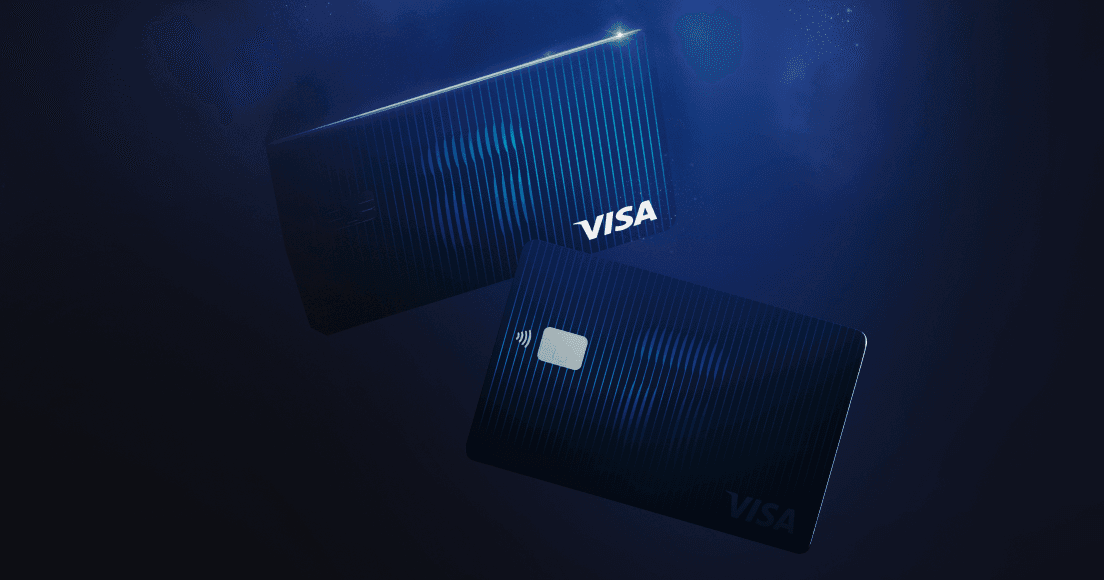
Tangem is rolling out a new feature designed to bridge self-custody and everyday spending—without requiring users to relinquish control of their crypto. The company announced on November 6 that it has introduced Tangem Pay, a virtual Visa card that lets users spend USDC directly from their self-custodied wallet, both online and in-store.
 Source:
Tangem
Onchain balance, real-world payments
Tangem Pay operates inside the existing Tangem Wallet app as a non-custodial payment account. Users load the account with USDC on the Polygon network, and can then make purchases through Apple Pay, Google Pay, or any merchant that accepts Visa.
Crucially, funds remain onchain until the moment of purchase. At checkout, USDC is converted 1:1 to USD over Visa’s settlement rails, so users don’t need to pre-convert to fiat or move funds through a centralized exchange.
Tangem stresses that the wallet remains user-controlled. The security system relies on a dual-key structure in which the user retains one private key. Issuing partner Rain holds a second key that only confirms transactions in real-time.
Rain cannot move funds independently, and identity verification applies solely to Tangem Pay, not the full wallet.
There are no monthly account fees or extra transaction charges. Users only pay the standard Polygon gas fees and Visa foreign exchange fees for cross-border purchases.
Supported regions and upcoming expansion
Activation for Tangem Pay will start later this month, beginning with a waitlist rollout. The first regions include the United States, Latin America, Japan, Singapore, Hong Kong, Australia, South Africa and the UAE. A physical card version will launch at a later stage.
Tangem also confirmed plans to expand into the UK and EU in Q1 2026, aligning with MiCA regulatory requirements. In January, Tangem was granted a United States patent for its innovative private key backup technology, enhancing security and usability for crypto users.
Take control of your crypto portfolio with MARKETS PRO, DeFi Planet’s suite of analytics tools.”
Disclaimer: The content of this article solely reflects the author's opinion and does not represent the platform in any capacity. This article is not intended to serve as a reference for making investment decisions.
You may also like
Anthropic's $2 Trillion IPO Faces Doubts: Risks of Mismatched Computing Commitments and Revenue
The independent institution New Constructs reported that the Anthropic IPO is absurd, with a valuation of only 150 billion. The main controversy lies in the mismatch between long-term computing power commitments and clients' short-term on-demand procurement models, coupled with macroeconomic headwinds and early investor sell-off pressure, leading to increased market volatility.

Anthropic allocates 5% of shares to set up a fund before IPO, Musk calls for direct distribution to the public
Anthropic announced the establishment of a public welfare fund, initially allocating 5% of its shares. When the company's valuation increases by 50%, another 2% will be added. The aim is to address the impact of AI on employment. Musk suggested directly distributing shares to the public.

AI Stocks Struggle to Rebound: Lacking Three Major Supports, July’s Rally Hard to Replicate
JPMorgan pointed out that due to the absence of ETF bargain-hunting funds, limited room for short covering, and the early termination of the $40 billion buyback by Samsung and SK Hynix, the rebound strength of AI stocks in October may not match that of July. The resurgence of leverage risk could intensify volatility.
A Trillion-Dollar Merger Pricing Game: Market Confidence in the Merger with Tesla (TSLA.US) Hinges on SpaceX (SPCX.US) Q3 Report to Be Released on Tuesday
SpaceX's third-quarter report is regarded by the market as a potential pricing anchor for a merger: Under an all-stock swap structure, the strength of performance directly determines the persuasive power of the share exchange ratio for Tesla shareholders, while massive capital expenditures are the biggest variable shaking confidence.
Crypto prices
More


