
Chainlink, SBI Digital Markets Advance Tokenized Finance Collaboration

Quick Breakdown
- Chainlink CCIP becomes the exclusive interoperability protocol for SBI Digital Markets’ tokenized asset platform.
- CCIP’s private transaction functionality will enable discreet cross-border transfers of tokenized funds and real-world assets.
- SBI is assessing Chainlink’s automated compliance system to enable legally compliant asset transfers across jurisdictions.
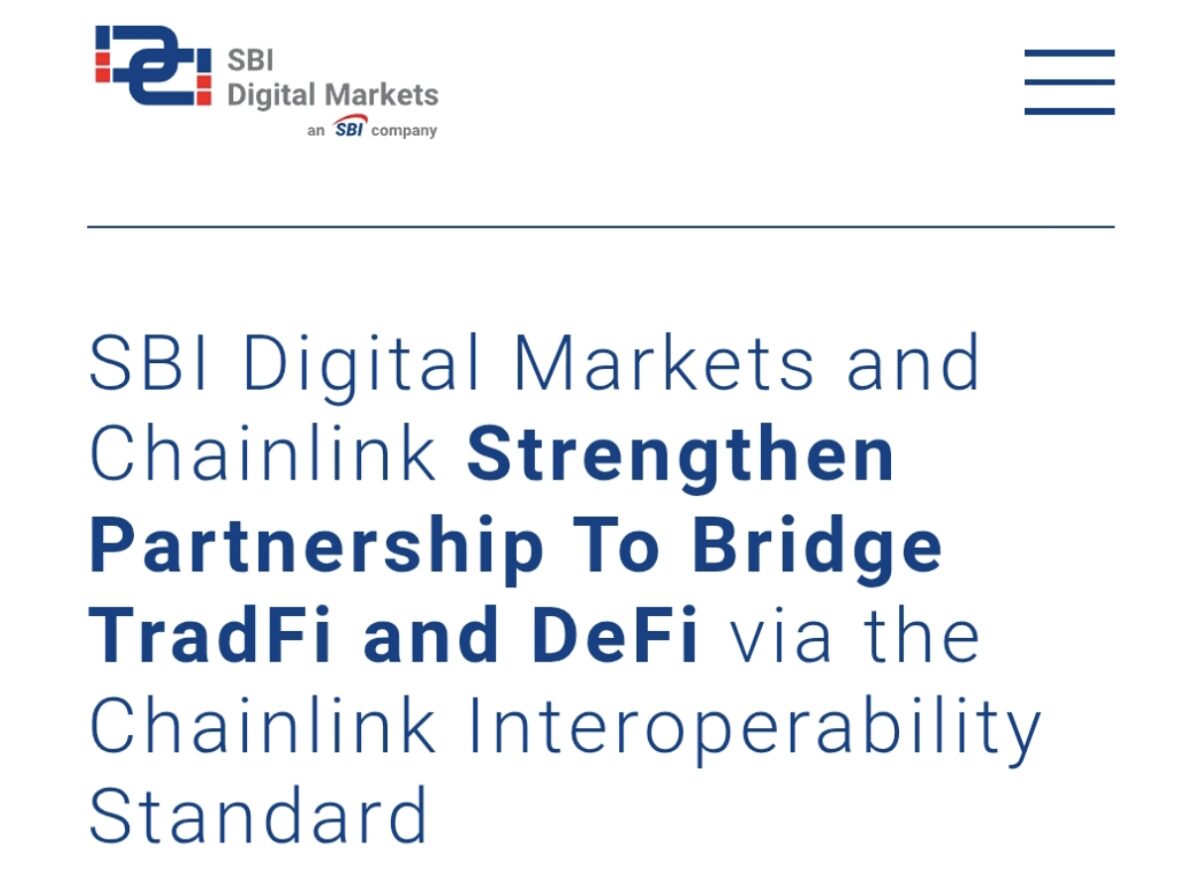
Chainlink and SBI Digital Markets are strengthening their collaboration as they work to bridge traditional financial infrastructure with blockchain-based tokenized assets.
 Source:
SBI
In a recent announcement , SBI Digital Markets — the digital asset arm of Japan’s SBI Group — confirmed that Chainlink’s Cross-Chain Interoperability Protocol (CCIP) will be the exclusive network powering cross-chain connections across its institutional tokenization platform. The move aims to enable asset issuance, settlement, and secondary market trading across multiple blockchain environments, including both public and permissioned blockchains.
Building a cross-chain digital asset hub
The partnership marks the next phase in SBI Digital Markets’ development of a multi-network tokenized finance ecosystem. Instead of limiting tokenized securities to a single chain, the platform will allow institutions to issue and manage assets across several blockchains while still operating under regulated standards.
This collaboration expands on pilot work completed under Project Guardian, a Monetary Authority of Singapore-backed initiative that explores secure blockchain applications in traditional financial markets. During the pilot, Chainlink, UBS Asset Management, and SBI Digital Markets demonstrated automated fund administration processes using shared blockchain workflows.
With CCIP’s Private Transactions feature, SBI plans to support discreet cross-border asset transfers — covering tokenized funds, real-world assets, and stablecoins — without exposing trade or settlement data to public mempools.
Regulated tokenization with built-in compliance controls
SBI Digital Markets is also evaluating Chainlink’s Automated Compliance Engine, a policy-enforcement layer that applies jurisdiction-specific rules directly to on-chain transactions. This would enable tokenized assets to move between regulated markets while automatically respecting legal and geographic restrictions — a core requirement for institutional adoption.
Long-term, the goal is to establish a global regulated tokenization hub that links banks, custodians, asset managers, and crypto-native liquidity platforms. Chainlink provides the technical interoperability standards, while SBI Digital Markets oversees policy alignment and commercial rollout.
Executives on both sides say the collaboration reflects a clear shift in Asia and Europe toward regulated, cross-chain digital securities markets, where blockchain improves efficiency without compromising compliance.
“Take control of your crypto portfolio with MARKETS PRO, DeFi Planet’s suite of analytics tools.”
Disclaimer: The content of this article solely reflects the author's opinion and does not represent the platform in any capacity. This article is not intended to serve as a reference for making investment decisions.
You may also like
Anthropic's $2 Trillion IPO Faces Doubts: Risks of Mismatched Computing Commitments and Revenue
The independent institution New Constructs reported that the Anthropic IPO is absurd, with a valuation of only 150 billion. The main controversy lies in the mismatch between long-term computing power commitments and clients' short-term on-demand procurement models, coupled with macroeconomic headwinds and early investor sell-off pressure, leading to increased market volatility.

Anthropic allocates 5% of shares to set up a fund before IPO, Musk calls for direct distribution to the public
Anthropic announced the establishment of a public welfare fund, initially allocating 5% of its shares. When the company's valuation increases by 50%, another 2% will be added. The aim is to address the impact of AI on employment. Musk suggested directly distributing shares to the public.

AI Stocks Struggle to Rebound: Lacking Three Major Supports, July’s Rally Hard to Replicate
JPMorgan pointed out that due to the absence of ETF bargain-hunting funds, limited room for short covering, and the early termination of the $40 billion buyback by Samsung and SK Hynix, the rebound strength of AI stocks in October may not match that of July. The resurgence of leverage risk could intensify volatility.

A Trillion-Dollar Merger Pricing Game: Market Confidence in the Merger with Tesla (TSLA.US) Hinges on SpaceX (SPCX.US) Q3 Report to Be Released on Tuesday
SpaceX's third-quarter report is regarded by the market as a potential pricing anchor for a merger: Under an all-stock swap structure, the strength of performance directly determines the persuasive power of the share exchange ratio for Tesla shareholders, while massive capital expenditures are the biggest variable shaking confidence.

Crypto prices
More


