
「Biggest DeFi Rug Pull Victim」 Loses Over $100 Million, Funds Currently Unable to Be Withdrawn

Can We Still Trust DeFi?
BlockBeats News, November 11th, due to the DeFi protocol Stream Finance's collapse, a whale told BlockBeats that they have over $100 million deposited but cannot withdraw it, and the platform currently has no follow-up solution.
According to the victim's statement to BlockBeats, they learned in early November from a news channel that Stream Finance disclosed a $93 million loss on its official Twitter account, only then realizing that Stream Finance was in a solvency crisis, with a large amount of investor funds frozen. They immediately tried to withdraw but found that the protocol's liquidity had been completely drained.
The victim's assets are mainly distributed in the Euler protocol, with around $82 million USDT held across three addresses. Additionally, 233.3 BTC (around $24.5 million) is stored in Silo, totaling trapped funds exceeding $107 million. The addresses are:
1. 0xa38d6e3aa9f3e4f81d4cef9b8bcdc58ab37d066a; Euler: $57 million USDT;
2. 0x0c883bacaf927076c702fd580505275be44fb63e; Euler: $3.8 million USDT;
3. 0x673b3815508be9c30287f9eeed6cd3e1e29efda3; Euler: $22 million USDT;
4. 0x5f8d594f121732d478c3a79c59bcd02823b6e7a3; Silo: 233.3 BTC;
Currently, the Stream Finance protocol's deposit function has been disabled, and user funds are in a completely frozen state. Due to the protocol's design mechanism, withdrawal limits can only be released when new funds are deposited. However, in the case where the deposit function has been disabled, this mechanism has completely failed. Since the last tweet was posted on November 4th, the official team has not released any further information or solutions.
In several victim rights protection groups, some investors have attempted to seize limited liquidity through technical means, with attempts even made using methods such as "bot racing." It is understood that some investors have been scammed by trusting others who claimed to provide technical assistance, resulting in transferring deposit credentials and suffering losses, causing chaos in the community.
Prior to this, according to independent DeFi analyst YieldsAndMore's analysis and estimation, the Stream Finance collapse event involved a debt exposure across multiple DeFi protocols amounting to $285 million, where TelosC ($123.6 million), Elixir ($68 million), and MEV Capital ($25.4 million) had the largest ties. The team stated substantial losses, an uncertain problem resolution approach, and potentially more stablecoins and liquidity pools affected. Research results show that the largest single risk exposure belongs to Elixir's deUSD, where the protocol lent $68 million USDC to Stream, an amount representing around 65% of deUSD's total reserve.
Due to the decentralized nature of protocols such as Euler, Morpho, Silo, and others affected, there is little room for intervention. A multi-party legal team is preparing to file a lawsuit, but the progress of the lawsuit and the likelihood of fund recovery are currently unclear. For trapped investors, the only option at the moment is to stay informed through official channels of the respective projects, as the timeline for asset thawing remains uncertain.
This event once again exposes systemic issues in the DeFi ecosystem, such as recursive leverage, protocol contagion, and lack of risk management. Even though the Stream team claimed that its position had "full redemption rights per dollar," in extreme circumstances, this commitment relies on the liquidity and health of the underlying assets. Once the underlying assets default, this commitment becomes meaningless. Creditors only learned the comprehensive risk exposure through third-party analysis after the fact, indicating a significant gap in risk disclosure and real-time auditing in the current DeFi ecosystem.
The composability of DeFi is a double-edged sword. It can efficiently recycle capital and increase returns in a bullish market, but it also allows risk to quickly penetrate multiple protocol layers, forming a complex network of risk exposure.
Disclaimer: The content of this article solely reflects the author's opinion and does not represent the platform in any capacity. This article is not intended to serve as a reference for making investment decisions.
You may also like
AI development slowdown combined with surging oil prices hit Japanese and Korean chip stocks first, SK Hynix falls more than 5%, SoftBank plunges 11%
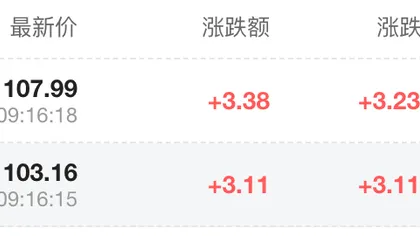
AI giants have made a rare joint call to slow down the development of advanced models. The South Korean and Japanese stock markets have declined, with the Seoul Composite Index falling over 3% and the Nikkei 225 Index dropping more than 2%. SoftBank plunged 11% in a single day, while SK Hynix dropped over 5%. Meanwhile, Saudi Arabia has shut down oil pipelines, pushing Brent crude prices up to $107. Combined with the US CPI exceeding expectations, the probability of a Fed rate hike on Wednesday is now over 90%. The double whammy has led to a turbulent opening for Asian markets.
ASIC and optical interconnects drive high-speed growth! Bank of America strongly supports the soaring Marvell (MRVL.US), claiming there's still 55% upside potential
Bank of America maintains its $365 price target for Marvell, citing its focus on expanding revenue per AI system through custom AI accelerators (i.e., AI ASIC/XPU) and supporting optical interconnect chips, driven by massive demand for AI agents. Compared to the September 11 closing price of $236.10, this target implies a potential upside of approximately 54.6%.

Crypto prices
More


