
A Discussion on the Bond Market at the Beginning of the Year

At the beginning of 2026, the stock and commodity markets displayed a "buy everything" sentiment, while in contrast, the bond market appeared somewhat lackluster. The bond market has a characteristic—each year starts by following the logic from the end of the previous year. For example, the beginning of 2025 continued the frenzy of late 2024, and the start of 2026 carried over the gloom of late 2025.
Although market sentiment remains weak, objectively speaking, there have been some subtle changes in bond supply and demand. Furthermore, I believe that the bond market in 2026 is unlikely to be a mere continuation of 2025, and there may be a turning point. Specifically, my observations are as follows:
First, the implementation of new regulations on public fund sales has reduced the redemption risk for bond funds. The finalized regulations significantly lower the threshold for redemption fee exemption (the holding period for exemption from redemption fees is shortened from 6 months to 1 month, and ETFs are exempt from the holding period requirement), which is positive for the overall public bond fund market.
From our monitoring, the redemption pressure on bond funds has noticeably eased recently, which is clearly beneficial for certain bond types closely linked to bond funds (such as subordinated capital bonds). Looking at recent years, whenever the public fund liability side improves, subordinated capital bonds often experience a wave of recovery.
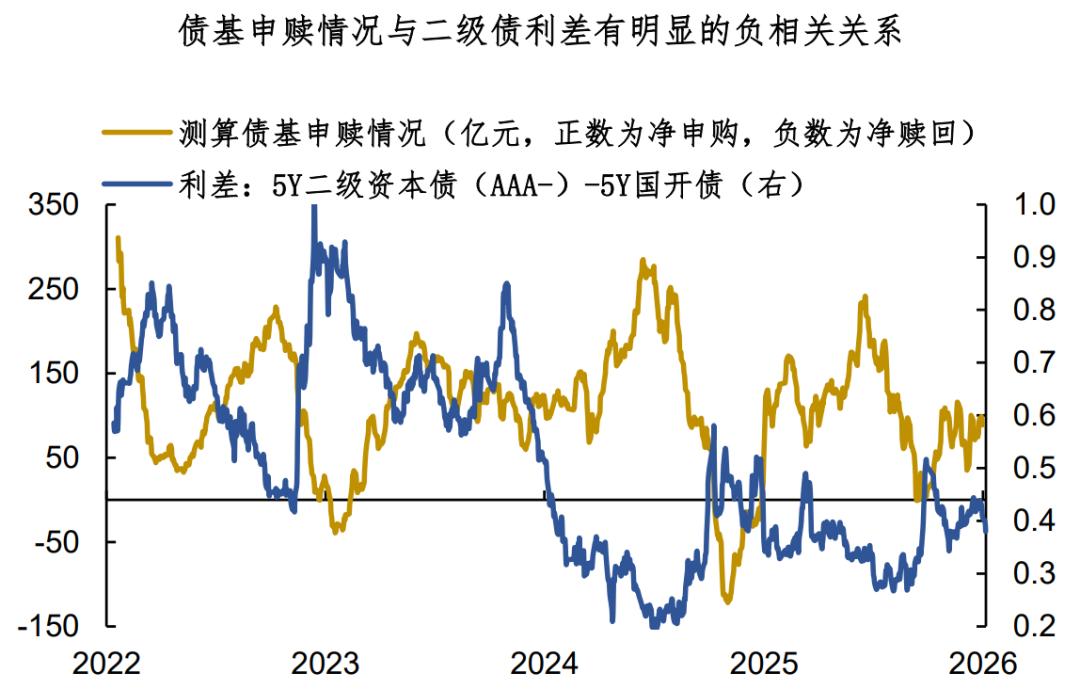
The second observation is that although much speculative capital is "taking the money and running," allocation-oriented funds seem to be entering the market. According to our observation model, allocation-oriented funds have recently begun to increase their holdings of 5-10Y medium- and long-term interest rate bonds, which is often a sign that rates are at a temporary peak. Industry peers know that in the bond market of recent years, institutional behavior is very important, and the actions of allocation-oriented funds may carry certain signaling effects.

The third observation is that the so-called "stock-bond seesaw" should be a phase phenomenon. In fact, during industry discussions at the end of 2025, I heard many opinions about a strong opening for stocks in January and February, with some speculative funds even giving the opening rally a name—the "KPI rally."
Theoretically, the "stock-bond seesaw" is more likely to occur in the fourth quarter and the first quarter each year, as these periods are relatively fundamental vacuums and market and policy factors become more important. But as the market progresses, economic data, reserve requirement ratio or interest rate cuts, and other factors could weaken the "stock-bond seesaw" effect. After all, in the medium term, bond performance is inherently linked to the broad-spectrum interest rate system, not to stocks.

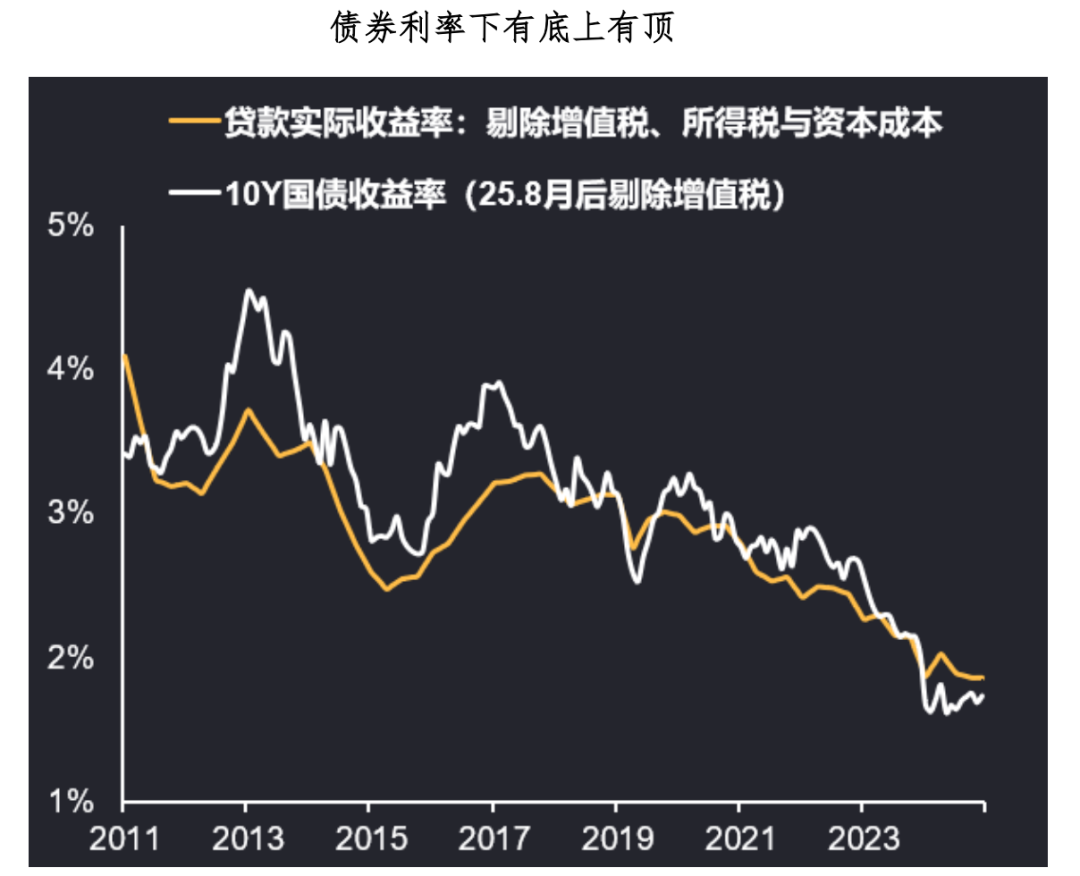
To summarize today's sharing:
1. At the start of 2026, the stock and commodity markets displayed a "buy everything" atmosphere, while the bond market appeared somewhat neglected. Although market sentiment remains weak, there have already been some subtle changes in bond supply and demand.
2. A few observations: First, with the implementation of new public fund sales rules, redemption risk for bond funds is decreasing, which may be accompanied by a recovery in subordinated capital bonds; second, allocation-oriented funds seem to be entering the market, and this may have a signaling effect.
3. The so-called "stock-bond seesaw" should be considered a phase phenomenon. If you believe the opening rally in the A-share market is a "KPI rally," then subsequent economic data, reserve requirement ratio or interest rate cuts, and other factors may weaken the "stock-bond seesaw" effect. The bond market in 2026 is unlikely to be a bear market; even if it is a sideways market, there will always be trading opportunities.
BFC Exchange Talk
Accompanying you in 2025
Welcome to leave a message in the background
Communicate with us
Disclaimer: The content of this article solely reflects the author's opinion and does not represent the platform in any capacity. This article is not intended to serve as a reference for making investment decisions.
You may also like
AI investment returns remain questionable, South Korean stocks drop 1.4%, Samsung falls over 4%, oil prices decline, gold prices soften
Samsung Electronics fell more than 6% at one point, as the company failed to announce a new shareholder return plan, disappointing investors. The Korea Kospi index dropped 1.2%, while Nasdaq 100 index futures fell 1.1%. The yield on the rate-sensitive 2-year US Treasury declined by 2 basis points to 4.68%, and the 10-year Treasury yield also fell by 2 basis points to 5%. Spot gold dropped 0.7% to around $4,040 per ounce. Brent crude fell below $110 per barrel, trading at $109.98 per barrel.

AI chip demand surges, Korean won records highest quarterly increase since 1998
Driven by the AI chip boom, a massive inflow of US dollars has caused the Korean won to surge by 13% in Q3. Hwang Kunil, a dovish member of the Bank of Korea, warns that the benefits of this round of appreciation are highly uneven: leading large companies profit while default rates among small and medium-sized enterprises are rising. Although the strong exchange rate helps curb inflation, it also weakens exports and exacerbates domestic demand weakness, putting the central bank, which maintains a 3% interest rate, in a dilemma between stabilizing prices and supporting the real economy.
Sui launches Hong Kong-regulated gold token as SUI price falls below $1

Crypto prices
More


