

A mix of political tension and regulatory movement in the United States is reshaping how markets view Bitcoin, not through sudden price jumps, but through quieter structural changes.
Recent reports revealed rising pressure on the U.S. Federal Reserve, including legal actions tied to testimony by Fed Chair Jerome Powell. Powell pushed back strongly and released a video statement, saying the central bank must set interest rates based on economic data, not political pressure.
While stocks and metals reacted to the uncertainty, Bitcoin’s price remained relatively calm.
Crypto Market Structure Bill, known as the CLARITY Act, is scheduled for markup in the U.S. Senate Banking Committee on January 15, 2026. Lawmakers are debating how digital assets should be regulated and classified.
Market analysts say the bill should not be seen as a short-term price trigger. Instead, it could mark a longer-term shift in how Bitcoin is treated inside the U.S. financial system, potentially as a regulated digital commodity rather than a gray area asset.
In earlier regulatory scares, Bitcoin often rushed onto exchanges as investors prepared to sell. This time, onchain data shows something different. Exchange inflows remain low, suggesting holders are not rushing for exits.
 Source:
CryptoQuant
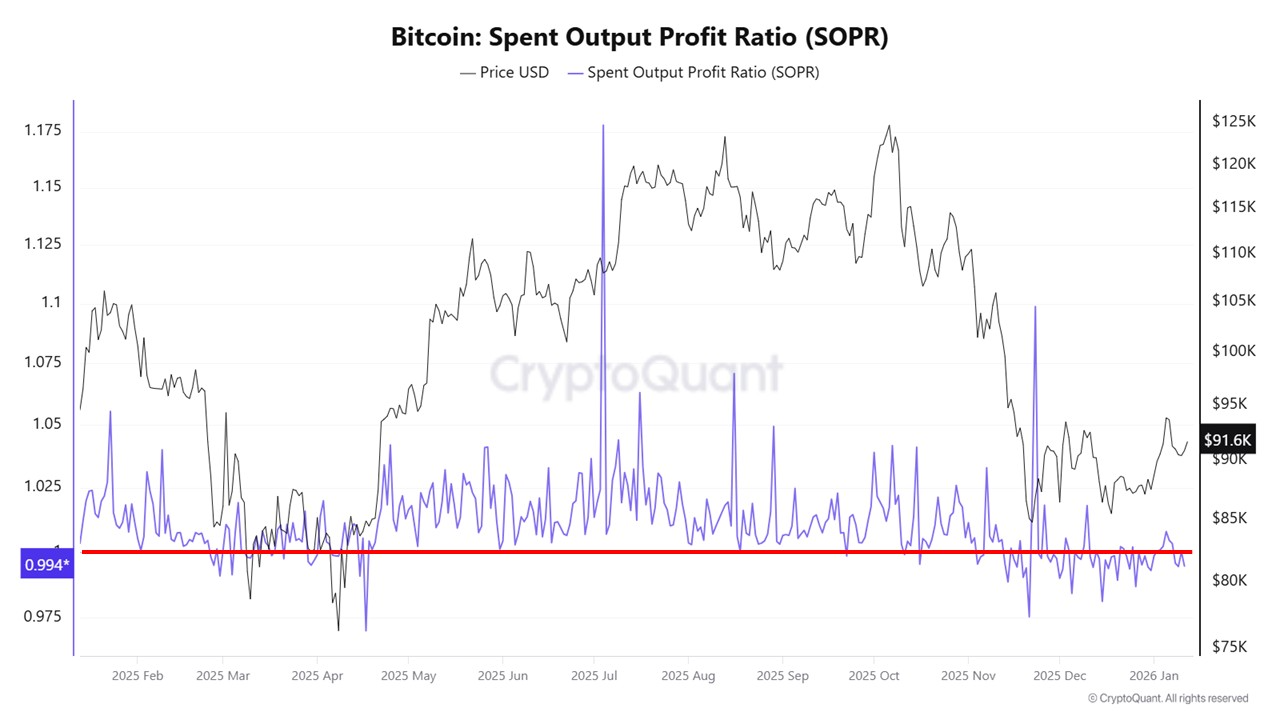
Another important indicator, known as SOPR, shows that coins are barely moving, and profit-taking is limited. In simple terms, investors are holding rather than trading. This points to patience, not fear.
Bitcoin is trading sideways and has remained quiet this week, though volatility could rise with U.S. CPI data due today, Wednesday’s retail sales report, and a possible Supreme Court ruling on tariffs.
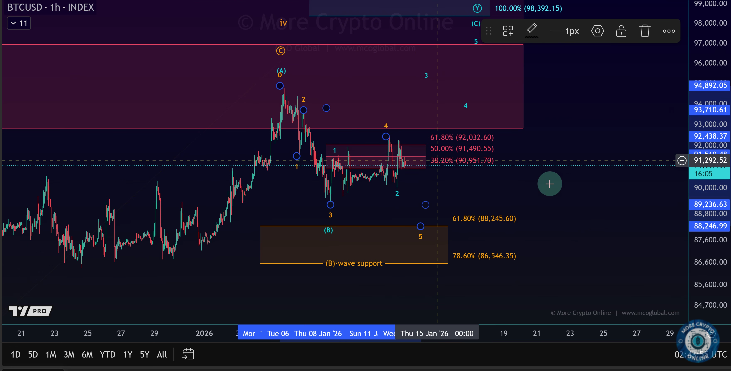
Right now, Bitcoin is stuck in a range. Strong resistance sits between $90,950 and $92,300. Price has been rejected from this area several times. If Bitcoin fails again here, it could pull back toward support between $86,500 and $88,200.
 Source:
YouTube
If Bitcoin breaks above the Monday high around $92,450, it could open the door for a move toward $97,000 to $98,400. That said, sellers are not showing much strength. As long as Bitcoin stays above the recent low near $89,200, the overall structure still looks stable.
Related: Bitcoin Waits While Gold and Silver Break Records Ahead of Key U.S. Data


