
Bitcoin: Institutional Wallets Strengthen Their Position Despite Price Drop

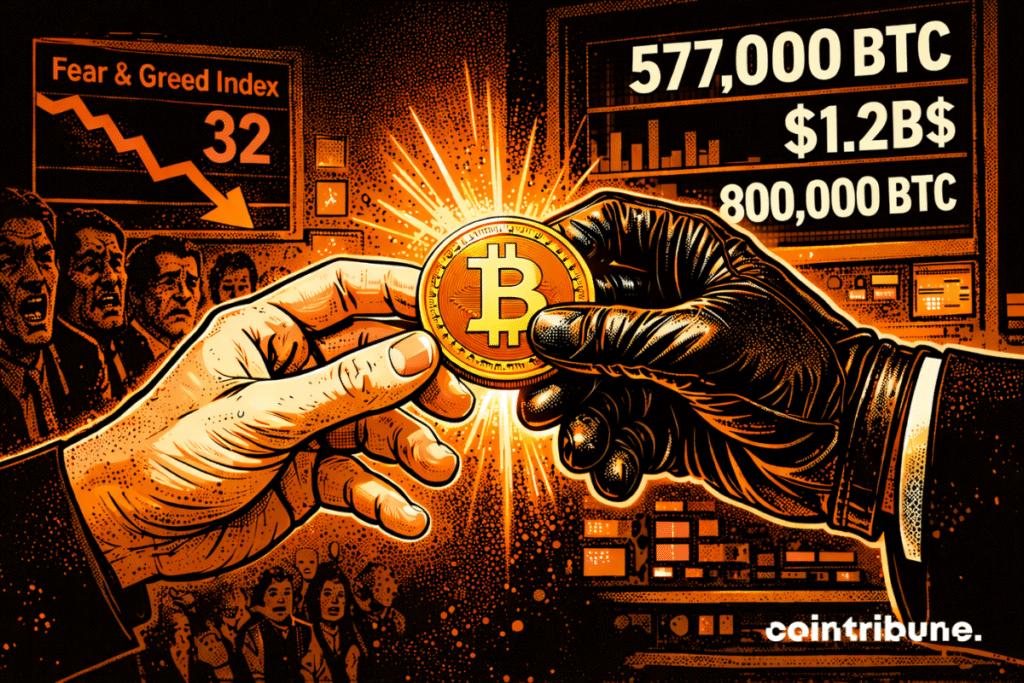
The data confirms it: while retail investors are wary of bitcoin, institutional investors are rushing in. In one year, they have accumulated the equivalent of 53 billion dollars in bitcoin, or 577,000 BTC. A figure that illustrates a silent turning point within the crypto market.
In Brief
- Institutional investors have accumulated 577,000 BTC, confirming a massive long-term strategy.
- Despite retail fear, Bitcoin ETFs strengthen institutional adoption and market stability.
Institutional Wallets Strengthen Their Grip on Bitcoin
Institutional wallets group entities holding between 100 and 1,000 bitcoins, excluding crypto exchanges and miners. They include funds, Bitcoin ETFs, as well as treasuries such as those managed by Michael Saylor. His company Strategy, which has just relaunched purchases, now holds over 260,000 BTC.
This trend has accelerated since the approval of spot Bitcoin ETFs in the United States at the beginning of 2024. These digital assets have attracted more than 1.2 billion dollars since January. The total held by Bitcoin ETFs today exceeds 800,000 BTC. These figures reflect a long-term strategy based on diversification and growing confidence in bitcoin.
According to CryptoQuant CEO Ki Young Ju, institutional accumulation continues. And this is just the beginning! One indicator confirms this: the Fear and Greed Index has dropped to 32. This signals dominant fear among retail investors. A perfect climate for crypto whales, who buy against the trend.
Signals of a Bitcoin Locked by Strong Hands
While the BTC price drops from $95,000 to $91,000, buying continues. Whales practice DCA (regular buying) and now control a growing share of the circulating supply. Result: bitcoin is increasingly in the hands of holders with strong conviction.
This development changes the structure of the crypto market. Less exposed to panic selling, BTC could eventually show more stable movements. But this dynamic has a downside: price-setting power shifts to the most capitalized entities, relegating small holders to the background.
Meanwhile, bitcoin options reveal a bearish bias. Derivative markets anticipate a drop below $80,000 by the end of June. A tension between long-term accumulation and short-term speculation that highlights the current complexity of the crypto market!
In any case, institutional investors seem to be reshaping the future of bitcoin. The crypto landscape will never be the same.
Disclaimer: The content of this article solely reflects the author's opinion and does not represent the platform in any capacity. This article is not intended to serve as a reference for making investment decisions.
You may also like
NEAR Enters Bitwise Large-Cap Indexes in October Rebalance

Ethena Pay Adds Earn+ Through Aave V4 Lending on Avalanche

DoorDash (DASH.US) Outperforms Nasdaq Amid Tech Stock Selloff! Officially Announces $17 Billion Acquisition of Instacart; Will Grocery Delivery and Retail Advertising Drive a Revaluation of Value?
The complete integration of the two major platforms may enhance their overall competitive and bargaining power in terms of delivery economics, consumer reach, and retail media monetization. Grocery retailers lacking their own delivery networks are bound to face more significant bargaining pressure, while Walmart and Target, which own Spark and Shipt, are relatively more capable of withstanding the impact.
Earnings Preview | A 121x P/E Ratio Gamble: If Palantir (PLTR.US) Guidance Is Not “Impressive Enough”, Its Stock Price May Plummet
Palantir released its Q3 earnings after the market closed on Monday. The market expects revenue of $2.18 billion, an increase of about 85%. The focus is on the raised annual guidance and the growth rate of the commercial business. With its high valuation, there is very little margin for error.

Crypto prices
More


