
Ether holds $2K, but will $242M spot ETH ETF outflow reignite price downside?

Key takeaways:
Institutional demand for Ether is cooling as investors shift toward the safety of short-term US government bonds.
High interest rates and rising ETH supply make the current staking yield less attractive for long-term holders.
Ether (ETH) price has failed to sustain levels above $2,150 since Feb. 5, leading traders to fear a further correction. Investor sentiment deteriorated following outflows from Ether exchange-traded funds (ETFs) and increased demand for put (sell) options.
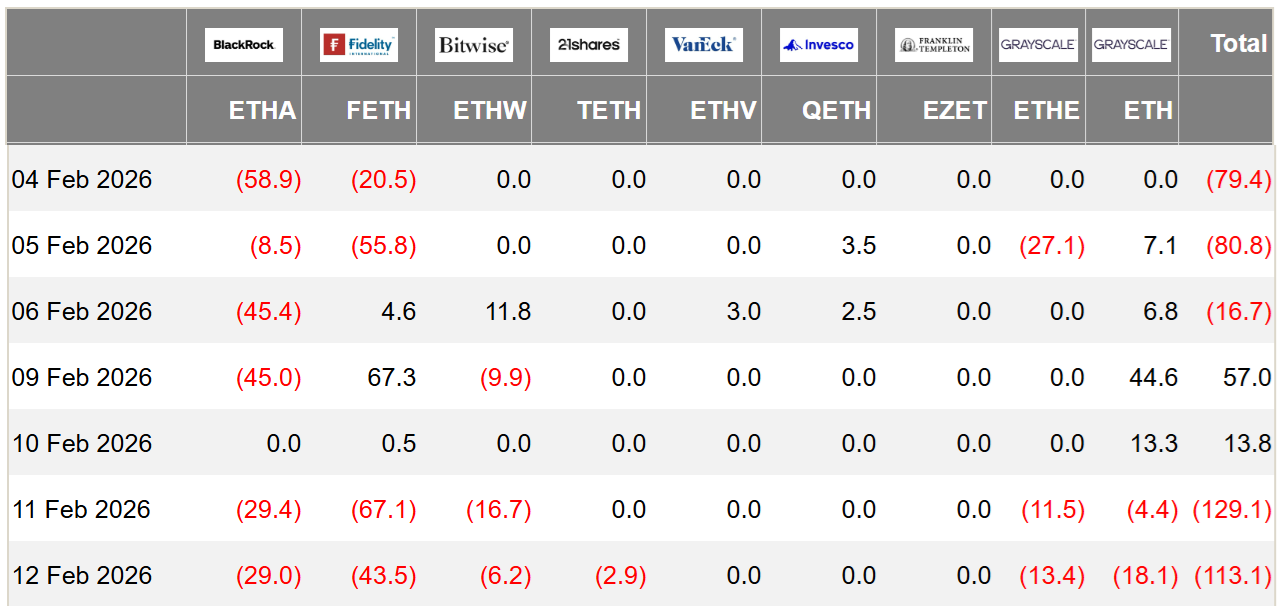 US-listed Ether ETFs daily net flows, USD million. Source: Farside Investors
US-listed Ether ETFs saw $242 million in net outflows between Wednesday and Thursday, reversing the trend from the prior two days. The institutional demand that followed the 20% Ether price recovery after the $1,744 bottom on Feb. 6 has faded as investors noted inconsistency in US economic growth—evident by the growing demand for short-term US government bonds.
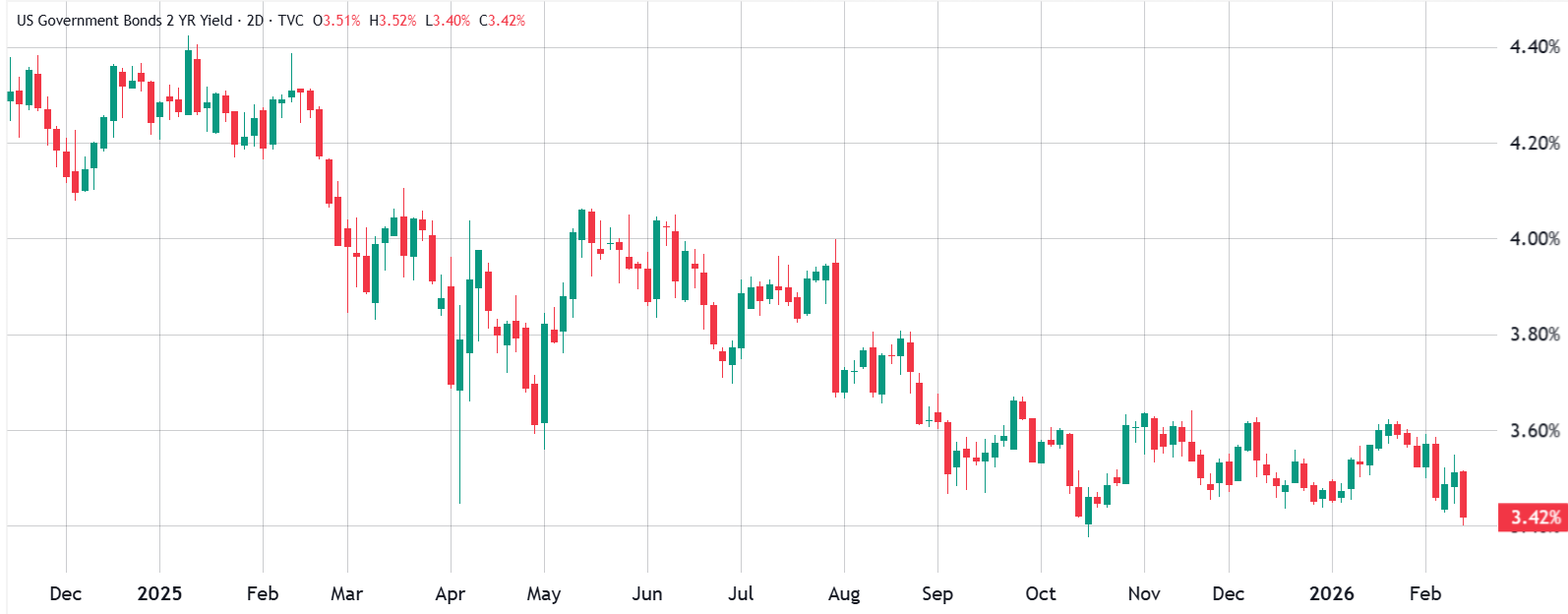 US 2-year Treasury yield. Source:
Yields on the US 2-year Treasury declined to 3.42% on Friday, nearing the lowest levels seen since August 2022. The higher demand for government-backed debt reflects traders’ expectations of further interest rate cuts by the US Federal Reserve (Fed) throughout 2026. Signs of economic stagnation reduce inflationary risks, paving the way for expansionist measures.
Regardless of macroeconomic trends, Ether has underperformed the broader cryptocurrency market, causing traders to question if Ethereum still has what it takes to compete against networks that offer base layer scalability and faster onchain activity.
Traders fear that ETH price is destined for more downside, but data seems to reflect the recent price weakness rather than the anticipation of a further crash.
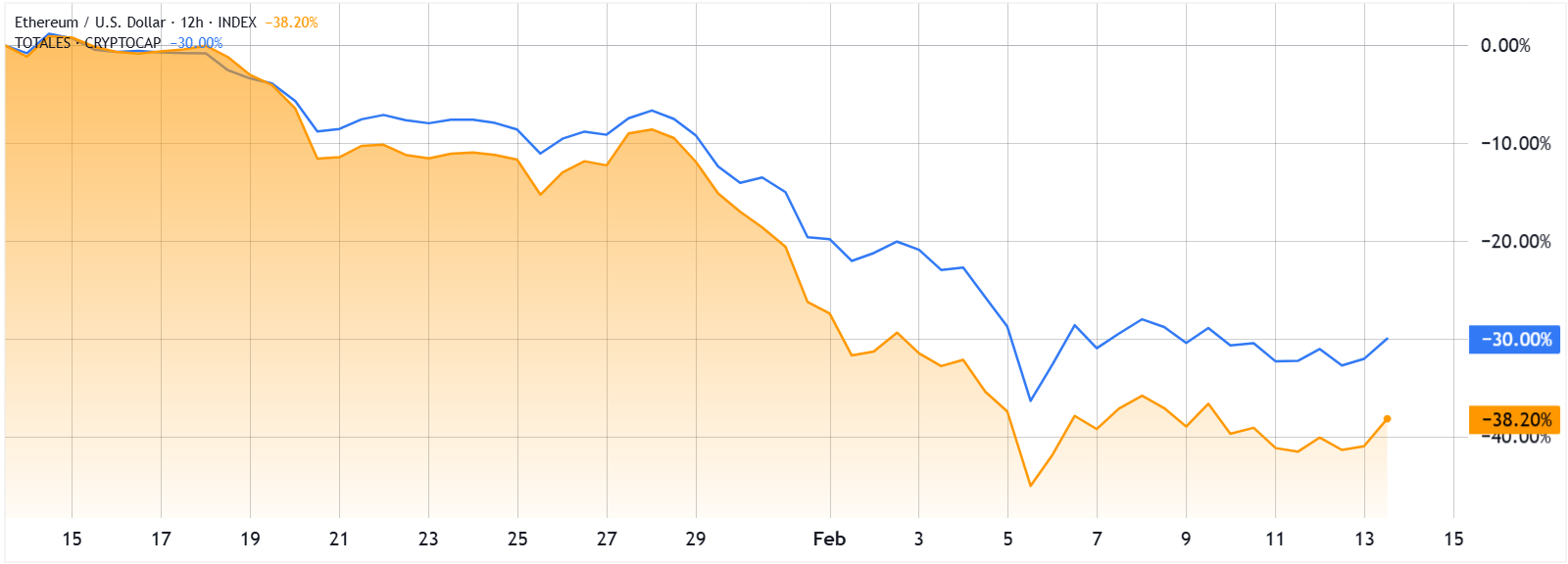 ETH/USD (orange) vs. total crypto capitalization (blue). Source: TradingView
Ether price declined 38% in 30 days, which negatively pressures the network’s fees and ultimately reduces incentives for staking. Long term holding is a critical component for sustainable price growth, and the current 2.9% staking yield is far from appealing, considering the US Fed target rate stands at 3.5%. Furthermore, the ETH supply is growing at an 0.8% annualized rate.
ETH derivatives metrics reflect traders' fear of further price drops
Professional traders are not comfortable holding downside price exposure according to ETH derivatives metrics, which further reinforces the bearish sentiment.
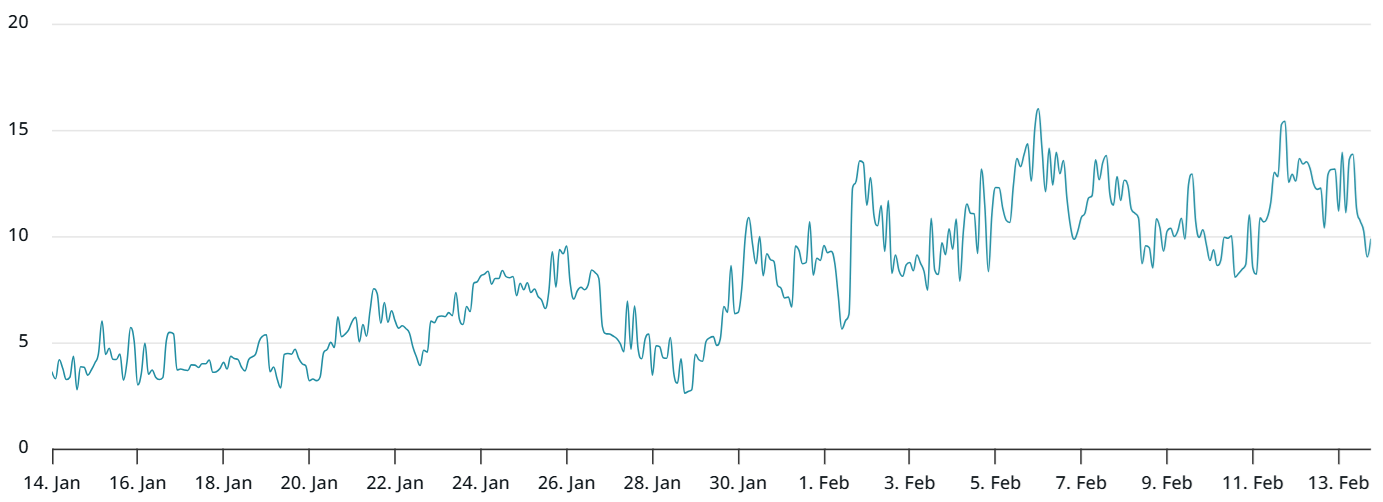 ETH 30-day options delta skew (put-call) at Deribit. Source:
The ETH options delta skew stood at 10% on Friday, meaning put (sell) options traded at a premium. The increased demand for neutral-to-bearish strategies causes the indicator to move above the 6% threshold, which has been the norm for the past two weeks. Traders’ mood reflects a six-month bear market as ETH trades 58% below its all-time high.
Related:
From a broader perspective, a mere $242 million in Ether ETF outflows represents less than 2% of the total $12.7 billion in assets under management; hence, traders should not assume that ETH price has entered a death spiral. Investors' morale will eventually recover as the network remains the absolute leader in Total Value Locked (TVL).
Traders’ attention will likely remain centered on corporate earnings results and whether the US government will be able to refinance its debt amid growing global socio-economic tensions. Under this scenario, ETH price will likely remain pressured regardless of onchain and derivatives metrics.
Disclaimer: The content of this article solely reflects the author's opinion and does not represent the platform in any capacity. This article is not intended to serve as a reference for making investment decisions.
You may also like
Uber Tests Weekend Tokenized Fund Redemptions With HSBC on Canton

Aave Expands Stock-Backed USDC Loans on Base for Eligible Investors

Deciding Next Week’s Market Trend! The Biggest Uncertainty in the US Midterms: Republicans Unexpectedly Hold the Senate vs. Democrats Win Over 53 Seats
Citigroup believes that the expectation of a Democratic sweep of both chambers is largely priced into U.S. stock valuations, with control of the Senate being the key variable. If the Republicans unexpectedly retain the Senate, U.S. stocks may be boosted by year-end; if the Democrats win more than 53 seats, expectations of corporate tax hikes, fiscal negotiations, and regulatory risks for AI data centers will put pressure on the market.
The "Perfect Storm" Script for AI: Bond Market "Sounds the Horn," Earnings Reports "Add Insult to Injury," Will the Election Deliver the "Final Blow"?
The AI boom faces triple threats from the bond market, earnings reports, and political risks: rising financing thresholds have nearly closed the bond market for AI cloud companies; tech giants are increasing capital expenditures and experiencing deteriorating free cash flow, putting pressure on stock prices; with midterm elections approaching, growing opposition to data centers may push for tighter regulations. The market is shifting from pursuing computing power to questioning investment returns.

Crypto prices
More


