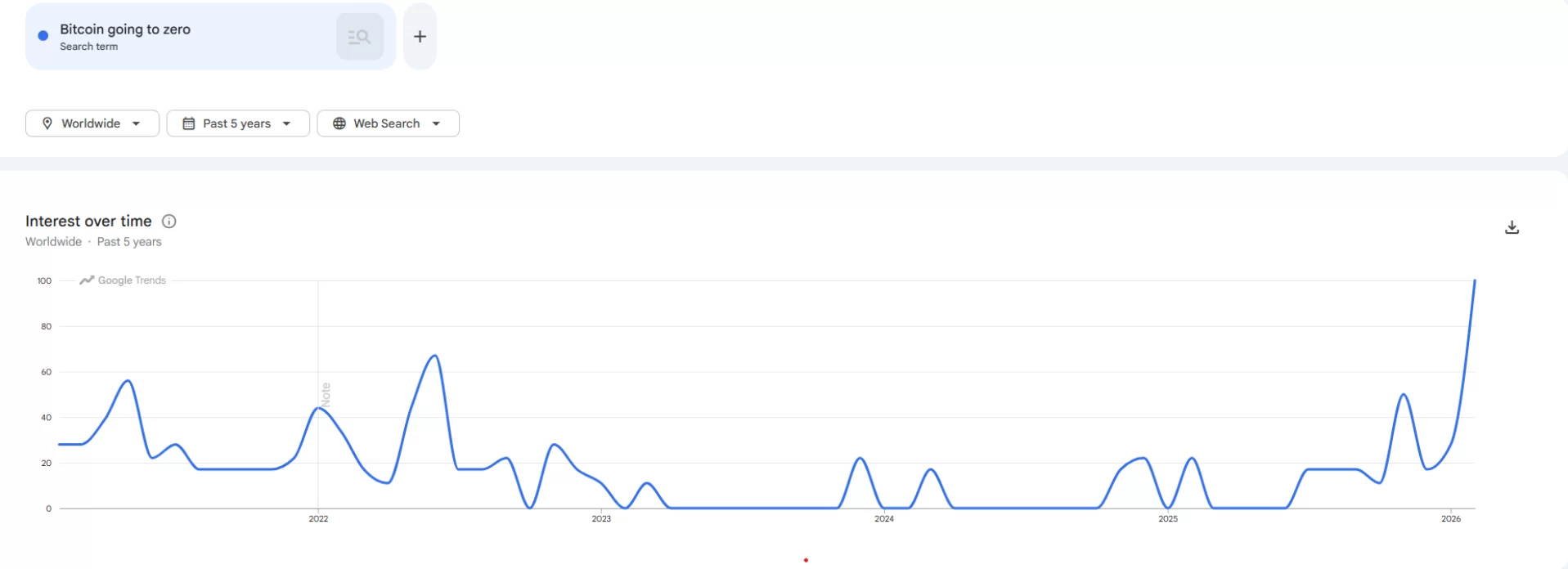
Google search trends have long offered a window into the sentiment of retail cryptocurrency participants. During Bitcoin’s most bullish periods, waves of users flock to search engines out of curiosity, driven by the soaring price and spiraling hype. Yet, the mood has now shifted drastically: searches signal anxiety rather than exuberance.
Spikes in ‘Bitcoin Going to Zero’ Searches
Searches for the question, “Is Bitcoin going to zero?” have soared to their highest levels since the infamous FTX collapse. Back then, the implosion of what was once the world’s second-largest crypto exchange shattered investor confidence, casting doubt on the future of the entire market. Google Trends data today reveals echoes of that same panic taking hold among retail investors once again.
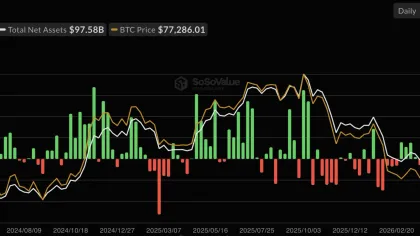
Historically, surges in such pessimistic queries suggest a tidal wave of fear sweeping through so-called small investors. After Bitcoin hit an all-time high of $126,000 in October 2025, the price tumbled sharply to the $60,000–$65,000 range by February 2026. This abrupt reversal has stoked widespread concern, with many now wondering if the end is in sight for the world’s largest cryptocurrency.
These fears recall scenes from 2022, when Bitcoin hovered near $15,000 and some social media voices projected even lower targets, speculating a drop to $6,000 or $7,000. At the time, critics labeled Bitcoin a scam and insisted the public would lose all interest—a sentiment resurfacing today as volatility returns.
Is Zero Truly on the Table?
The argument goes: If Bitcoin could climb from zero to $126,000, what’s stopping it from crashing back down? History is filled with surprises that humble anyone certain about markets. Yet, the current wave of anxiety diverges markedly from the FTX era. In 2022, the space was reeling from widespread bankruptcies; most prominent crypto lenders and venture capital firms faced insolvency, with Genesis, the largest crypto lender, seeking bankruptcy protection. Many of those crisis episodes have since faded from public memory.
Today, however, the roots of panic in crypto run deeper and stem from a complex tangle of macroeconomic fears. Market participants cite the fading four-year market cycles, growing doubts about Bitcoin’s status as “digital gold” or an inflation hedge, and existential threats such as quantum computing’s potential to undermine blockchain security. Despite turmoil among individuals, major institutional players continue to accumulate Bitcoin, suggesting a disconnect between retail panic and institutional confidence.
Regardless, the sector now faces a period fraught with uncertainty. Ongoing geopolitical tensions, unpredictability stemming from Donald Trump’s leadership, anxieties over a possible slowdown in the artificial intelligence-driven stock rally, looming changes at the Federal Reserve, and a host of other concerns all paint a rocky road ahead for cryptocurrencies. At least until mid-2026, crypto may remain an unforgiving landscape. Even if Bitcoin doesn’t collapse to zero, those holding it are likely in for a bumpy ride.