
Crypto treasury companies likely to consolidate in 2026: Crypto exec

The crypto treasury market is likely to consolidate this year amid the market downturn, as companies with operating businesses merge with or acquire those trading below net asset value (NAV), according to Wojciech Kaszycki, chief strategy officer of crypto infrastructure and treasury company BTCS.
Operating businesses, such as providing validator services for blockchain networks or offering public and private credit instruments, generate cash flow that give crypto treasury companies an edge over those that only accumulate crypto, Kaszycki told Cointelegraph.
This financial edge allows them to buy up companies treading water on their crypto investments or trading below the value of their crypto holdings, he said. Kaszycki added:
“If you consolidate with another player, sometimes two plus two equals six or more, you can win faster, because everybody in this market trading below net asset value is struggling.”
Crypto treasury companies experienced a market-wide downturn in 2025, with many companies’ stock prices dropping below the value of the crypto held on their balance sheets. The crypto treasury decline preceded the crypto market crash in October.
Related: Crypto Biz: A Bitcoin treasury shareholder revolt
Tokenized public and private credit instruments as a revenue model for crypto treasuries
“In today's world, credit instruments are one of the biggest financial instruments used worldwide,” Kaszycki told Cointelegraph.
Public and private credit instruments could also be tokenized on blockchain networks, Kaszycki said.
“I believe tokenized real-world assets (RWA), especially tokenization of public and private credit, is something that will grow a lot in the next 24 months,” he said.
These RWAs could be used as collateral on decentralized finance (DeFi) platforms, including lending or borrowing applications, he said.
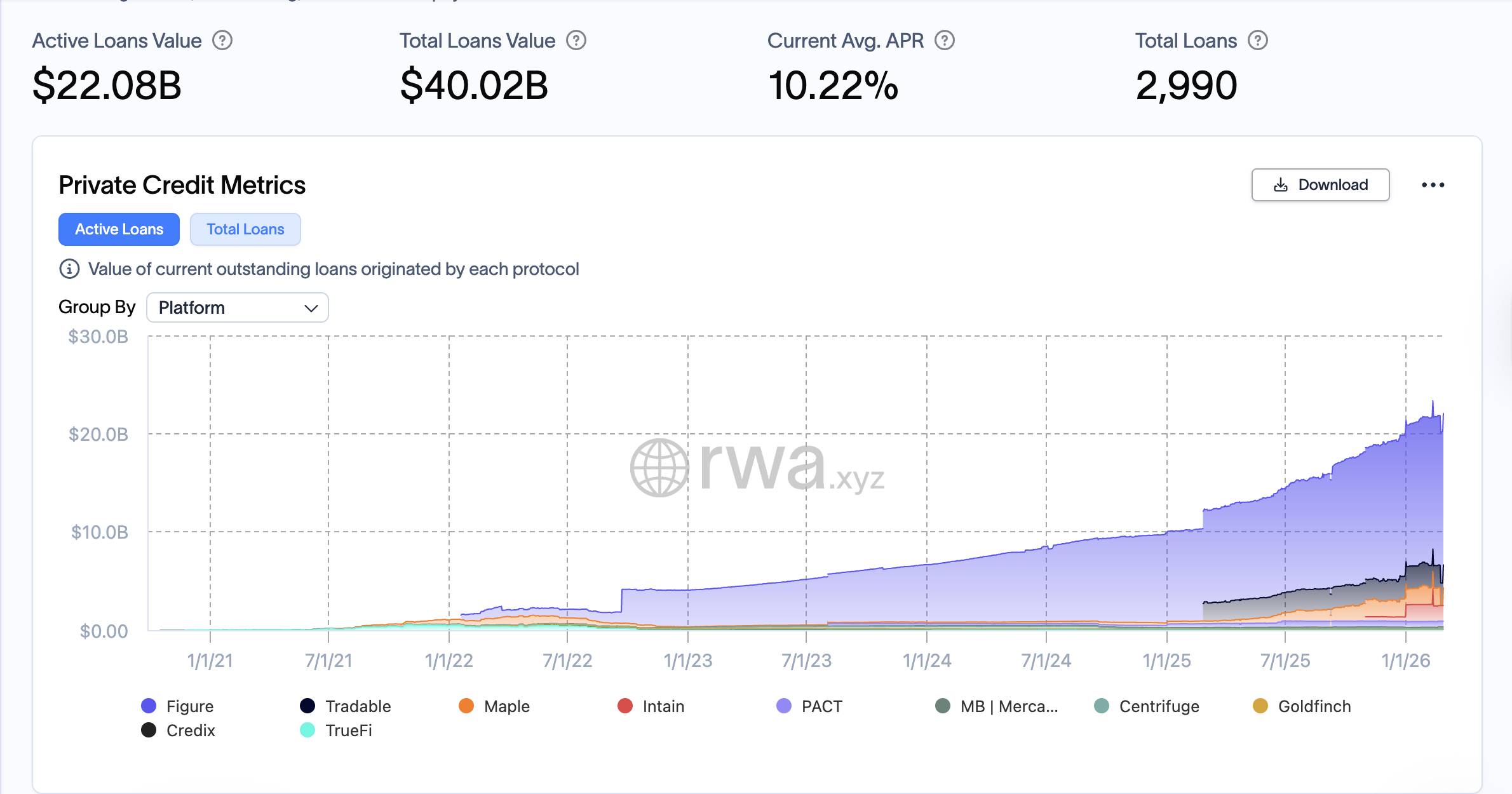 An overview of the tokenized private credit market. Source:
Strategy, the biggest Bitcoin (BTC) treasury company in the world, offers credit-like and fixed-income instruments to the investing public.
The company cited its fixed-income instruments as one of the reasons that MSCI, an index provider, should include Strategy and other similar crypto treasury companies in its stock indexes.
“Strategy’s treasury operations are designed to provide investors with varying degrees of economic exposure to Bitcoin by offering a range of securities, including equity and fixed income instruments,” Strategy wrote in response to MSCI.
Magazine: ‘China’s MicroStrategy’ Meitu sells all its Bitcoin and Ethereum: Asia Express
Disclaimer: The content of this article solely reflects the author's opinion and does not represent the platform in any capacity. This article is not intended to serve as a reference for making investment decisions.
You may also like
Is there a "stealth bear market" in US stocks? AI stocks plunged 13% in October, and the "S&P 500 excluding AI" hit a new high
AI-related stocks have cumulatively declined by over 13%, while the S&P 500 index, excluding AI components, has risen by 8% and reached a record high. Some institutions refer to this as a "stealth bear market," suggesting that capital is shifting from high-valued AI stocks to non-AI component stocks. Despite intensified short-term volatility, these institutions remain optimistic about the medium- and long-term market outlook, believing that the current adjustment is fueling momentum for the next round of gains, and expect turbulence in the market in November.

Forex Today: US Dollar edges lower as mood improves ahead of midterm elections
FOMO Market: The Five Most Worth Buying U.S. Stocks Before the Midterm Elections
When market sentiment shifts, five stocks rated as "Strong Buy" by SA Quantitative Ratings may help investors maximize returns.
Earnings Preview | ON Semiconductor (ON.US) Q3 Results to be Announced Soon: AI Data Center Business, Gross Margin, and Q4 Guidance Are the Key Focus
The market currently expects On Semiconductor's Q3 revenue to increase by 10% year-on-year to $1.7 billion, with adjusted earnings per share rising by over 39% year-on-year to $0.88.

Crypto prices
More


