
UK Manufacturer Basic Prints Commits to Digital-First Production Model with Dual Investment in Kornit Digital's Apollo

Transitions Majority of Production to Fully Automated Digital Mass Production to Serve UK High Street Retailers With Speed and Agility
Apollo Basic Thinking
Apollo Basic Thinking 2
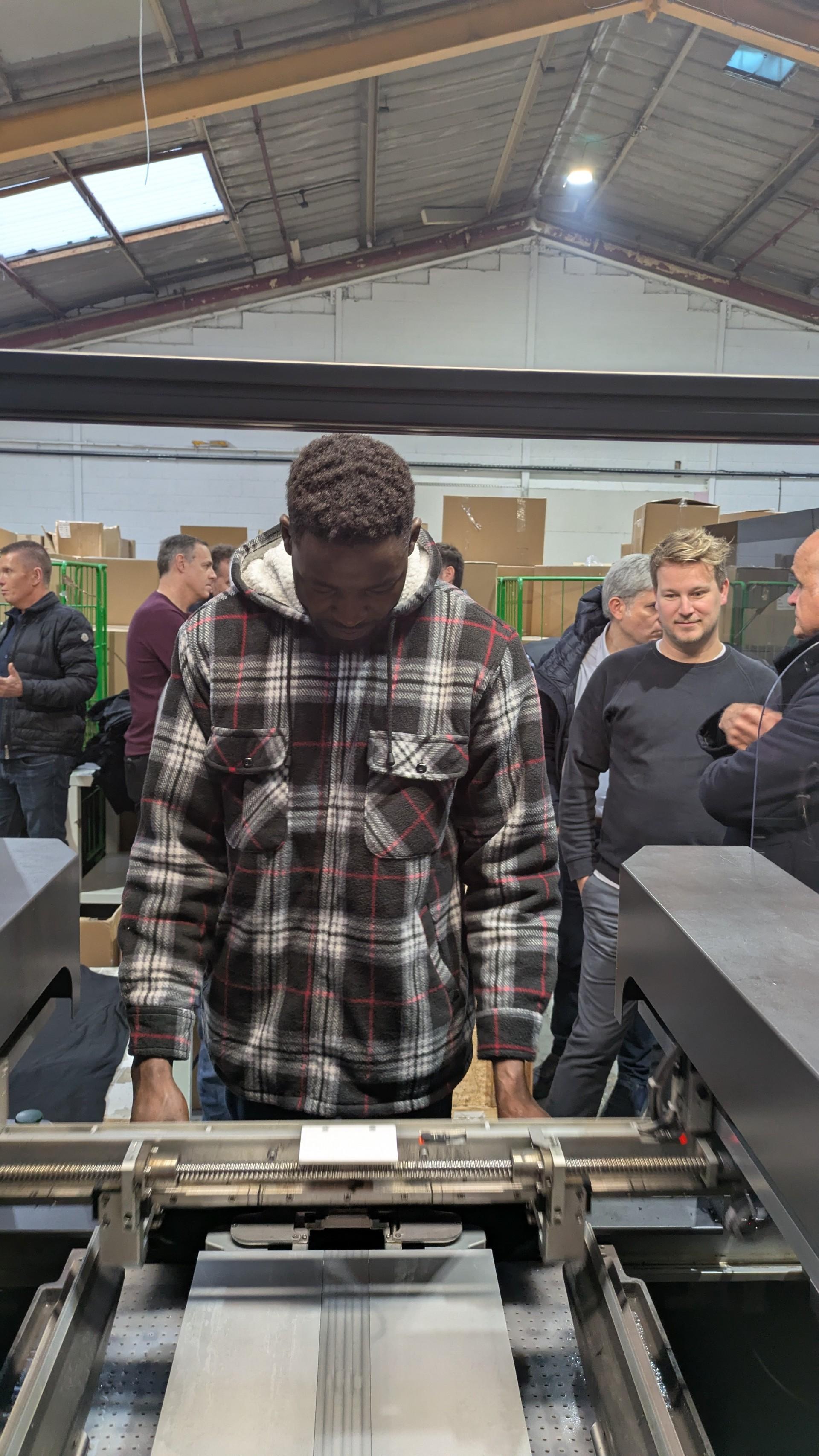
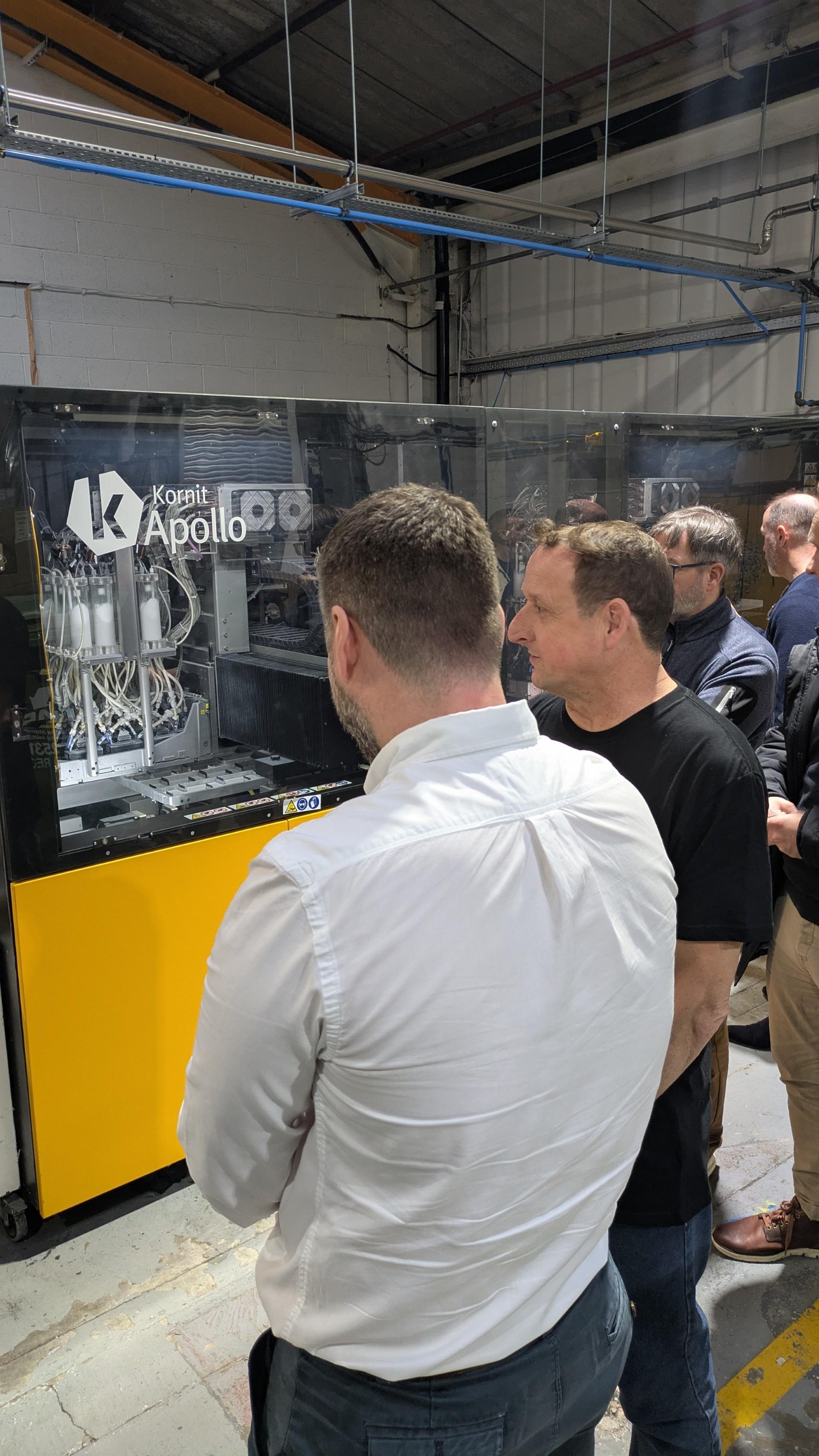
ROSH-HA`AYIN, Israel, March 02, 2026 (GLOBE NEWSWIRE) -- Kornit Digital LTD. (NASDAQ: KRNT) (“Kornit” or the “Company”), a global leader in sustainable, on-demand digital fashion and textile production technologies, today announced that UK clothing manufacturer Basic Prints has expanded its digital production capacity with a second Kornit Apollo Direct-to-Garment (DTG) system. This marks a strategic shift supporting Basic Prints’ digital-first manufacturing model.
Founded more than 30 years ago, Basic Prints has built its reputation supporting leading high street retailers, licensed music programs, and private label fashion brands with high-quality manufacturing and garment decoration. Basic Prints has now strategically transitioned the majority of its UK production from traditional screen printing to fully automated digital mass production – positioning itself at the forefront of agile, on-demand driven apparel manufacturing.
With two Apollo systems running at industrial scale, each capable of producing thousands of prints per day, Basic Prints has redefined its operational model to meet the speed, complexity, and unpredictability of today’s retail environment. The investment enables Basic Prints to deliver rapid replenishment, manage complex graphics without setup limitations, and switch designs instantly while maintaining consistent industrial level quality.
Apollo is a fully automated high volume DTG platform that manages loading, printing, curing, and unloading in a seamless workflow. By eliminating traditional screen setup processes and significantly reducing labor intensity, the system enables true end-to-end digital mass production at scale.
“This is not about just adding capacity. It’s about redefining how apparel is produced at scale,” said Ronen Samuel, Chief Executive Officer at Kornit Digital. “Basic Prints has moved most of its production from screen to digital and is running thousands of prints per day on each of their Apollo systems. That shift gives them the freedom to change designs instantly, manage complex graphics with ease, run short- or mid-sized orders without setup limitations, and deliver consistent quality at industrial volumes, proving again that digital is ready for mainstream retail production.”
By bringing high-volume digital production closer to market, Basic Prints enables retailers to reduce inventory risk, shorten lead times, and react quickly to demand spikes. The move supports a broader industry shift toward a more agile, data-driven manufacturing model.
“We have spent more than three decades manufacturing garments for the UK retail market,” said Kieran Hickey, Founder of Basic Prints. “Digital production is no longer an add-on to our business. It is now the backbone of how we operate. With two Apollo systems in place, we can deliver industrial scale with the flexibility modern retail demands. It simplifies our operations, increases speed-to-market, and allows us to support our customers with greater responsiveness than ever before.”
Disclaimer: The content of this article solely reflects the author's opinion and does not represent the platform in any capacity. This article is not intended to serve as a reference for making investment decisions.
You may also like
 VIPCross-Asset Positioning Amid AI Earnings Scrutiny and the US Election
1. Markets diverged during the week. Between the October 23 and October 30 closes, BTC fell 4.78%, the Nasdaq 100 declined 1.98%, and gold and silver dropped 2.72% and 8.59%, respectively. The DAX, KOSPI, Nikkei 225 and Hang Seng advanced. We focus on differences in growth prospects, valuation sensitivity and risk exposures rather than applying a single directional view across assets. 2. Market reactions to Alphabet's and Intel's earnings brought returns on AI investment into focus. Attention is shifting from the scale of capital expenditure to revenue realization, margins and free cash flow. Lower interest rates can ease discount-rate pressure, but a sustained valuation recovery still requires support from both operating performance and financing conditions. 3. The November 3 US midterm elections and November 6 employment report are key events in the coming week. We monitor how post-election fiscal and legislative agendas may affect interest rates, the dollar and industry operating conditions. Our execution priorities are to manage leverage and concentration, retain margin and exit-liquidity buffers, and avoid treating a single political outcome as an automatic trading signal. 4. Following Binance's disclosure of a security incident, industry attention to endpoint protection, access segregation and coordinated incident response has increased. Key assets to monitor: BTC, the Nasdaq 100, crude oil and gold, alongside upcoming earnings from AAPL, AMD, PLTR, ARM, ANET and QCOM.

HYATT HOTELS CORP <H.N>: JEFFERIES RAISES TARGET PRICE TO $188 FROM $167
Italgas Raised to Buy From Hold by Berenberg
BANCORP INC <TBBK.O>: KBW CUTS TARGET PRICE TO $56 FROM $65
Crypto prices
More


