
Saylor Continues Long Term Bitcoin Strategy

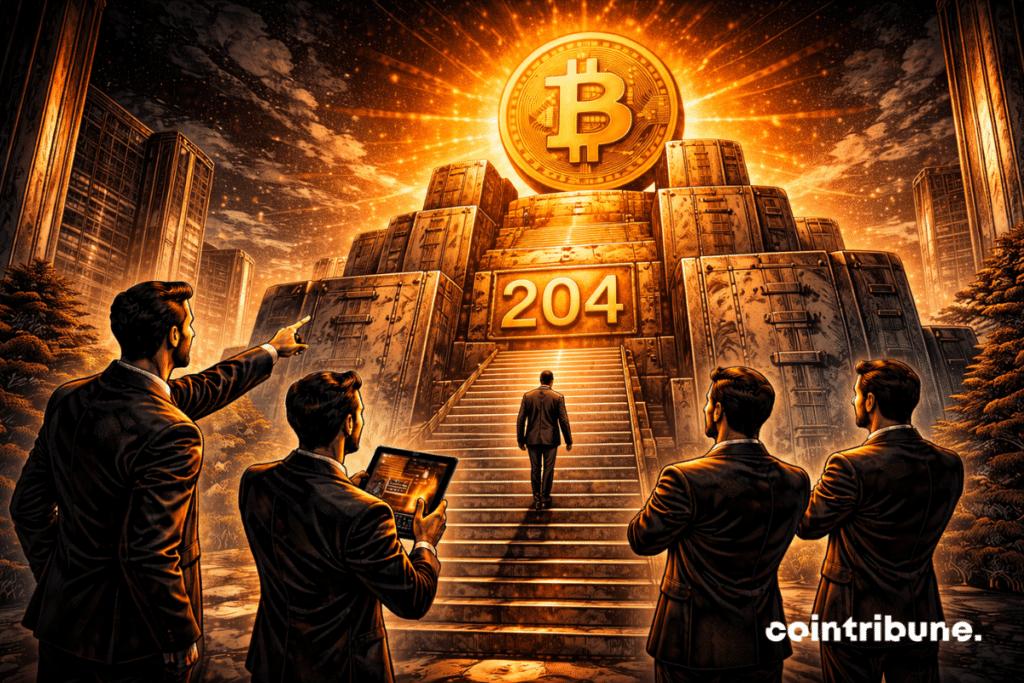
Michael Saylor continues his offensive on bitcoin. Strategy has just announced a new massive purchase, further strengthening a balance sheet already dominated by the flagship asset. This operation, the 101
In brief
- Strategy makes its 101st bitcoin purchase with an investment of 204 million dollars.
- The company acquires 3,015 BTC at an average price of 67,700 dollars per unit.
- Total reserves now amount to 720,737 bitcoins.
- This strategy strengthens the correlation between Strategy’s market capitalization and Bitcoin’s evolution.
Strategy adds 3,015 BTC to its balance sheet
Strategy, after a purchase at a largely overvalued price, announced the acquisition of 3,015 additional bitcoins for a total amount of 204 million dollars. The operation was carried out between February 23 and March 1, 2026, according to published information. This new transaction is part of a continuous accumulation policy engaged for several years by the company led by Michael Saylor.
The average purchase price was 67,700 dollars per bitcoin, confirming execution spread over several days. The financing of this acquisition comes from the sale of common shares under the “at-the-market” (ATM) program, a mechanism allowing capital raising directly on the market.
The disclosed information are as follows :
- 3,015 BTC acquired ;
- 204 million dollars invested ;
- Average purchase price : 67,700 $ per BTC.
Following this operation, Strategy now holds 720,737 bitcoins. The total cumulative acquisition cost reaches approximately 54.8 billion dollars, for an overall average price of about 75,985 dollars per bitcoin.
An accumulation financed by the stock market
The operation was made possible through the sale of common shares under the ATM (at-the-market) program, a mechanism allowing the company to gradually raise funds on the markets.
This approach differs from previous bond financings used by Strategy of Michael Saylor during earlier accumulation cycles. It illustrates an adaptation of the financial leverage mobilized to pursue this bitcoin strategy.
By using the stock market, Strategy pursues a unique model: converting raised capital into bitcoin to increase its strategic reserve. This method strengthens the correlation between the company’s market capitalization and BTC’s evolution, making the company an indirect exposure vehicle for traditional investors.
Strategy continues its methodical accumulation of bitcoin, consolidating a financial model now closely linked to BTC’s evolution. This 101
Maximize your Cointribune experience with our "Read to Earn" program! For every article you read, earn points and access exclusive rewards. Sign up now and start earning benefits.
Disclaimer: The content of this article solely reflects the author's opinion and does not represent the platform in any capacity. This article is not intended to serve as a reference for making investment decisions.
You may also like
After the Nasdaq evaporated over $2 trillion in a single month, Wall Street is starting to look for buying opportunities! Deutsche Bank upgrades its technology rating, and Goldman Sachs’s “seven signals” outline the bull narrative.
Deutsche Bank is optimistic about U.S. tech stocks, overturning its downgrade rating from three weeks ago. The bank claims that the large sell-off has created attractive buying opportunities and that most of the risks related to artificial intelligence have already been excessively priced in by the market.

NEAR Enters Bitwise Large-Cap Indexes in October Rebalance
Ethena Pay Adds Earn+ Through Aave V4 Lending on Avalanche

DoorDash (DASH.US) Outperforms Nasdaq Amid Tech Stock Selloff! Officially Announces $17 Billion Acquisition of Instacart; Will Grocery Delivery and Retail Advertising Drive a Revaluation of Value?
The complete integration of the two major platforms may enhance their overall competitive and bargaining power in terms of delivery economics, consumer reach, and retail media monetization. Grocery retailers lacking their own delivery networks are bound to face more significant bargaining pressure, while Walmart and Target, which own Spark and Shipt, are relatively more capable of withstanding the impact.
Crypto prices
More


