
Brazil's Pix instant payments system expands to Argentina

Banco Central do Brasil said on Friday that it expanded its Pix digital payments system to allow Brazilians living in Argentina to access the service to pay for goods, services and send payments in both countries.
The central bank’s instant payments platform is accepted by major crypto platforms and service providers operating in Brazil for fiat onramping, including the Lemon crypto application, Binance Pay, Crypto.Com, the Mercado Bitcoin exchange and the Kraken crypto exchange.
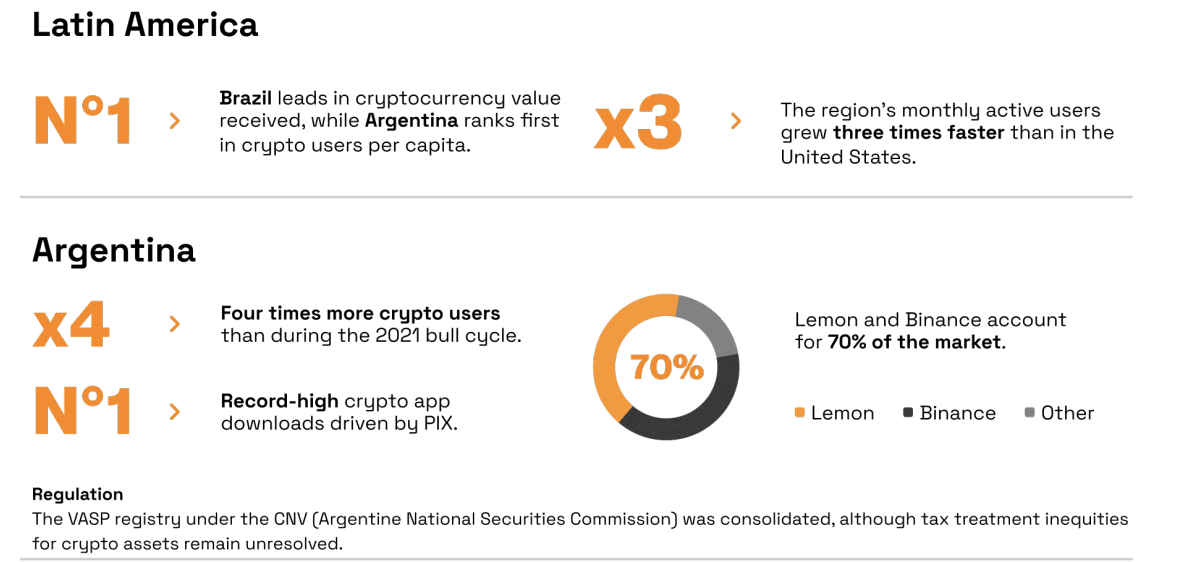
Argentina ranks as the number one country for crypto adoption per capita in LATAM, while Brazil ranks as number one in terms of total crypto value received, according to Lemon’s State of the Crypto Industry in Latin America 2025 report.
Argentina has about 4x the number of crypto users it had during the 2021 market cycle, the report said, and the Latin America region has about a 3x higher adoption rate than the United States.
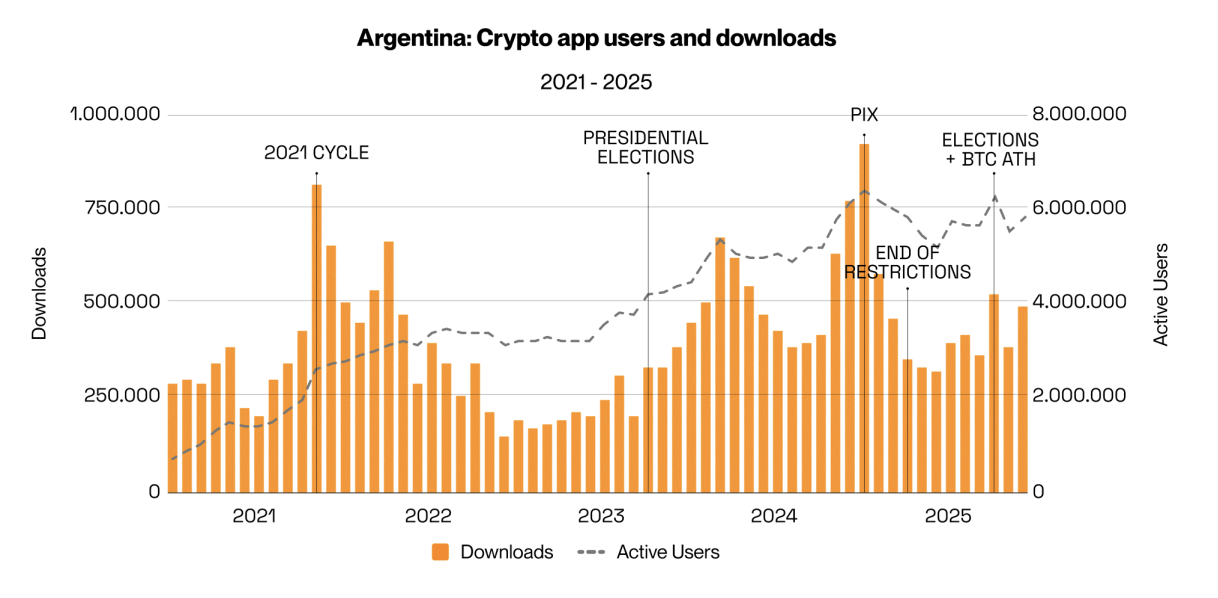
Lemon also attributed a surge in user downloads of its crypto application to the PIX payments system.
“Argentina recorded 5.4 million crypto app downloads in 2025, with more than 90% corresponding to wallets that implemented Pix payments in Brazil,” the authors of the report said.
Users in Latin America and other jurisdictions with high inflation have turned to digital assets as an alternative to traditional fiat currencies and the legacy financial system, which features relatively higher transaction fees and potential currency controls.
Related: Western Union teams with Crossmint to support USDPT stablecoin on Solana
Inflation is declining in Argentina, but still remains high
The Argentine peso clocked its lowest annual inflation rate in eight years in 2025, when inflation climbed back down to 37%, a threefold reduction from the previous year, according to Lemon.
Argentina’s government also removed currency controls, allowing residents in Argentina to sell and buy US dollars on the open market, improving economic conditions for those living in the country.
Previously, Argentine residents were not allowed to sell or buy US dollars, creating a black market for the greenback and dollar-pegged stablecoins.
This improvement has opened the door for new crypto use cases beyond savings and cross-border remittances, the report said.
Magazine: El Salvador’s national Bitcoin chief has been orange-pilling Argentina
Disclaimer: The content of this article solely reflects the author's opinion and does not represent the platform in any capacity. This article is not intended to serve as a reference for making investment decisions.
You may also like

Wall Street on High Alert for the Biggest U.S. Treasury Issuance Adjustment in Years: Long-Term Bond Issuance May Be Cut Early, Short-Term Financing Ratio Faces Test
The U.S. Treasury will announce a new round of quarterly refinancing plans this Wednesday. Several primary dealers predict that the Treasury will adjust its policy language to allow for a reduction in long-term Treasury issuance next year, while compensating for the financing gap by increasing short-term debt issuance. Citi expects the Treasury may begin reducing the issuance of 20-year and 30-year Treasuries starting this month, which would diverge from the previous quarterly refinancing statement's guidance of maintaining stable issuance levels.

Optimism to highlight OP Stack at Ethereum Institutional Forum in London

Bitcoin risks drop below $76K as 7% oil slide fails to spark BTC price rally

Crypto prices
More


