
Rich Bitcoin traders lost $337M daily in first quarter of 2026

Bitcoin (BTC) traders holding 100–10,000 BTC realized losses at an average of $337 million per day in Q1 2026, the worst quarter since 2022, according to data from Glassnode.
Key takeaways:
Bitcoin dropped more than 20% after whales last realized losses at a comparable pace in 2022.
Long-term holders are also selling at a loss, indicating capitulation and potentially more downside in price.
BTC whales, sharks realized $30.91 billion loss in 2026
Realized Loss tracks the total dollar value of losses locked in when BTC is sold on-chain below its purchase price. In 2026, two significant wallet cohorts show signs of capitulation.
They are addresses holding 100–1,000 BTC, or “sharks” that often represent mid-sized funds or wealthy investors, and those holding 1,000–10,000 BTC, which are considered whale-sized entities.
In Q1, Bitcoin’s sharks (yellow) realized losses at an average of $188.5 million per day, while whales (orange) comprised another $147.5 million daily.
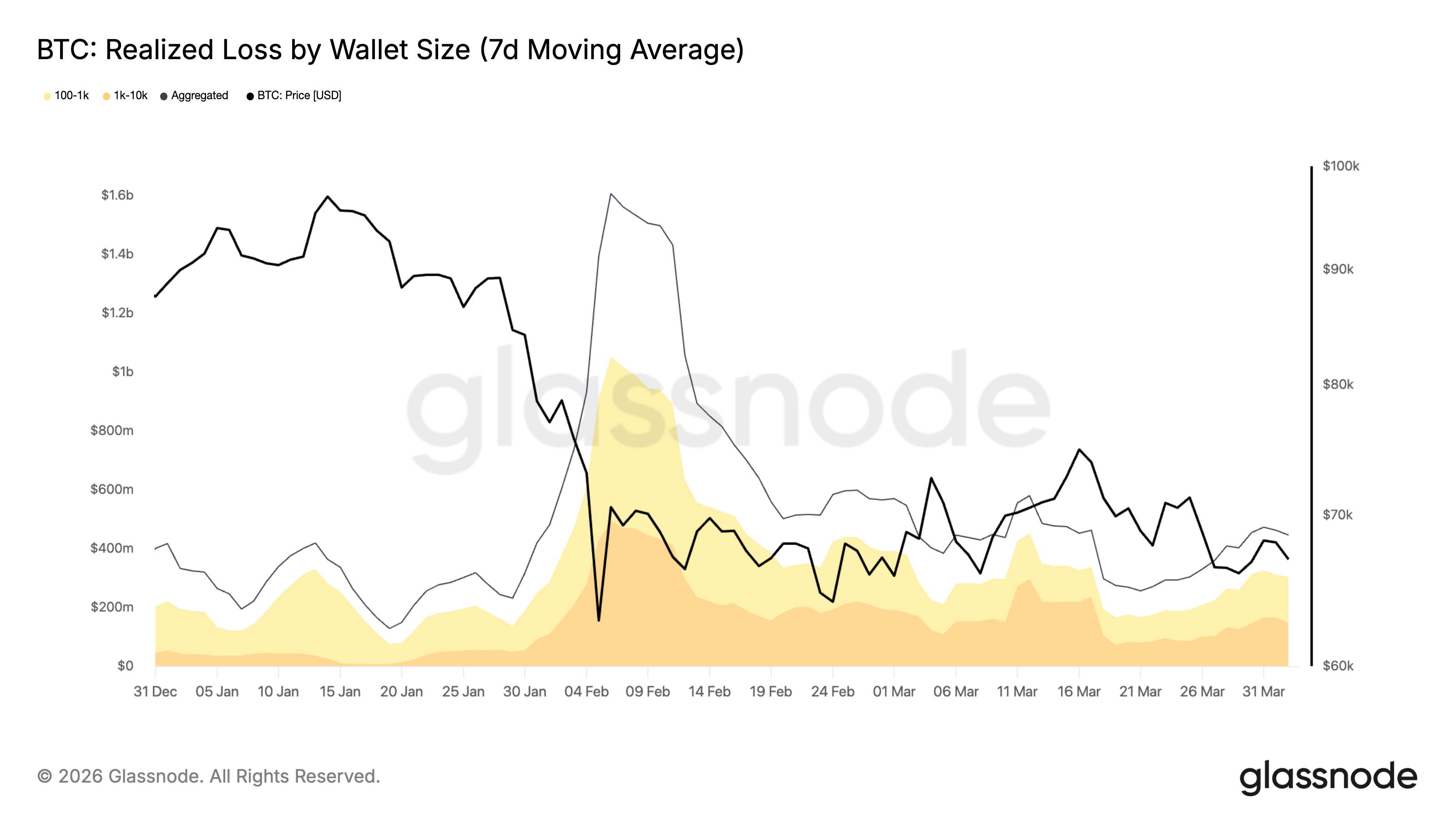 BTC realized loss by wallet size. Source: Glassnode
Combined, these large entities have locked in roughly $30.91 billion in realized losses so far in 2026.
Bitcoin’s realized losses in Q1 2026 for these high-net-worth entities rank among the most severe on record, trailing only Q2 2022’s roughly $396 million daily average.
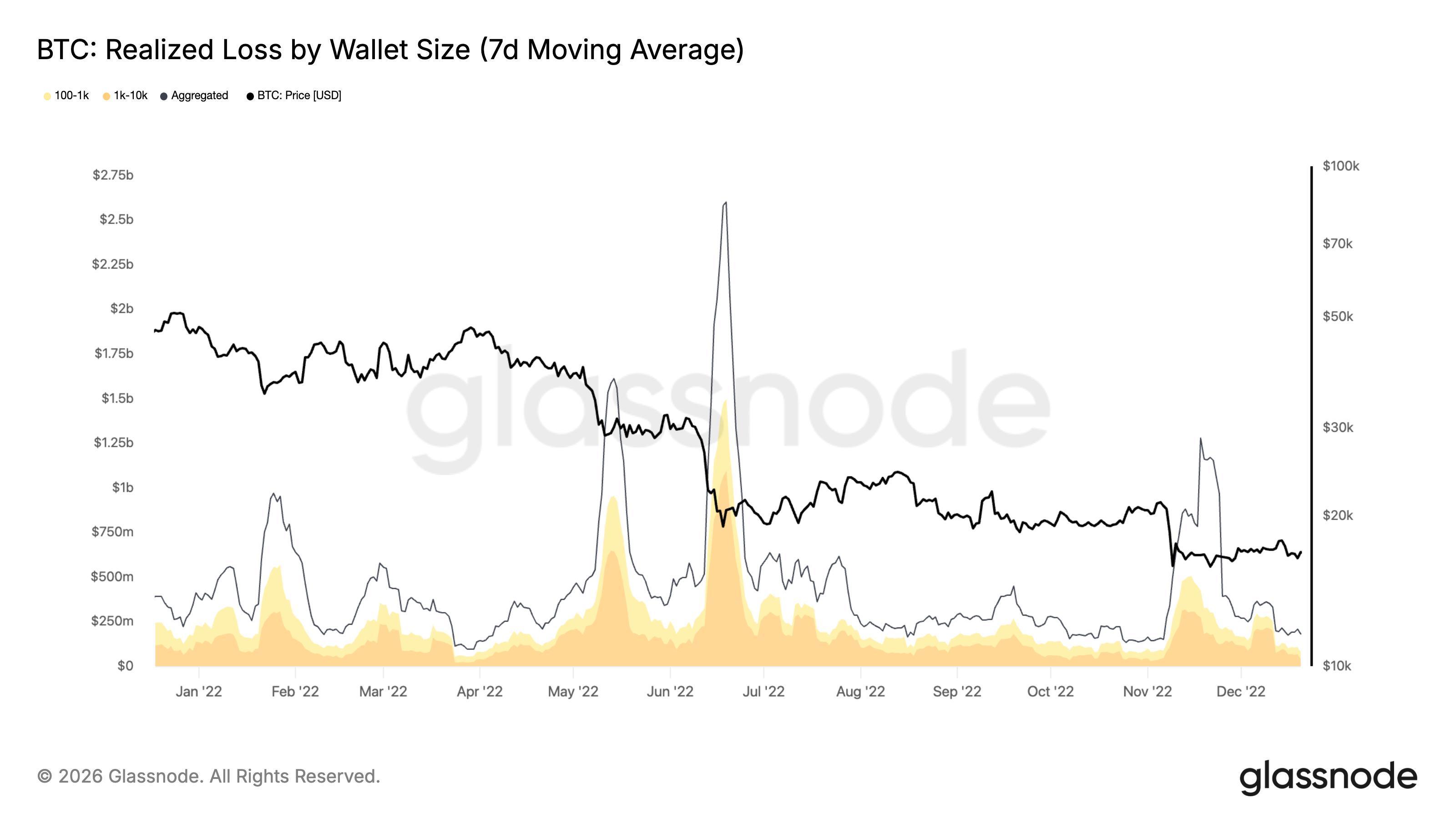 BTC realized loss by wallet size (2022). Source: Glassnode
In Q2 2022, BTC’s price dropped by over 50% and another 20% by the year’s end. It kept falling as the Terra collapse, Celsius freeze, and Three Arrows failure triggered panic across crypto, draining liquidity and confidence.
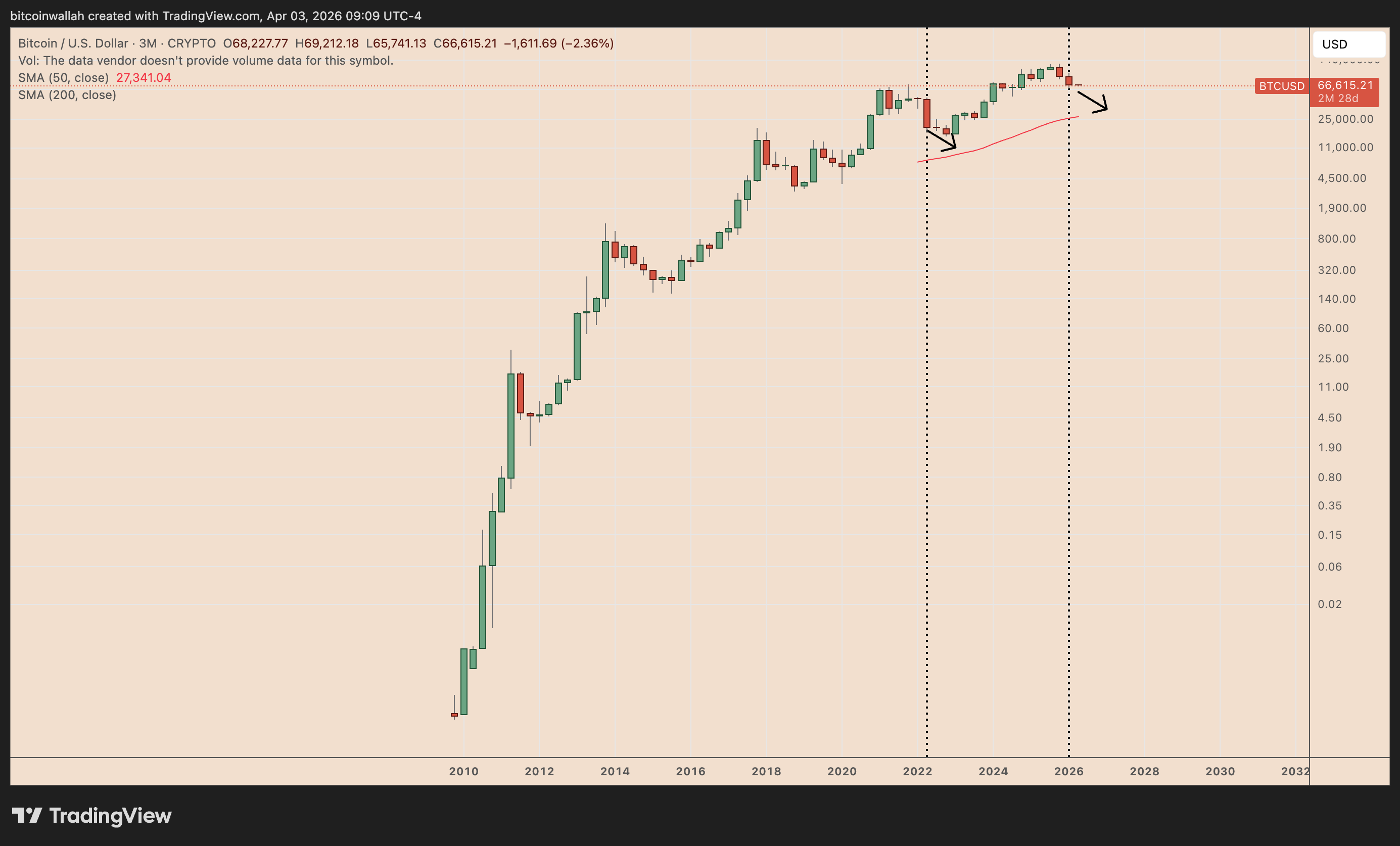 BTC/USD three-month performance chart. Source:
In 2026, pressure on Bitcoin has come from different sources, including Iran war-driven inflation fears, quantum-security risk, and broader stress in the AI-led risk trade.
Related: Bitcoin supply in profit heads to ‘true bear market’ levels
Therefore, whales and sharks are cutting their losses now because they expect the Bitcoin price to drop further as macro risks mount. This sentiment raises the odds of a 2022-like bear market, with a bottom in Q4 2026.
Bitcoin’s long-term holders add to downside risks
Another sign that Bitcoin’s sell-off may not be over comes from Glassnode’s Long-Term Holder Realized Loss chart, which tracks losses locked in by investors who held coins for more than six months before selling.
That figure remains elevated at around $200 million per day on a 30-day average basis since November 2025.
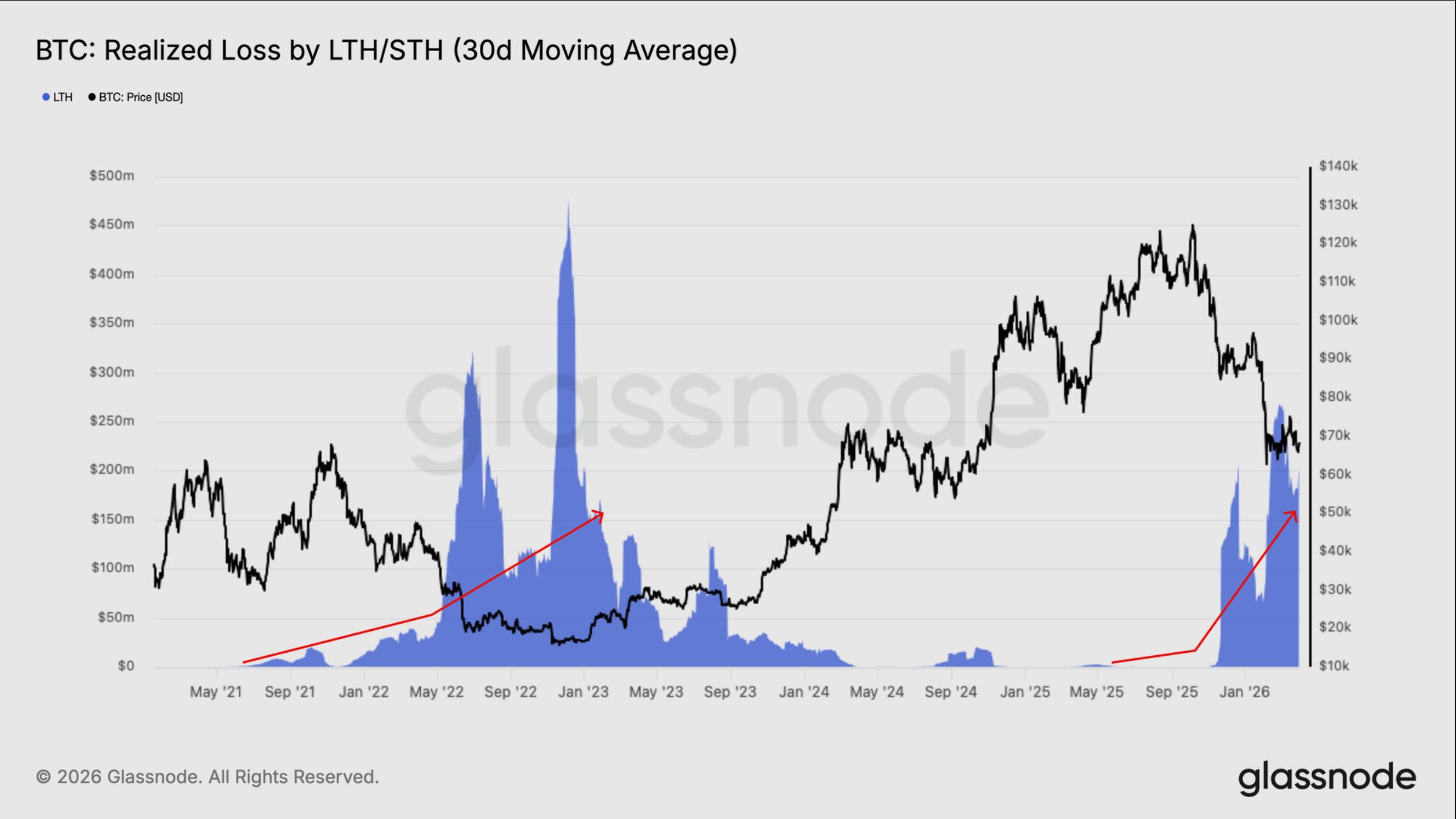 BTC realized loss by LTH/STH (30-day MA). Source: Glassnode
“A meaningful cooldown toward levels below $25M per day would represent a more compelling signal of exhaustion in selling pressure,” Glassnode analysts said in their weekly report published on Wednesday, adding:
“A prerequisite for the base formation that historically precedes a sustainable bull market transition.”
Together, these headwinds have already fueled calls for a deeper BTC correction, with some analysts pointing to the $40,000–$50,000 range as a possible bottom.
Disclaimer: The content of this article solely reflects the author's opinion and does not represent the platform in any capacity. This article is not intended to serve as a reference for making investment decisions.
You may also like
Crypto Sentiment Hits Extreme Lows as Open Interest Surges: 5 Altcoins to Accumulate Before the Market Turns
Not Following Intel's Footsteps! AMD's Q3 Revenue Surges 45% Beating Expectations, Data Center Revenue Nearly Doubles, Q4 Guidance Accelerates to a New High | Earnings Report Insights
Q3 AMD revenue increased by 15.5% from the record set in Q2, with EPS up 74% year-on-year; client revenue grew 7% year-on-year, below expectations, gaming revenue exceeded expectations but dropped 40% year-on-year, and embedded revenue surpassed expectations with a 29% increase. Free cash flow fell 64% to $550 million, far below expectations, mainly due to inventory climbing nearly fourfold to $3 billion. Q4 revenue guidance midpoint is up 66% year-on-year to $17 billion, $700 million higher than analyst expectations and nearly 10% higher than Intel’s guidance for the same period. The CEO stated that with the ramp-up of the Helios system and Venice CPU, growth is expected to accelerate further in Q4. After-hours stock price once surged nearly 10%.
Booking (BKNG.US) Q3 total bookings reach $54.5 billion, exceeding expectations; adjusted EPS increases by 17%. Q4 guidance turns cautious due to Middle East situation.
Booking Holdings (BKNG.US), the world's largest online travel company, released its Q3 2026 earnings after the US stock market closed on Tuesday. Total bookings, room nights, and adjusted profitability indicators all exceeded market expectations for the quarter, with adjusted earnings per share surging by 17%.
Bank of Canada Says Government Spending Has Not Fueled Inflation; Heavy Crude Oil Discount Hits Eight-Year High
Bank of Canada Governor Macklem stated that government fiscal plans have not yet significantly pushed up inflation, but there are still differences in the market regarding fiscal stimulus and interest rate hikes. Meanwhile, due to rising international shipping costs and intensified competition, the discount for Canadian heavy crude oil has widened to its highest level in eight years.
Crypto prices
More


