
Bitcoin and the US dollar have a 'symbiotic' relationship: BPI exec

US dollar-pegged stablecoins and Bitcoin (BTC) share a “symbiotic” relationship, mutually benefitting from rising adoption, according to Sam Lyman, head of research at Bitcoin Policy Institute (BPI), a Washington DC-based digital asset advocacy organization.
“Bitcoin is beneficial to the US system because the largest Bitcoin trading pair is BTC/USD,” or Tether’s USDt (USDT) stablecoin, which is backed by cash deposits and short-term US government debt, Lyman told Cointelegraph. He added:
“There is a symbiotic relationship between BTC and the dollar system because BTC is most frequently traded in dollars. So, I do see those things as being mutually reinforcing, which runs contrary to the narrative around BTC that it would actually undermine the dollar.”
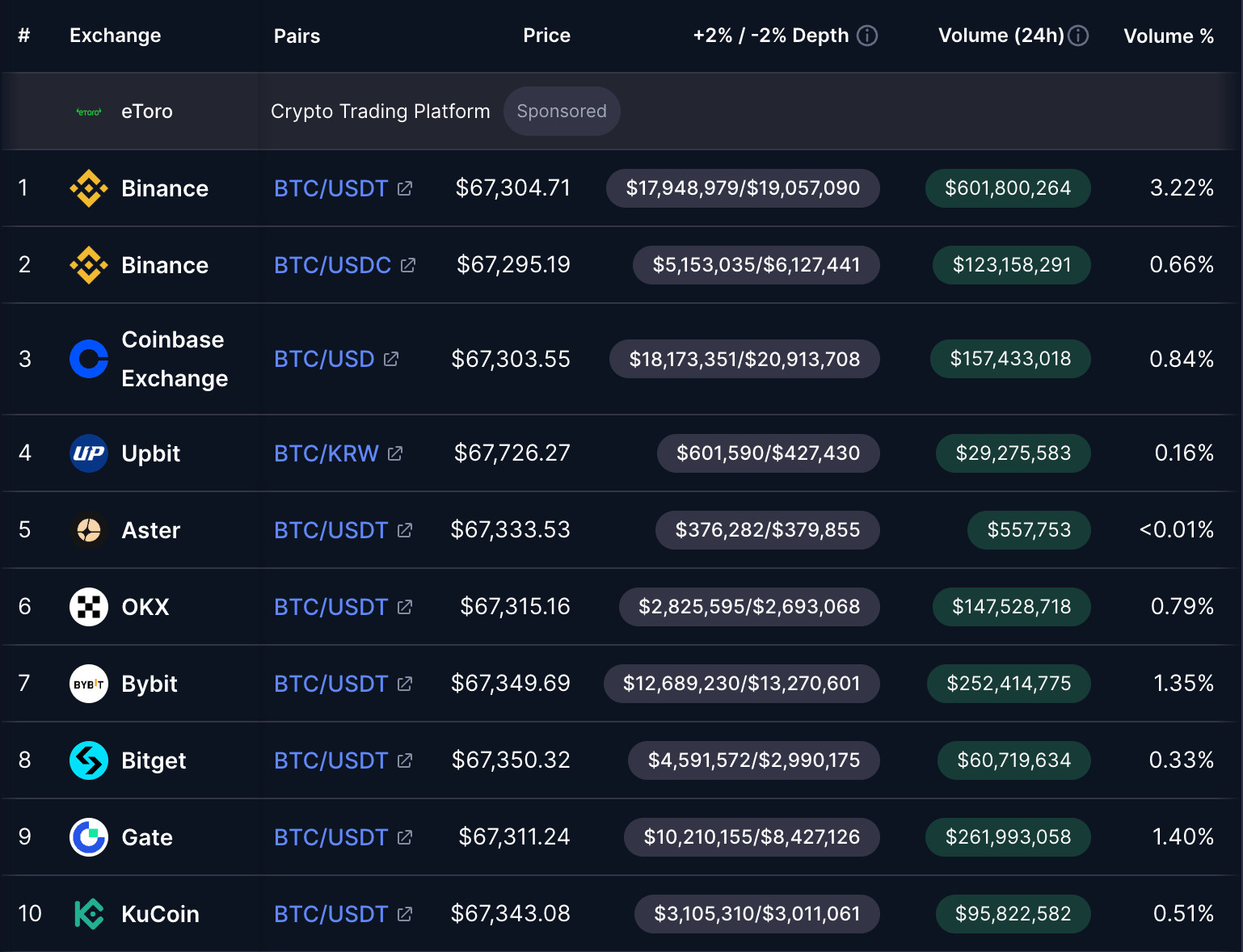 US dollar-based trading pairs dominate the BTC market. Source:
He said Bitcoin and dollar-pegged stablecoins share a similar relationship to the dollar and oil. Under the petrodollar system, which began in the early 1970s, international oil sales are priced in dollars, driving more demand for the currency.
Lyman urged US lawmakers to continue developing stablecoin regulations introduced in the GENIUS regulatory framework, without deviating from its core principles, to strengthen and protect US dollar hegemony and remain competitive in geopolitics.
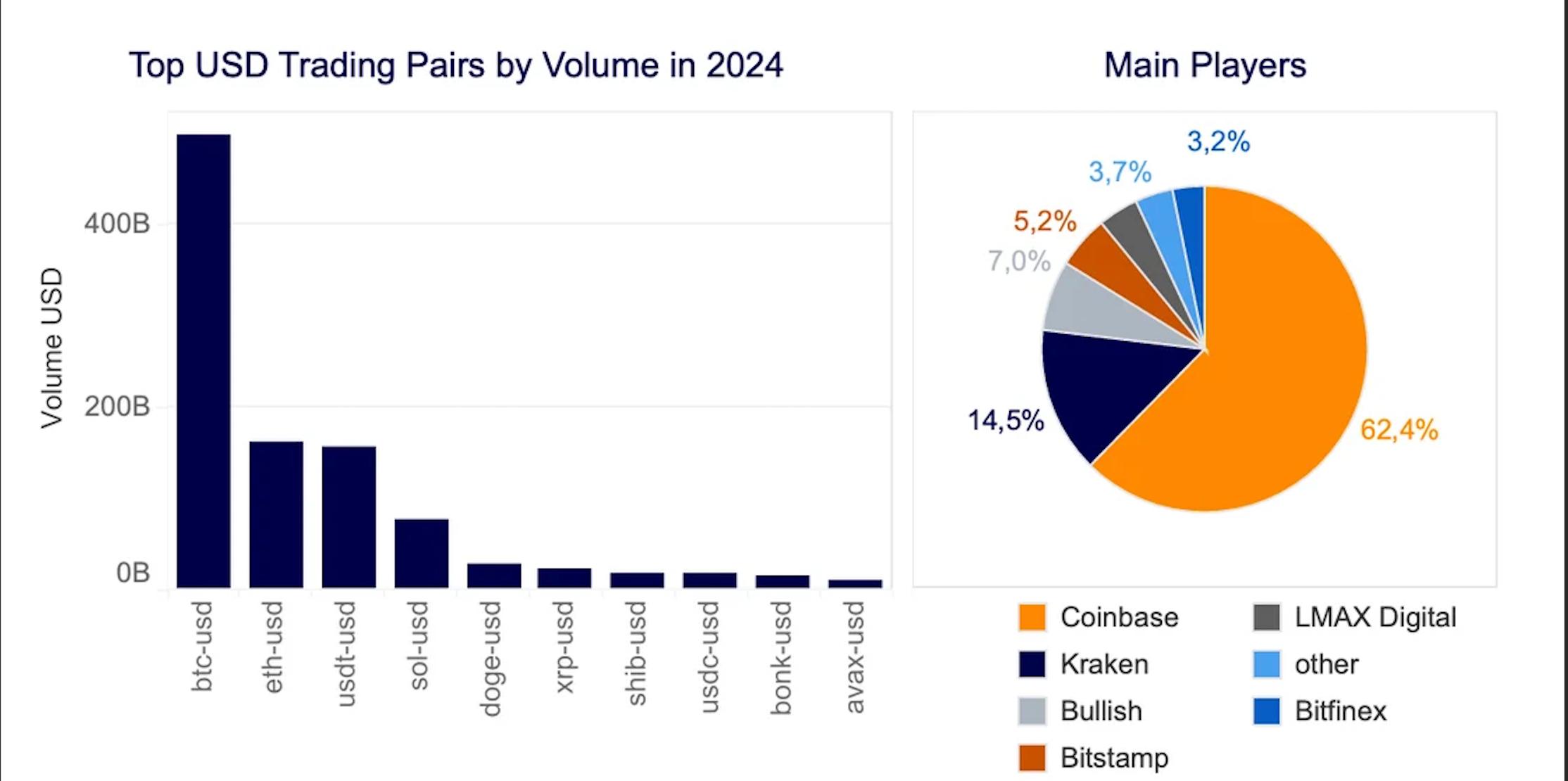 Data from 2024 also reflects the dominance of the dollar in BTC markets. Source:
Related: Stablecoins flip automated clearing house volume in February
China clamps down on permissionless blockchain tech to push for CBDC
The People’s Republic of China has “banned” Bitcoin and stablecoins several times, because both are a “tremendous threat” to the government’s capital controls, which are a critical component of the Chinese economy, Lyman told Cointelegraph.
“The entire Chinese economy depends on capital controls. China is able to keep money within the country by preventing its elite from moving money out of the country,” he said.
This is why China reaffirmed its stablecoin ban in 2025, choosing instead to launch the digital yuan, a yield-bearing central bank digital currency (CBDC) to control capital flows and capture a larger portion of the foreign currency exchange market, Lyman said.
CBDCs are fully programmable and controlled by the government or the central bank issuing the digital fiat currency.
However, the bans have failed to actually curtail permissionless crypto activity, including Bitcoin mining and stablecoin flows to and from China, Lyman said.
Despite a blanket ban on Bitcoin mining, Chinese mining pools control more than 36% of the mining pool global hashrate, or the total amount of computing power mining pools are contributing to secure the network, according to Hashrate Index.
Magazine: Bitcoin vs stablecoins showdown looms as GENIUS Act nears
Disclaimer: The content of this article solely reflects the author's opinion and does not represent the platform in any capacity. This article is not intended to serve as a reference for making investment decisions.
You may also like
Crypto Sentiment Hits Extreme Lows as Open Interest Surges: 5 Altcoins to Accumulate Before the Market Turns

Not Following Intel's Footsteps! AMD's Q3 Revenue Surges 45% Beating Expectations, Data Center Revenue Nearly Doubles, Q4 Guidance Accelerates to a New High | Earnings Report Insights
Q3 AMD revenue increased by 15.5% from the record set in Q2, with EPS up 74% year-on-year; client revenue grew 7% year-on-year, below expectations, gaming revenue exceeded expectations but dropped 40% year-on-year, and embedded revenue surpassed expectations with a 29% increase. Free cash flow fell 64% to $550 million, far below expectations, mainly due to inventory climbing nearly fourfold to $3 billion. Q4 revenue guidance midpoint is up 66% year-on-year to $17 billion, $700 million higher than analyst expectations and nearly 10% higher than Intel’s guidance for the same period. The CEO stated that with the ramp-up of the Helios system and Venice CPU, growth is expected to accelerate further in Q4. After-hours stock price once surged nearly 10%.
Booking (BKNG.US) Q3 total bookings reach $54.5 billion, exceeding expectations; adjusted EPS increases by 17%. Q4 guidance turns cautious due to Middle East situation.
Booking Holdings (BKNG.US), the world's largest online travel company, released its Q3 2026 earnings after the US stock market closed on Tuesday. Total bookings, room nights, and adjusted profitability indicators all exceeded market expectations for the quarter, with adjusted earnings per share surging by 17%.
Bank of Canada Says Government Spending Has Not Fueled Inflation; Heavy Crude Oil Discount Hits Eight-Year High
Bank of Canada Governor Macklem stated that government fiscal plans have not yet significantly pushed up inflation, but there are still differences in the market regarding fiscal stimulus and interest rate hikes. Meanwhile, due to rising international shipping costs and intensified competition, the discount for Canadian heavy crude oil has widened to its highest level in eight years.
Crypto prices
More


