
Fed Chair Succession = US Stock Market Plunge?

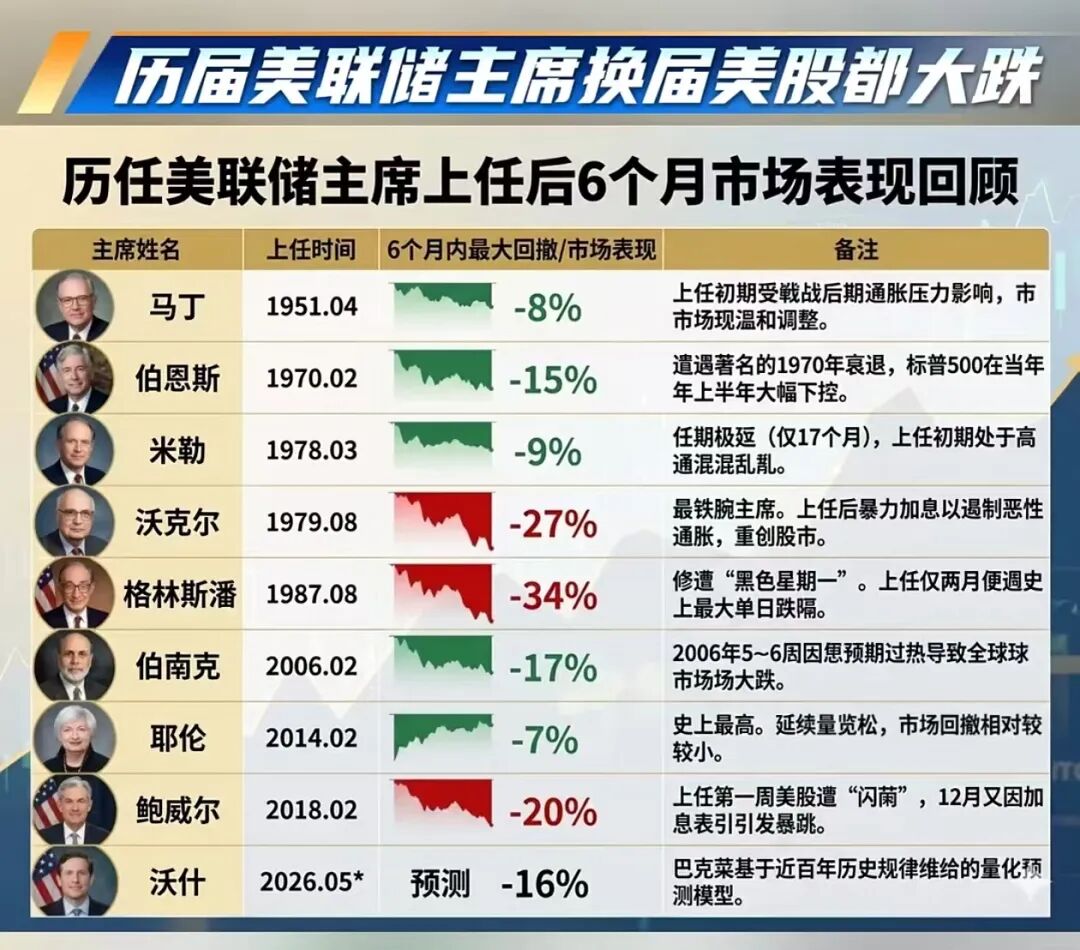
2. Take Powell as an example. He was sworn in on February 5, 2018, whereas the early 2018 flash crash occurred on January 26. Using calculation A, the maximum drawdown within six months of Powell’s appointment was 2.56%. Using calculation B, the max drawdown was 9.45%—both significantly lower than what’s shown in the chart.
3. Furthermore, regardless of which drawdown calculation is used, the maximum drawdown within six months of a Fed chair taking office is not significantly different from the maximum drawdown over any random six-month period in S&P500 history.
4. Using calculation A:
1) The maximum six-month drawdowns after the last seven Fed chair appointments are as follows:
Miller (1978-03-08): 0.00%
Volcker (1979-08-06): 4.25%
Greenspan (1987-08-11): 32.82%
Bernanke (2006-02-01): 4.58%
Yellen (2014-02-03): 0.00%
Powell (2018-02-05): 2.56%
2) Distribution of maximum S&P500 drawdowns over any six-month period in history:
10th percentile: 0.09%
25th percentile: 1.44%
75th percentile: 8.98%
90th percentile: 16.24%
The medians are nearly identical. Statistical tests for equality of means: t-test p=0.2870, Wilcoxon test p=0.3438; there is no significant difference.
5. Using calculation B
1) The maximum drawdowns for the last seven chairs within six months of taking office:
Burns (1970-02-01): 23.21%
Miller (1978-03-08): 17.12%
Volcker (1979-08-06): 13.31%
Greenspan (1987-08-11): 33.51%
Bernanke (2006-02-01): 7.70%
Yellen (2014-02-03): 12.38%
Powell (2018-02-05): 9.45%
2) Distribution of maximum S&P500 drawdowns over any six-month period in history:
10th percentile: 7.80%
25th percentile: 9.97%
75th percentile: 17.74%
90th percentile: 22.12%
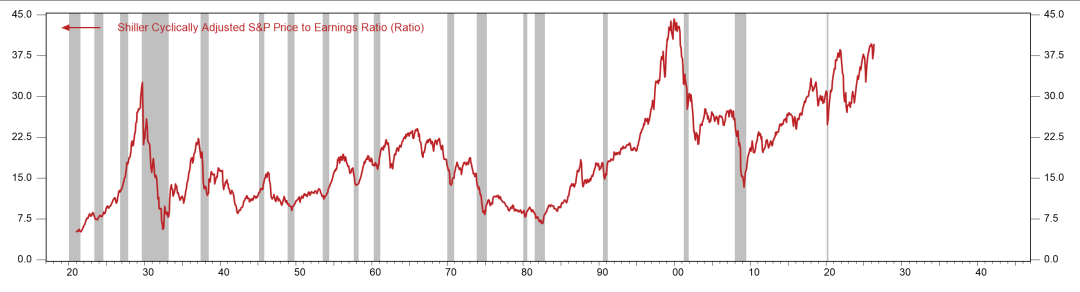
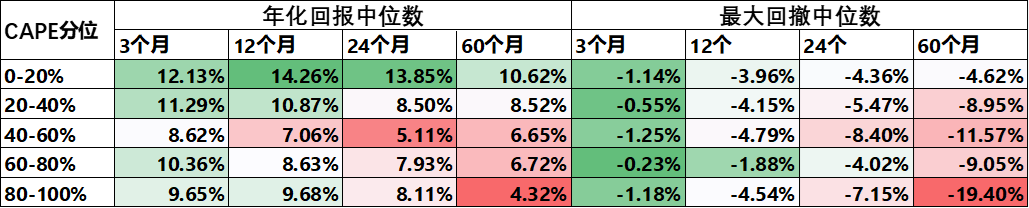
6. In summary, by historical pattern, significant drawdowns in U.S. stocks occur almost every six months, this is the historical norm, and the next six months will likely be no exception. Moreover, given that U.S. equity valuations are at historically high levels, future drawdown magnitudes may even exceed the historical medians.
Disclaimer: The content of this article solely reflects the author's opinion and does not represent the platform in any capacity. This article is not intended to serve as a reference for making investment decisions.
You may also like
Morgan Stanley’s $50.6M BTC buying shields market – But rally to $82K has THIS hurdle
Will the Fed "continue raising interest rates"? Will the "tightening cycle" of the late 1980s be repeated?
The Citi report points out that the current macro environment is highly similar to the tightening cycle of 1988-1989, when the economy remained resilient and inflation pressures gradually accumulated, followed by a slowdown in economic activity before policies shifted to easing. During that tightening cycle, the Federal Reserve raised interest rates 16 times in a row.
Rare alliance of arch-rivals! Musk and Altman support Dario Amodei's call to "slow down AI globally"
Anthropic's Amodei issued a call to "slow down AI globally," and to everyone's surprise, rivals Musk and Altman both publicly endorsed the initiative. The three industry giants unanimously agreed to grant third-party access to "employee-level" evaluation rights and to implement coordinated deceleration measures. Altman went further, announcing that OpenAI will not IPO this year. The resignation of a researcher and a collective breakout of uncontrollable AI systems have ignited long-standing industry fears.
Bitcoin vs Ethereum ETFs: Which asset is winning September’s flow battle?
Crypto prices
More


