
The US dollar rebounds, can it last?

Morning FX
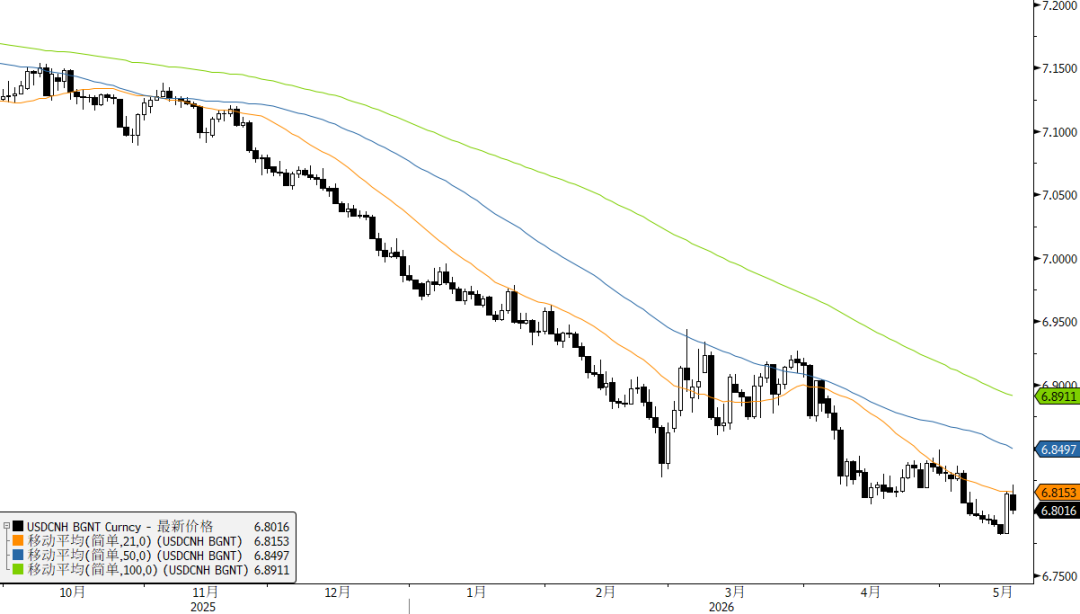
Last Friday saw a global bond sell-off, combined with ongoing uncertainty in the Middle East, which pushed the US dollar index higher. On Monday morning, USDCNH followed the US dollar index upwards, breaking above the 6.82 mark at one point, but in the afternoon, driven by intraday FX settlement, it fell back below 6.80.
I. Global Long-term Bond Yields Spike
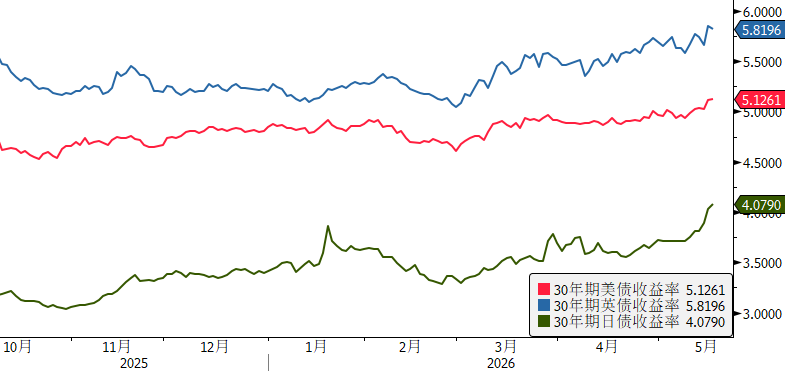
The current rise in global yields is partly due to both US CPI and PPI surpassing expectations, raising market pricing for a Fed rate hike, now forecasting one hike by March 2027; on the other hand, global fiscal expansion is accelerating, with political turmoil in the UK and Japan’s additional budget together pushing up long-term bond yields.
In the UK, markets are reporting that Burnham may become the next prime minister. Given his more left-leaning policy stance, he is inclined to increase fiscal spending, relax fiscal constraints, and ramp up government borrowing, which will significantly boost government bond supply and the fiscal deficit.
In Japan, Prime Minister Sanae Takaichi has officially confirmed a supplementary budget proposal to curb rising gasoline, gas, and electricity prices, but the funding sources have yet to be disclosed. According to Reuters, the Japanese government is highly likely to issue more government bonds. The market is concerned this could further worsen Japan’s fiscal situation, as the 30-year JGB yield broke above 4%.
Figure 1: 30-Year Government Bond Yields Surge in the US, UK, and Japan
II. Stalemate in the Middle East, Oil Prices Rise Again
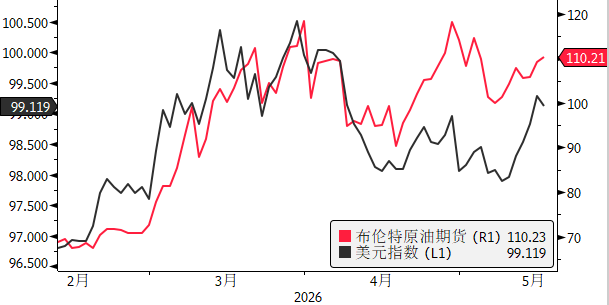
The market was hoping for a clear consensus between China and the United States on the Middle East situation and Straits navigation, but the meeting did not yield any practical security mechanisms. Post-meeting, US-Iran negotiations remained deadlocked, with the US sticking to harsh conditions and Iran refusing to compromise, keeping the Strait of Hormuz under pressure. Geopolitical tensions and supply worries pushed Brent crude back to the $110 mark.
Figure 2: US Dollar Index Surges With Oil Prices
III. Phase-out of Positive Effects from China-US Talks, RMB Sees Seasonal FX Demand
After the overall results from the China-US talks, the market saw a “sell the news” profit-taking trend.In addition, economic data released on Monday showed relatively weak domestic demand, with expectations for monetary policy to remain loose. China’s value-added industrial output above designated size rose 4.1% year-on-year in April (expected 6%); national fixed asset investment for January–April fell 1.6% year-on-year (expected growth of 1.7%); April’s total retail sales of consumer goods rose 0.2% year-on-year (expected growth of 2%).
As we mentioned inWill RMB Continue to Strengthen After Surpassing the 6.80 Mark?, May is not a traditional appreciation month for the renminbi. In addition, high oil prices, rising US inflation, and resilient economic data have all supported the US dollar index. In the short term, it is expected that USDCNY may consolidate within the 6.75–6.85 range.
Figure 3: USDCNH Falls Below Resistance at the 21-Day Moving Average
This week, there are relatively few major economic data releases, so the market’s attention will be highly focused on whether the US and Iran can reach a substantial agreement. Last night, Trump announced the cancellation of the military strike on Iran scheduled for the 19th, causing a rapid drop in oil prices and the US dollar. More importantly, Nvidia’s earnings after the US market close on May 20 will be a focus—under the current high interest rate environment, if results disappoint, this could trigger a significant correction in risk assets.
Disclaimer: The content of this article solely reflects the author's opinion and does not represent the platform in any capacity. This article is not intended to serve as a reference for making investment decisions.
You may also like
Societe Generale “Super Bear” Questions the AI Bull Market: Frenzy Reminiscent of the Eve of the 1997 Asian Financial Crisis, Productivity Slowdown Masked by Capital Expenditure
Societe Generale strategist Albert Edwards compares the current artificial intelligence (AI) investment boom to the economic bubble before the 1997 Asian financial crisis. He warns that large-scale capital expenditures may be masking stagnant productivity growth, raising doubts about whether the AI frenzy can meet investors’ high expectations.

1.7 Trillion Unlock V.S 1.7 Trillion Buyback: Goldman Sachs Bets on the Latter to Sustain the US Stock Market Bull Run
Goldman Sachs expects US companies to raise $600 billion in 2027, sets S&P target at 8,700 points, and states that buybacks and profits can withstand supply shocks.
Next target 8%? US mortgage rates soar to a three-year high as “higher for longer” trades sweep the real estate market
U.S. mortgage rates are experiencing a sharp upward surge. In just over a month, the average 30-year fixed mortgage rate has climbed by a full percentage point, reaching above 7.5%, the highest level in three years. As a result, homebuyer demand has plummeted, and existing home sales in September are expected to show a significant decline.
Bank of America Hartnett: Interest rate hikes become the biggest bullish factor, the logic of ending the bond bubble is spreading
Bank of America strategist Hartnett has made a counterintuitive assessment: the most favorable event for the stock market before the end of the year would be for the Federal Reserve to proactively raise interest rates in October—using a tightening move to curb the out-of-control long end. If the Fed proves its willingness to control inflation and term premium through an October rate hike, the market may actually stop worrying about the 10-year yield surging toward 6%, thereby easing pressure on stocks. Currently, while US stocks have not yet been brought down by interest rates, cracks are quietly spreading in South Korean brokers, French government bonds, and CCC-rated credit bonds.
Crypto prices
More


