
ECB Rate Hike Expected in June: Tightening Transmission Begins, Beware of Financial Market Repricing

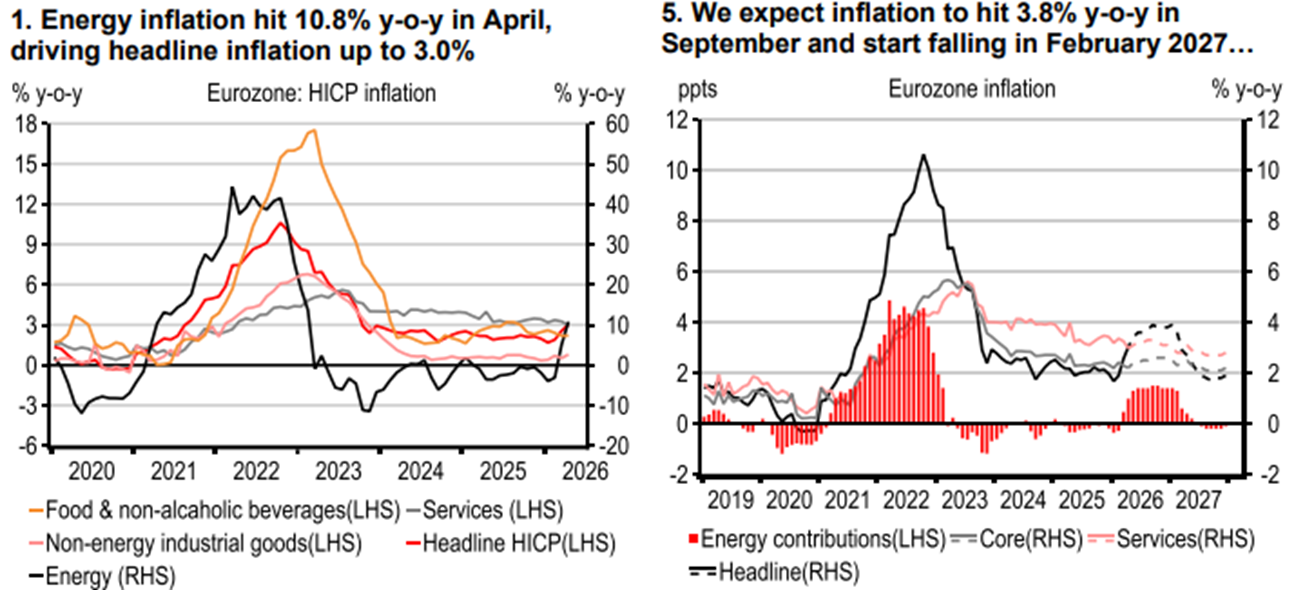
Recently, the European Central Bank (ECB) has taken a clearly hawkish policy stance. Over the past month, hawkish voices within the ECB have been intensively released, almost forming a "June rate hike" consensus. In April, the overall HICP inflation rate in the Eurozone rose to 3.0%, with energy inflation soaring from 5.1% in March to 10.8%, making it the primary driver of rising prices. More importantly, concerns about secondary inflation within the ECB are rising rapidly.
On May 26, Executive Board member Isabel Schnabel, considered the most hawkish official, made it clear that "the scale and duration of the current shock can no longer be ignored." Even if the conflict ends immediately, the damage to global energy infrastructure and supply chains will persist for a long time, so "a June rate hike is necessary." Central bank governors and Governing Council members from EU countries, such as Joachim Nagel of Germany, Martin Kocher of Austria, and Yannis Stournaras of Greece, have all continued to release hawkish signals. Even the relatively dovish Stournaras admitted that, to maintain the ECB's credibility, a rate hike in June "might be inevitable." ECB President Christine Lagarde also confirmed that, due to changing circumstances, the March forecast for a 2.6% increase in prices this year may be revised upward.
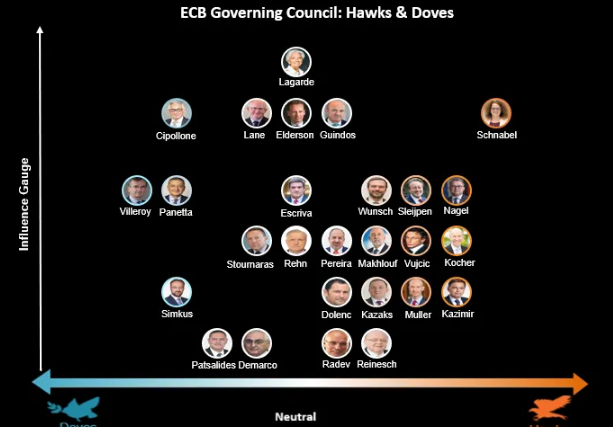
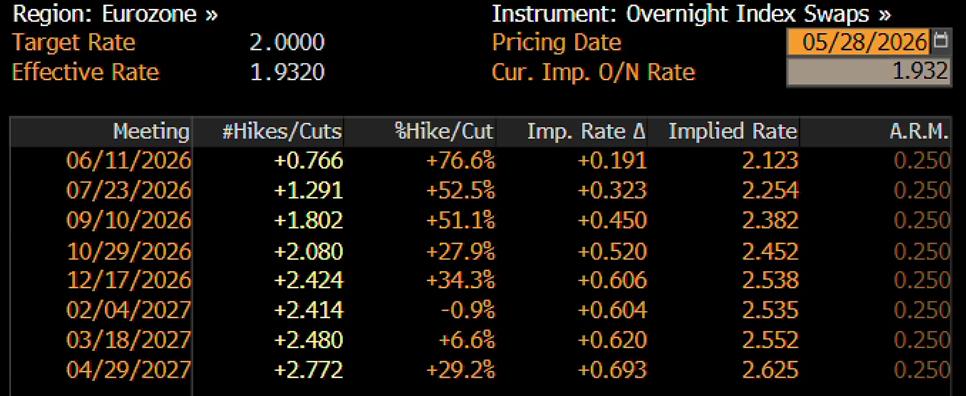
Judging from both the frequency and intensity of recent statements, the ECB is clearly guiding expectations ahead of the June meeting. The market has now largely priced in a 25 basis point rate hike in June, with a 76.6% probability; further hikes in September are also being factored in.
In fact, the tightening effect triggered by expectations of a rate hike has already begun to transmit in advance. The market is currently pricing in a 60 basis point rate hike for the year, with the 10-year German bund yield rising from 2.6% at the beginning of the year to 3.2%. Sovereign bond yields have generally risen, and term premia have expanded significantly. Especially against the backdrop of an expanding fiscal deficit alongside increased defense spending, rising financing costs are putting pressure on European public finances.
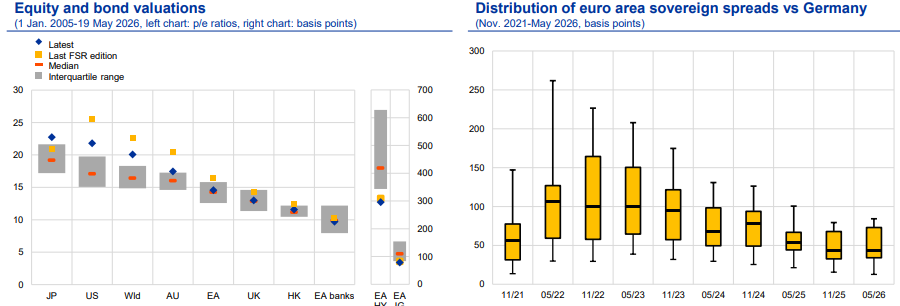
Financial tightening has already been transmitted in advance, posing a test for the real economy and financial markets
Disclaimer: The content of this article solely reflects the author's opinion and does not represent the platform in any capacity. This article is not intended to serve as a reference for making investment decisions.
You may also like
Morgan Stanley Bullish on SpaceX: "Tera’Merica" Potential Undervalued, Enterprise AI and Computing Power Expansion Unlock Growth Space
Morgan Stanley believes that SpaceX's growth logic is expanding from aerospace and satellite communications to enterprise AI and computational infrastructure, while the reconstruction of U.S. advanced manufacturing may also open up broader long-term opportunities. The commercialization of enterprise AI and the expansion of computational power provide more direct growth support, while the manufacturing opportunities represented by "Tera’Merica" offer additional long-term growth potential for the company.
Bitcoin Price LIVE: Buyers Absorb Selling as $87,220 Liquidity Target Looms
Standard Chartered maintains $250 year end target for SOL despite price drop
SpaceX to Acquire Low-Band Spectrum Portfolio From Grain Management in Mobile Connectivity Push
06:50 AM EDT, 10/09/2026 (MT Newswires) -- SpaceX (SPCX) shares rose early Friday after the rocket and satellite company agreed to acquire a nationwide low-band spectrum portfolio from investment firm Grain Management as it seeks to establish Starlink Mobile as a major US mobile carrier. SpaceX will buy Grain Management's entire portfolio of up to 14 megahertz of paired spectrum in the 800 MHz band, the companies said in separate statements late Thursday. The deal is subject to the Federal Communications Commission's approval and other customary closing conditions. SpaceX's stock gained 3.7% in the most recent premarket activity. The companies did not disclose the financial terms, and neither immediately responded to MT Newswires' request for comment on the reported transaction value. SpaceX will pay about $8 billion in cash for the assets, The Wall Street Journal reported Thursday, citing people familiar with the matter. Grain Management, which specializes in digital infrastructure, acquired the 800 MHz spectrum portfolio from T-Mobile US (TMUS) in August in exchange for $2.9 billion in cash and all of Grain's 600 MHz spectrum licenses. "This prime low-band spectrum addresses one of the key remaining technical gaps that will pave the way for Starlink Mobile to become a major mobile carrier in the US," SpaceX said in its statement. Following regulatory approval, SpaceX intends to combine its satellite-to-mobile constellation in space with a terrestrial deployment that will enable Starlink Mobile's signals and services to reach customers from both the ground and space, according to the companies. SpaceX said most existing mobile devices already support the band. "Our spectrum expertise allows us to connect the strategic value of these assets with the technologies and operators that can realize their potential," Grain Management Chief Executive David Grain said in a separate statement. "This agreement with SpaceX brings that capability to bear at extraordinary scale." Shares of Verizon Communications (VZ), AT&T (T)
Crypto prices
More


