
Rejecting "Always Being Right": Reviewing Real Mistakes [Dialogue with Peifeng Ke, Part II]

This is a modal window.
Beginning of dialog window. Escape will cancel and close the window.
End of dialog window.
Dialogue with Peifengke’s Chen Dapeng, Part II | Rejecting “Always Being Right”: Reviewing Real Mistakes
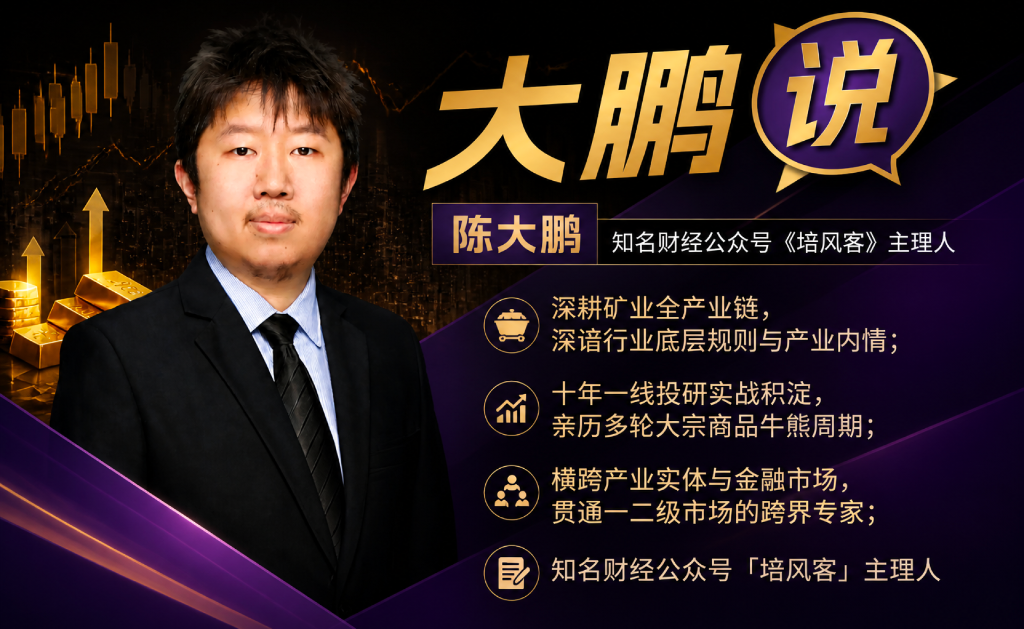
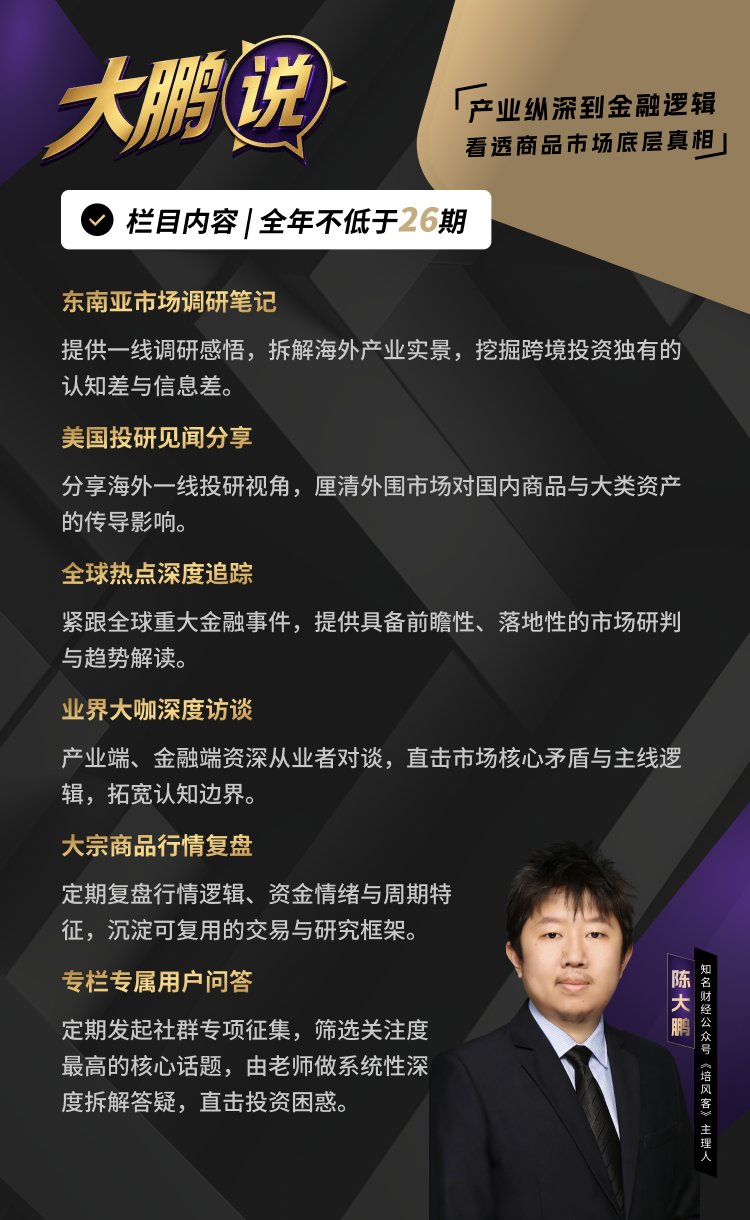
In recent years, the enthusiasm for investments in precious and non-ferrous metals has been rising. On March 15, 2026, the masterclass "Understanding Gold, Silver, and Copper: A New Global Paradigm of Metal Pricing" was held by WallstreetCN in collaboration with Peifengke’s Chen Dapeng, and received high praise in the market. To help you better understand the underlying logic of the commodities world, we have jointly launched the annual column "Dapeng’s Insights" with Mr. Chen after friendly consultation, to accompany users in seeing through the core reality of the commodity world— from the industrial lens to financial logic.
This article is the second part of an interview with Mr. Chen Dapeng, recorded in March 2026, entitled "Rejecting 'Always Being Right': Reviewing Real Mistakes." We hope it will help you better understand this complex market.
How Wide Is the "Temperature Gap" Between Physical Trade and Financial Markets?
We need to understand that different participants have different decision-making methods. Let me give a simple example: during Qingming Festival in April 2025, Trump announced new tariffs. He took out a board, first said tariffs would be 10%, and then it seemed that 10% would be the lowest. Macroeconomic sentiment instantly turned very pessimistic.
After the holiday, copper opened on the LME at nearly $8,000. If you ask macro investors, in the face of such a huge bearish event, almost no one dared to go long at that point. In fact, the macro sentiment at the time was indeed very negative.
But at the moment when copper surged 10% in one morning, who was actually buying? It was the downstream manufacturing enterprises. They showed great enthusiasm at that price and started to resolutely "fix price" purchases.
The reason is that prior to that, industry inventory levels were not high. At the start of 2025, no one expected demand to be that strong; add in the tariff factor which diverted some inventories to the U.S. market. So when Chinese market investors saw prices drop significantly, downstream firms realized their own inventory was insufficient while orders were still coming in, so they decisively chose to lock in prices.
Looking back, the choices made by downstream investors turned out to be correct, while macro investors hesitated. At the most confusing moment, those bottom-fishing might not have understood much about macro, they just simply felt inventories were low and orders were fine. Even in the face of tariffs, U.S. end demand kept telling Chinese suppliers: as long as there are components, we’ll pay the tariffs, just ship the goods.
This example tells us that in today’s world, relying on past experience to make decisions is very difficult, and might even be wrong. We need to try to understand the decision-making logic of different investors:
Downstream Enterprises: When inventories are low and orders are plentiful, they don’t care about macro narratives—if the price is right, they buy.
Macro Investors: They focus on milestone events. For example, in March 2024, when inflation was still high but Powell chose to cut rates, that signaled macros to step in.
My personal advice is to engage with as many different participants as possible to get each person’s perspective on the same market. If you can build a mental framework—"If I were a macro investor, what would I look at? If I were downstream, what would be my indicators?"—your decision-making will become much more reliable.
These days, having frequent conversations with industry colleagues—dining together, having drinks—figuring out what’s on their minds, is much more effective than relying solely on historical experience or subjective judgment for trading.
Breaking Experience Bias: Understanding Counterparty Profit Logic
First, I believe there is a certainty in commodities markets, and that is the supply-demand balance sheet. This is an indispensable tool for anyone in this business.
Frankly, I’m not an expert at building balance sheets myself. Yet I emphasize them because, even if you’re not great at it, you realize how crucial it is. I greatly respect friends who can estimate supply-demand balances with high precision. In past discussions, we’ve agreed that compared to some impulsive male analysts, many excellent female analysts are steadier and more diligent in data work—if you meet one, cherish that opportunity.
The supply-demand balance sheet changes—not only do the numbers change, but the market participants change as well.
Take gold for example. Global annual supply is about 4,800-5,000 tons. Before 2022, central bank gold purchases might have been under 500 tons, but after 2022, that became 1,000 tons—a classic structural change, where a major player doubled their purchase. The factors driving central bank purchases may be geopolitical or political, but it still falls within the scope of the balance sheet.
So, my humble view is: when you feel an asset has moved outside your prior framework, it’s likely that “trading structure” has changed, but not likely to have transcended supply and demand fundamentals.
Often, experience can become a burden because the human brain likes to simplify things. When you can’t figure something out and don’t have a way to, you default to a simple conclusion to "protect" yourself.
For example, seeing high prices and simply thinking, "there’s resistance." But you really need to be on the ground and actually ask: "Buddy, why do you want so much inventory?" Remember, no one comes to a market to lose money; every participant operates on a path that they believe will make a profit.
In the market, some people’s profit scenarios may not come true; after all, it's a game of longs vs. shorts. But you can’t just ignore, disparage, or put a simple label on your counterparties, just because you don’t understand them or they’re on the other side of your trade.
The simplest but most useless approach is to belittle your counterparty, which in my experience, is meaningless. The real core is: Figure out why they think their logic will make money, and why you think they’re wrong.
Discussing every player’s mindset and trading logic in the supply-demand balance sheet is an eternal topic in our industry. But at different times, the players change. You can’t think knowing a few players is enough, because new ones (like “Wang Wu,” “Zhao Liu”) can enter at any time.
Thus, maintaining regular communication, making industry friends, hanging out together, are the only way to really understand what’s on their mind.
When Traditional Commodity Pricing Models Meet a “Vulnerable World”
If you ask me, I think "inventory, basis, profit" are the core metrics all commodities investors care about, and we also look at the shape of the price curve. In China, there is a mature system: active destocking, passive destocking, active restocking, passive restocking. I think this is a great framework that helps clarify the market’s current state.
In recent years, this framework still holds; many commodities still follow this logic. But now, we see a new phenomenon: in the short-term, open interest and volume can temporarily surge due to sudden incidents (like supply interruptions or squeeze events). In the traditional "inventory-basis-profit" framework, such events are rarely considered the baseline. Previously, if inventory was high, prices were under pressure, or profits cycled, but few people proactively focused on why open interest might suddenly expand.
Personally, in today’s more geopolitically fragile world, commodities with concentrated supply will always have problems at some point. As I said earlier: Everyone comes to the market to make money.
Therefore, we need to look at open interest, trading data, and combine those with "fractures" in geopolitically-sensitive supply sources: for example, Indonesia in Asia, Congo DRC in Africa, or the complex Middle East. When these regions are already fragile, and the commodity cycle coincides with key inventory points, sudden events can have an unlimited impact.
To me, sudden events can happen anytime, but only at specific points do they really hit the market hard.
Our objective is to incorporate open interest, trading data and geopolitical supply risk factors into the traditional framework. Especially when prices have dropped a lot, the market is extremely bearish, the curve is in deep contango, and demand outlook is gloomy—if a political change or supply-side policy shift increases open interest, how should we interpret this?
Frankly, our old frameworks have not had a perfect way to anticipate or respond to such sudden events. But I think we can combine real cases from recent years—such as copper in 2024, silver in 2025, and gold in January 2026—to deeply discuss these experiences and test them in possible future cases.
Rejecting "Always Being Right": Reviewing Real Mistakes
I am very thankful to WallstreetCN, as sharing my past mistakes is something I really want to do. In today’s internet environment, most stories are of “one success after another”, but I don’t want to follow that script. I’m willing to share my past errors. To me, mistakes are not a problem, as long as you can make up for them later and earn back your losses—those mistakes become the fuel for your growth. I don’t want to build a persona of "always being right," because many of our past experiences are, in essence, lessons learned from errors.
As a “post-90s” person, when I interact with younger “post-00s” investors, I acutely feel that the new generation is often even more mature about handling “mistakes” than the older generations.
I hope to use this opportunity to reconstruct the real dilemmas in trading: when long and short factors both seem equally real, what makes us choose one over the other? Looking back, which decisions were right, and which ones were mistakes caused by blindspots in logic?
I am grateful I entered this industry early in 2016, when the internet and industry environment were relatively inclusive. For example, Ray Dalio’s "Daily Observations" could be found and studied easily if you tried back then.
But now, the world is becoming more closed, and society is often afraid of mistakes. I’m personally very willing to admit my errors, and it’s not a bad thing. This course is not so much about how “awesome” I am, but about a story of someone who, after many setbacks and repeated mistakes, ultimately found the right path with the help of mentors and friends.
I sincerely hope that the audience and friends who see these contents can help cultivate a more honest, inclusive, and mistake-tolerant social environment. I dislike living in a world of "always being right", because that will inevitably lead to disastrous outcomes.
Disclaimer: The content of this article solely reflects the author's opinion and does not represent the platform in any capacity. This article is not intended to serve as a reference for making investment decisions.
You may also like
Meteora Price Prediction: MET Surges 43% as DLMM Pro Launch Fuels Market Interest
Pi Network dips 1% as falling Open Interest leaves $0.0801 support at risk

Nasdaq Hits New High, Igniting Earnings Season Expectations! Citi Predicts Nearly 90% of Tech Stocks Will Deliver “Earnings Surprises”, with Nvidia and AMD Leading the Outperformance List
The latest quantitative research on earnings season released by Citigroup provides concrete evidence for this profit trend: the model predicts that 66.2% of Russell 1000 constituents will deliver positive earnings surprises (i.e., earnings exceeding market consensus expectations) and corresponding positive stock price return trajectories (i.e., Citigroup's model also predicts positive stock price return directions), significantly higher than last quarter's already strong 60.9%, reaching the highest level since Q4 2021.

Analysis - European Dilemma Provides New Reason for Dollar Bulls to Remain Optimistic
The US dollar has risen 5% against the euro, with some investors expecting further strengthening. The options market has become strongly bearish on the euro, as concerns over France’s fiscal situation and political uncertainty are creating pressure points for the eurozone. Laura Matthews/Saqib Iqbal Ahmed, Reuters New York, October 8 – This fall, the dollar surged to an 18-month high, with the latest rally fueled by uncertainty across the Atlantic, prompting some investors to bet the dollar will appreciate further. Analysts say the dollar continues to receive support from high—and possibly rising—US interest rates, robust economic growth, and persistent inflation risks. However, broader pressure centered on France’s massive fiscal deficit, potentially spreading to Italy and the wider eurozone, is emerging as a primary driver for the dollar in the coming months. So far this year, the dollar has appreciated about 5% against the euro, boosting the dollar index .DXY, which measures the dollar’s strength against six major currencies, including the euro (its largest component). “The euro remains under pressure, limiting one of the main alternatives to the dollar,” said Yuuto Shinohara, Senior Investment Strategist at Mesirow Currency Management. Last week, the yield spread between French and German 10-year government bonds recorded its largest weekly increase in decades, while the Italy-Germany yield spread saw its biggest weekly surge since the pandemic. The euro EUR= was last at 1.1183, down 0.67% against the dollar. “The market is focused on countries that, due to political dysfunction, cannot restore sustainable fiscal trajectories,” said Karl Schamotta, Chief Market Strategist at Toronto’s Corpay. One concern is that the euro no longer receives much support from the European Central Bank’s hawkish signals. The ECB raised rates by 25 basis points in September—its second hike this year to counter energy-driven inflation—but the euro fell after the decision, as markets worried about the impact of future hikes on the economy. Typically, rising European bond yields support the euro, but the euro's muted response suggests investors are increasingly concerned about growth and fiscal risks. Rising energy prices could add further pressure. “Structurally, Europe is a major energy importer and is more manufacturing-dependent than the US. The impact is obvious: high energy prices will drag down the region,” said Benjamin Ford, a researcher at Macro Hive. Ford expects the euro to fall to $1.10 within the next month, nearly 2% lower than current levels. “The US medium-term outlook seems stronger, while Europe is more susceptible to shocks,” Ford said. Policy Missteps Investors are also weighing whether the ECB can continue fighting inflation without causing greater harm to already weakening economies. The eurozone inflation rate (link) exceeded expectations in September, and with energy costs surging, it may rise further in coming months, keeping pressure on the ECB to hike rates. “There’s clear asymmetric downside risk for the euro at present,” said Dan Tobon, Citi’s Head of G10 FX Strategy in New York. “One of the likeliest triggers is policy error—if the ECB overtightens at a time when markets can’t bear it.” Euro risk reversal for one-month options, which measures whether traders are paying more to hedge against euro losses than gains, hit its most bearish level since March last Friday, while the three-month indicator touched its lowest point since June 2024. Federal Reserve policymakers have signaled that inflation risks remain high, which has helped keep US Treasury yields at multi-year highs. “Yields continue to rise, and US rates have an absolute advantage over most developed markets,” Shinohara said. Federal funds futures show about an 84% chance of at least one more 25-basis-point hike by December. Although few strategists expect the dollar to surge dramatically from current levels, they note that US economic resilience, sustained high yields, and Europe’s unique risks continue to tilt the balance toward the dollar. “For now, this imbalance looks very unfavorable for Europe,” Citi’s Tobon said. (For the convenience of non-native English speakers, Reuters automates translation of its reports into several other languages. As automated translation may be flawed or lack necessary context, Reuters does not guarantee the accuracy of such translations. They are provided solely for the readers’ convenience, and Reuters accepts no liability for any damage or loss arising from use of automated translation.)

Crypto prices
More


