coindesk.com
Crypto investors endured one of their toughest week in years as a wave of selling wiped out hundreds of billions of dollars from digital asset markets.
Bitcoin fell 17.3% this week while ether ($ETH) dropped 22%, putting both assets on track for their largest weekly declines since November 2022, when the collapse of Sam Bankman-Fried's FTX exchange triggered a market-wide panic.
Despite a modest stabilization on Saturday, both assets remained near their lows, with $BTC trading just above $60,000 and $ETH changing hands around $1,550.
The damage extended far beyond the two largest cryptocurrencies. The digital asset market shed roughly $390 billion in value during the week, leaving total market capitalization hovering just above $2 trillion, according to TradingView data. That's less than half of the nearly $4.2 trillion peak reached in October.
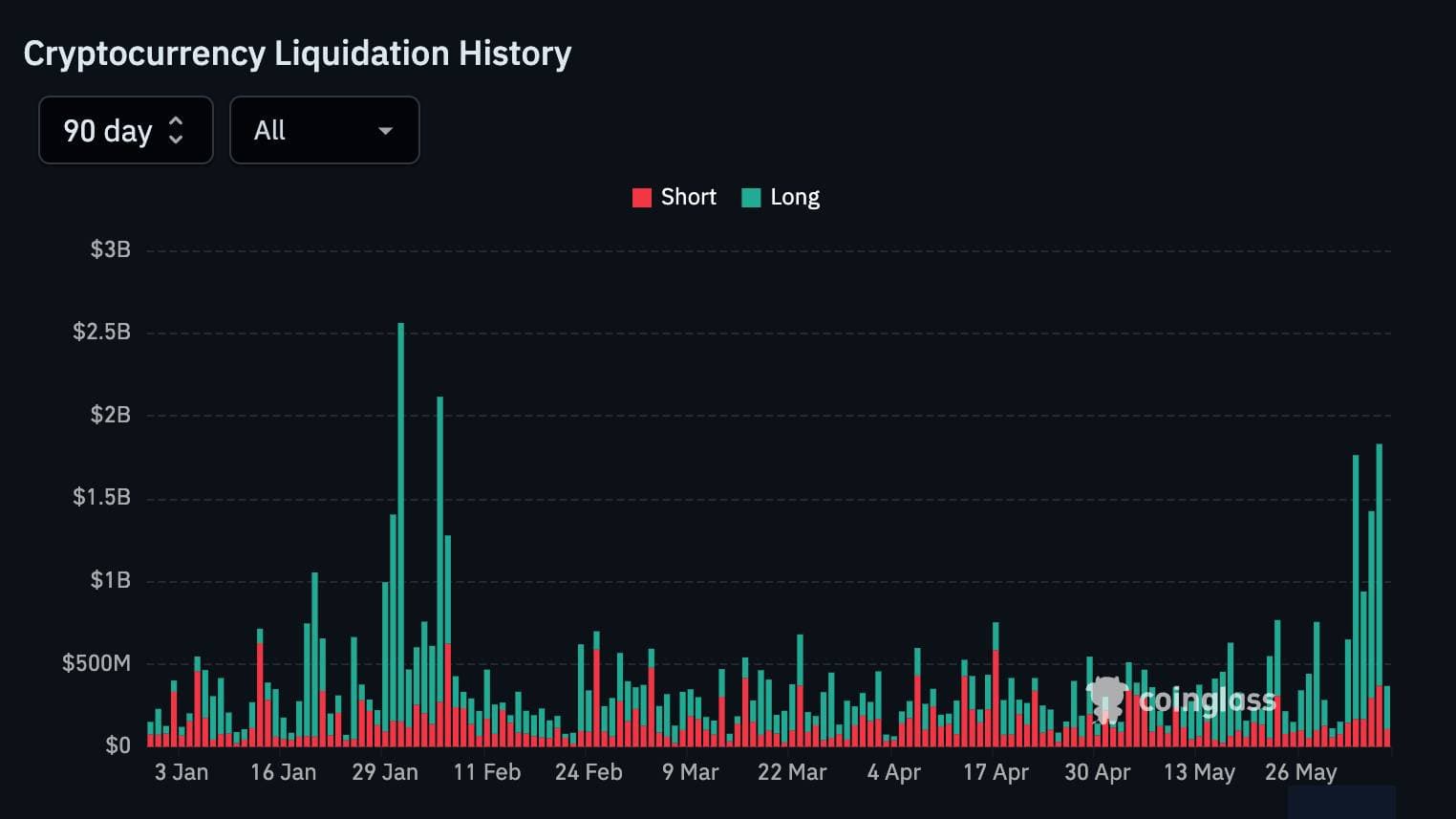
It wasn't just prices that got hit. Crypto derivatives traders suffered one of the largest wipeouts of this year.
Roughly $7 billion in leveraged positions were liquidated across digital assets during the week, according to CoinGlass data, with Monday and Friday delivering the most severe flushes.
About $5.7 billion of those were long positions, or bullish bets on higher prices.
Why crypto crashed this week
The selloff came as several bearish forces converged at once.
Starting the week, Strategy (MSTR), the largest corporate holder of bitcoin, disclosed it sold $BTC for the first time in nearly four years. The transaction was negligible — just 32 $BTC worth roughly $2.5 million — but the sale rattled investors who had long viewed Michael Saylor's company as a perpetual source of demand.
Investors also began questioning whether Strategy may need to sell additional bitcoin to help cover obligations tied to its growing stack of preferred equities.
At the same time, bitcoin ETFs continued to bleed assets. K33 Research head Vetle Lunde argued earlier this week that some of those outflows reflected a broader rotation of capital away from crypto and into artificial intelligence (AI) investments.
With AI-related stocks pushing to record highs and investors anticipating potential IPOs from companies such as OpenAI, Anthropic and SpaceX, "the opportunity cost of holding $BTC" has become increasingly difficult for some investors to ignore, Lunde said.
Concerns about AI's ability to expose flaws in crypto protocols also added to the pressure. Zcash (ZEC), one of the best-performing cryptos earlier this year, tumbled more than 40% after researchers used Anthropic's latest AI model to uncover a critical vulnerability in the network's privacy system.
The final blow came with Friday's stronger-than-expected U.S. jobs report, forcing investors to rethink the Federal Reserve's next move. Markets that earlier this year anticipated rate cuts are now increasingly expect that the central bank could hike if inflation remains stubbornly high.
U.S. Treasury bond yields surged, while the Nasdaq 100 suffered its worst day since the tariff-driven selloff in April 2025, snapping a record-setting rally that had fueled much of Wall Street's enthusiasm this year.
For now, the selling appeared to have paused with traditional markets closed for the weekend and crypto prices stabilizing on Saturday.
Whether this week's rout marked the capitulation that often comes at market bottoms or was merely the latest episode in the downtrend may come down to the broader macro picture. Higher bond yields, rate-hike fears and continued competition from AI investments and IPOs remain key hurdles for the recovery.