
BTC Market Pulse: Week 24

Overview
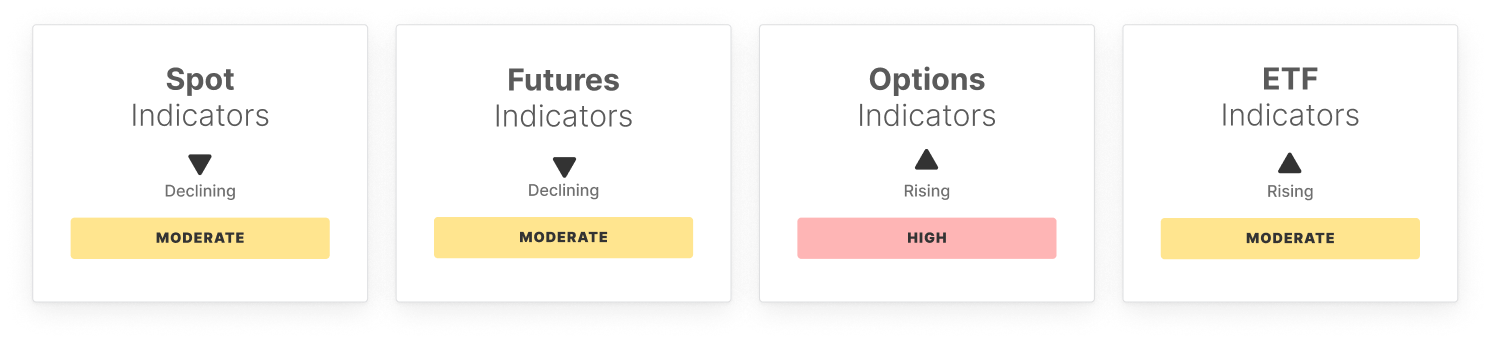
Bitcoin remains under pressure as sellers continue to dominate
market activity. Spot markets have seen momentum deteriorate
sharply, with aggressive taker selling driving a notable increase in
spot volume. Rather than signaling renewed demand, the rise in
activity suggests market participants are using liquidity to reduce
exposure, reflecting a more defensive market tone.
Derivatives markets tell a similar story. Futures open interest has
contracted as leverage is unwound, while perpetual positioning
reflects persistent sell-side aggression. In options markets,
demand for downside protection has risen materially, with both
25-delta skew and the volatility spread moving higher. Together,
these signals point to growing caution among investors as the
market navigates a period of heightened uncertainty.
Institutional behavior, observed through U.S. spot ETFs,
underscores this cautious sentiment. While trading volumes have
surged in response to recent volatility, net capital flows remain
persistently negative, and aggregate investor profitability has
compressed toward cost-basis levels. This suggests that
institutional participants are currently re-evaluating their exposure,
contributing to the broader atmosphere of uncertainty.
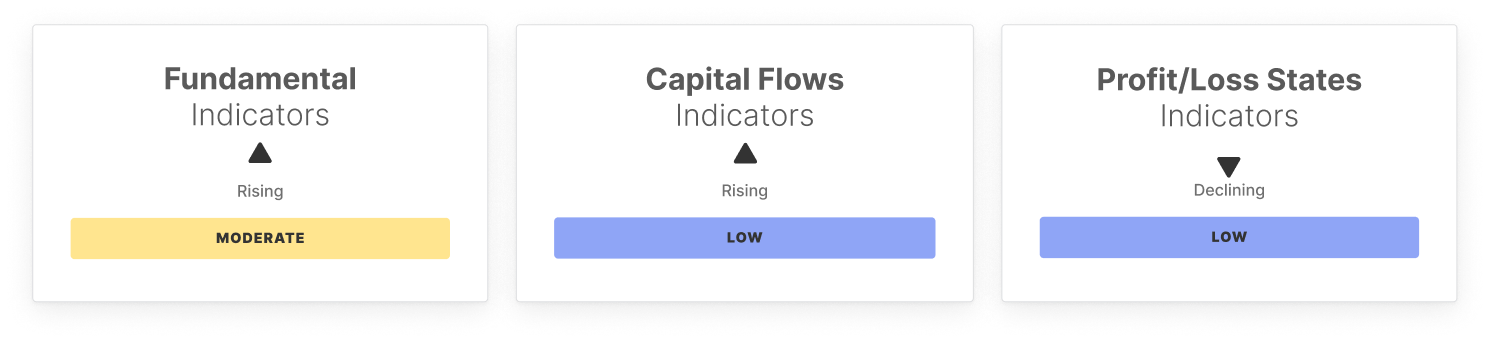
Despite these headwinds, fundamental network metrics show a
broadening base of engagement, with active addresses and
transfer volumes expanding. While total fee volume has cooled,
long-term holders continue to dominate supply distribution,
maintaining a resilient market structure. Ultimately, the transition
toward realized losses and the contraction in unrealized
profitability signal a phase of capitulation, as the market balances
short-term liquidation pressure against a stable, long-term holder
base.
Off-Chain Indicators
On-Chain Indicators

Don't miss it!
Smart market intelligence, straight to your inbox.
Disclaimer: The content of this article solely reflects the author's opinion and does not represent the platform in any capacity. This article is not intended to serve as a reference for making investment decisions.
You may also like
Federal Reserve meeting minutes: All 19 policymakers support a rate hike in September, but reasons vary; most expect further hikes this year, suggesting no urgency in October.
Most officials view a September interest rate hike as an "insurance" measure against stubborn inflation; a minority see it as a necessary step to curb inflation. Overall, there is no indication of a desire to push for consecutive rate hikes. The "New Fed News Agency" emphasized the minutes: "Most participants believe that it may be appropriate to raise interest rates again before the end of the year." Nearly all officials believe inflation remains elevated and the labor market is close to full employment. Many noted that, despite the rise in long-term U.S. Treasury yields, financial conditions are still conducive to economic growth. Some officials believe that AI will boost investment and productivity, but may also contribute to inflation. The minutes revealed that the U.S.-Japan joint intervention in July to support the yen was a U.S. Treasury action, with no Federal Reserve funds used.
Solana Consolidates After Sharp Expansion
FLOKI Recovery Tests Key Resistance
100 Million Barrels Shrinkage? Reports Say EU Believes Oil Reserve Release Plan Mainly Fulfills Previous Commitments, Not New Quotas
Last Friday, G7 member countries agreed to release up to 100 million barrels of crude oil and diesel reserves. The IEA had announced a plan to release 400 million barrels in March, and as of last Friday, about 75 million barrels had yet to be released. Most EU member states believe that this action is simply fulfilling previous commitments rather than adding new releases. Regarding the earlier-than-scheduled release of diesel stocks emphasized in last week's G7 agreement, EU member states consider it feasible, but on a limited scale.
Crypto prices
More


